









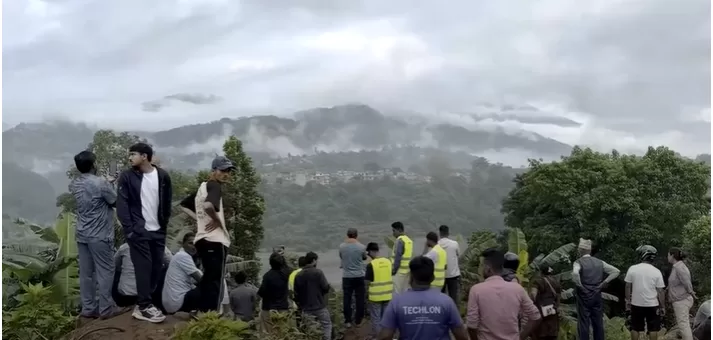
Rescuers in Nepal and China raced on Sunday to find thousands of people missing after a glacier collapse unleashed a catastrophic mudslide across the Himalayas, as they faced challenging weather conditions and rising water levels.
Authorities said the death toll rose to nearly 800 on Sunday, with more than 3,000 people missing on both sides of the Nepal-China border after a torrent of ice, rock, mud and debris swept through mountain valleys and rivers on Wednesday, causing widespread devastation.
The Red Cross has estimated that more than 90,000 people are likely to have been affected by the disaster, which China has linked to the effects of climate change.
Chinese Foreign Minister Wang Yi told his Nepalese counterpart during a Saturday telephone call that the mudslide was their “most severe cross-border disaster” in recent years and that rescue operations had risen to an unprecedented level of difficulty and complexity, state broadcaster CCTV reported.
Nepal’s disaster authority said 781 people had died, with 2,502 missing. On the Chinese side, authorities said 16 people were killed in Gyirong County and 546 were missing.
Beijing said 261 foreign nationals from 23 countries were unaccounted for in Tibet, near a key border crossing with Nepal.
The scale of the disaster has complicated rescue efforts across the rugged Himalayan terrain.
Local police in Nepal told Reuters that residents and rescue workers had moved to higher ground after the Trishuli River’s water levels rose in recent hours following fresh rainfall, raising fears of additional flooding.
Rescue operations have been suspended several times since Friday because of bad weather and concerns that a lake formed across the Nepal-China border by the disaster could trigger fresh flooding after it began overflowing into Nepal’s Lhende Khola and Trishuli Rivers.
CCTV reported that the lake threatening downstream areas had been largely drained by Saturday evening. But drones detected a landslide late on Saturday that is 2.8 kilometres (1.7 miles) downstream of the lake, forming a new dam and a fresh pool of water.

