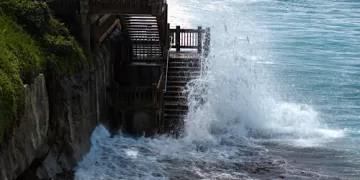










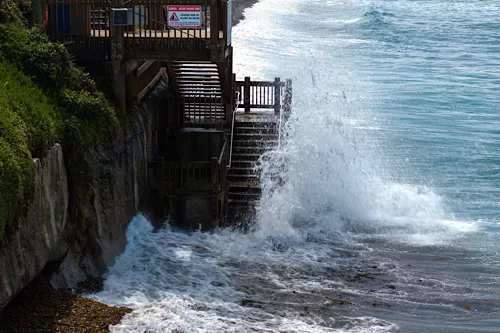
In Malibu, the Pacific Ocean opened a sinkhole near the home of movie star Nicolas Cage and wreaked havoc on beachfront property. Along Beach Road in the city of Dana Point, waves destroyed one home and forced the city to vacate or restrict occupancy to 16 others.
Such damage up and down Southern California this summer was provoked by a series of Eastern Pacific cyclones and hurricanes, enhanced by the weather phenomenon known as El Niño.
Although the hurricanes did not make landfall in California, they generated swells that slammed into the coast, denuding beaches of sand and transforming a coastline that is as much a part of California’s identity as Hollywood or Silicon Valley.
Experts say even more ferocious waves could arrive in the coming months, when naturally occurring weather cycles, supercharged by climate change, could coincide with the highest of high tides.
“Things are definitely lining up for this to be a pretty epic winter in terms of potential hazards,” said Patrick Barnard, research director of the Centre for Coastal Climate Resilience at the University of California, Santa Cruz. “Everything’s amplified by climate change.”
California this week preemptively declared a state of emergency to help mobilise disaster relief and first responders in preparation for more turmoil from El Niño, which emerged in June. The phenomenon is expected to demonstrate its greatest effects through yearend and into early 2027.
On Friday, another hurricane, Polo, churned off the Mexican Pacific coast. It could send more waves northward. Officials cancelled the inaugural Ocean Way Festival set for this weekend in Santa Monica, after storm surf and runoff from Hurricane Marie over Labour Day weekend eroded much of the concert site just south of the pier.
El Niño occurs every few years, when surface waters in the central and eastern tropical Pacific Ocean become unusually warm, altering atmospheric circulation and weather around the world.

