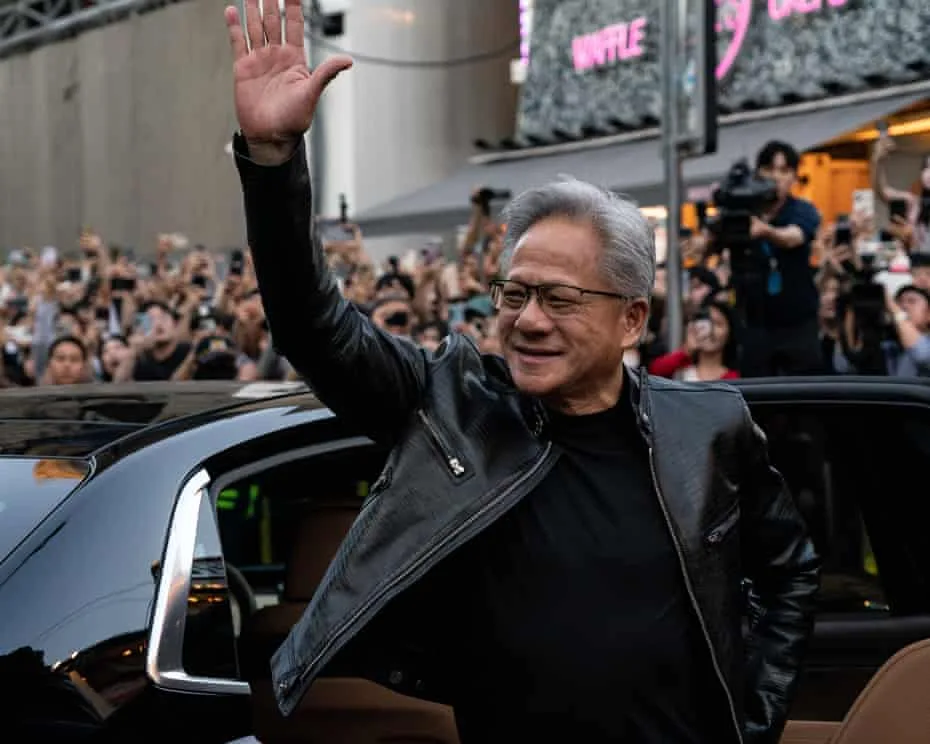










The US Justice Department looked into concerns surrounding Nvidia chief executive Jensen Huang following allegations of a relationship with a woman suspected of spying for China, but concluded, alongside other government agencies, that he posed no national security risk, Attorney General Todd Blanche said on Tuesday.
Speaking at a press conference, Blanche confirmed that the department had examined the concerns but stressed that looking into a matter did not necessarily mean a formal criminal investigation had been opened.
“The FBI, law enforcement looks into things all the time,” he said, adding that the department had no information indicating that Huang had committed a crime.
Blanche also said the assessment was based on consultations involving law enforcement and intelligence agencies, as well as government departments including Commerce, Treasury and State. He described the conclusion as a “collective consensus”.
The controversy surrounding Huang intensified after Nvidia’s board reinstated him as chief executive on Monday, just 11 days after his resignation. The decision followed intervention by US President Donald Trump, who said he had persuaded the company’s board to bring Huang back.
The allegations involve Alice Huang, a Singapore-based technology executive with no family relation to Jensen Huang, who has been accused of acting as a Chinese intelligence asset. She was also linked to the purchase of $4.8 billion worth of Nvidia AI chips, which were allegedly diverted to China through her company, Megaspeed, despite US export restrictions.
The case has raised questions in Washington about the protection of advanced American technology and the administration’s handling of national security concerns.
Democratic lawmakers have called for Huang to testify publicly before Congress, seeking answers about Nvidia’s efforts to expand chip exports to China and allegations that advanced semiconductors reached Chinese companies through third countries.
Meanwhile, Trump’s intervention has attracted further scrutiny after Nvidia shares surged by 31.5 per cent on Monday following Huang’s return, adding approximately $950 billion to the company’s market value.
According to financial disclosures, Trump could have gained up to $15 million from his Nvidia holdings following the sharp rise in the company’s share price.
The developments have intensified debate over the relationship between political influence, corporate interests and national security, particularly as the United States seeks to maintain its lead over China in artificial intelligence.