








A lake formed by a landslide on the Nepal-China border started to overflow on Friday, putting at risk areas devastated by a flash flood two days ago and forcing a temporary halt to rescue efforts, authorities on both sides said.
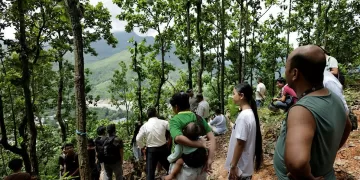
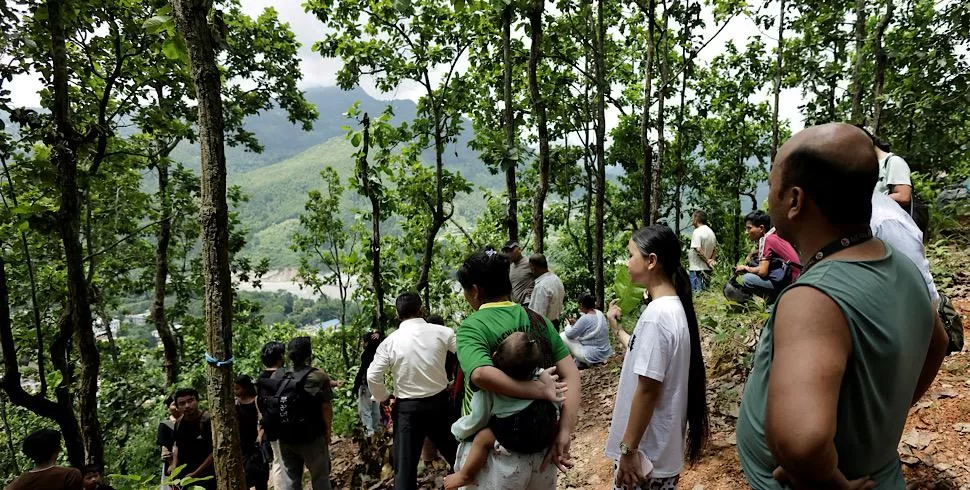
Residents in Nepal’s Rasuwa district, on the border with China’s Tibet, were seen rushing up hillsides to escape any surge in the river level, according to a Reuters witness.
The risk of the lake bursting prompted all Chinese rescue personnel and vehicles to withdraw to stand by in a safe area, state broadcaster CCTV said on Friday. Authorities in Nepal have stopped rescue operations for the next 90 minutes, an army officer said.
The confirmed death toll from the glacier collapse in the region on Wednesday rose to 469 in Nepal, with almost 1,000 more missing there and in Tibet. A huge torrent of rock, ice, mud and debris cascaded through Himalayan mountain river systems after the collapse.
The flood ripped through villages and valleys, destroying power stations, roads and bridges along a route that links Kathmandu with Lhasa in Tibet and is popular with trekkers and pilgrims. Of those missing, at least 540 are foreigners.
In its wake, debris had formed a barrier lake that was threatening further flooding on devastated downstream communities.
China mobilised an eight-member engineering team to conduct aerial surveys and 3D modeling of the lake on Thursday.
By Friday, the lake’s reservoir had topped 2.5 million cubic metres of water, up from the estimated 1.5-2 million cubic metres the engineering team recorded a day ago.

