











Of the thousands of lawsuits Meta faces over child safety on its platforms, none may be more consequential than one going to trial this week in California.
States are seeking extensive financial damages that could, in theory, total as much as $1.4 trillion, plus changes to how the company operates Facebook and Instagram.
The lawsuit accuses the social media giant of contributing to the youth mental health crisis by knowingly and deliberately designing features that get children addicted to its platforms. It also claims that Meta routinely collects data on children under 13 without their parents’ consent, in violation of federal law.
“Meta has harnessed powerful and unprecedented technologies to entice, engage, and ultimately ensnare youth and teens. Its motive is profit, and in seeking to maximize its financial gains,” the lawsuit says.
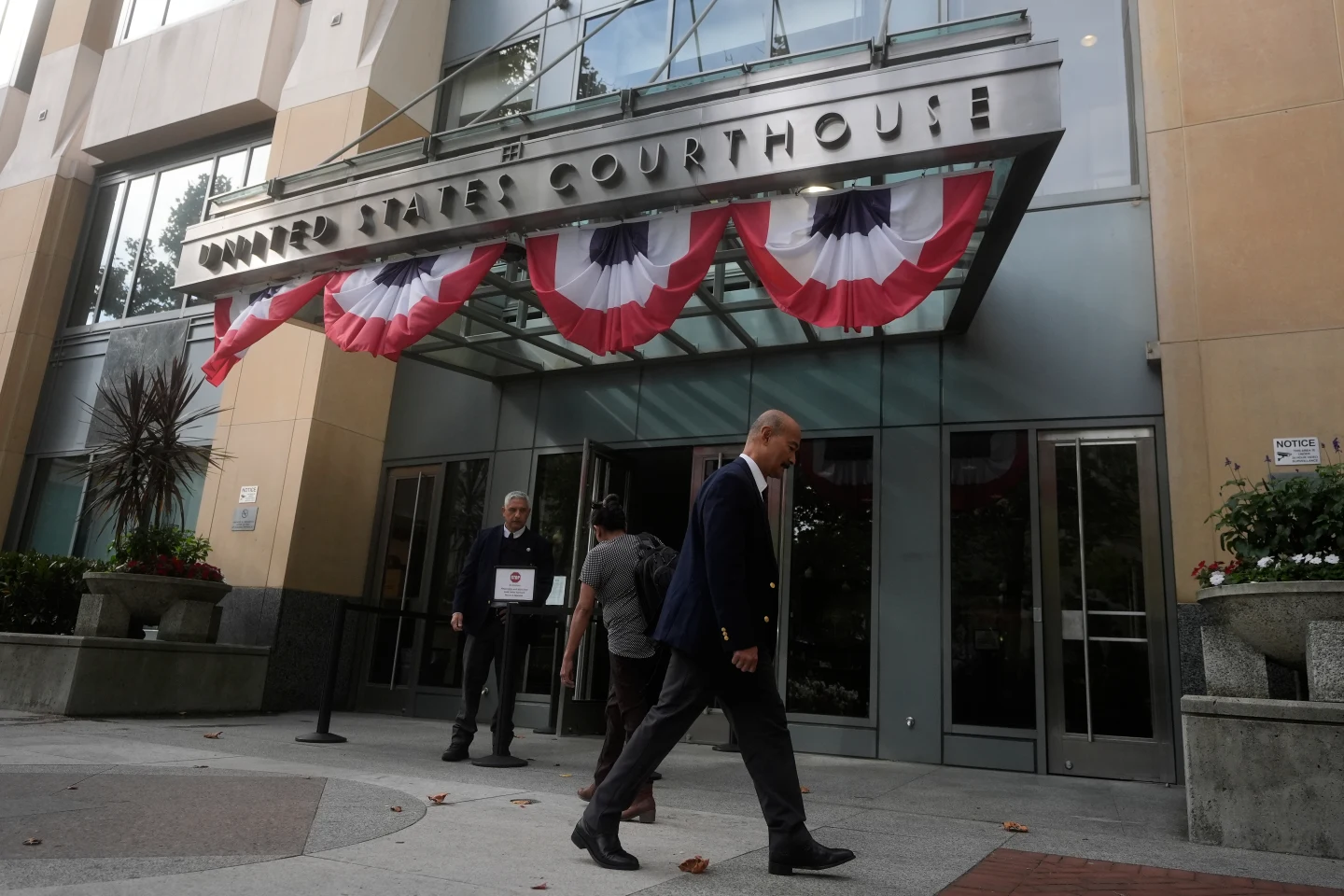
Dozens of states filed the lawsuit three years ago. The trial set to begin Tuesday in federal court in Oakland, California, features four of the states as plaintiffs — California, Colorado, Kentucky and New Jersey. The other 25 states are expected to have trials later.
Meta said it disputes the allegations, and the trial evidence will show its commitment to supporting young people. “We’ve listened to parents, worked with experts and law enforcement, and conducted in-depth research to understand the issues that matter most,” the company said in a statement.
For Meta, which already lost two pivotal cases over harms to children and teens this year, the stakes are high. The company reported a rare profit decline last month, in part due to $2.4 billion in legal expenses.
The $1.4 trillion figure, which Meta disclosed in a legal filing, is almost as high as the Menlo Park, California, company’s entire market capitalization — that is, the value of all its outstanding shares on the stock market. Paying it would inevitably put Meta Platforms in bankruptcy and perhaps put the company under state ownership.
“The state attorneys general are going for the gusto,” said Eric Goldman, a professor and co-director of the High Tech Law Institute at Santa Clara University School of Law. “They are trying to set the definitive precedent in this case and they have asked for extraordinary damages and they are going to seek extraordinary structural remedies if they succeed.”
Meta calls the possible penalty “untethered to any claimed violation” by the states.
“A sanction of that size has no analog in the history of consumer protection enforcement,” Meta said in a July 6 filing with the US District Court for the Northern District of California.
If Meta loses the trial, the court would have wide discretion over the size of any financial penalty, and legal experts say anything close to $1.4 trillion would be unlikely.
“It’s not plausible in the sense that Meta doesn’t have that much money and could not get it,” said James Grimmelmann, a law professor at Cornell Law School and Cornell Tech. “An award that large would put Meta into bankruptcy, wipe out its owners, and effectively result in the states owning Meta.”
As a practical matter, Grimmelmann added, “that seems extremely unlikely to happen.”
In other cases that have involved high potential damages for multiple individual offenses, he said courts have stopped short of imposing the maximum penalties. One example is the Anthropic artificial intelligence training case, where plaintiffs were claiming damages of $150,000 per book that Anthropic copied, but the penalty ended up being $3,000 per book, totaling about $1.5 billion.

