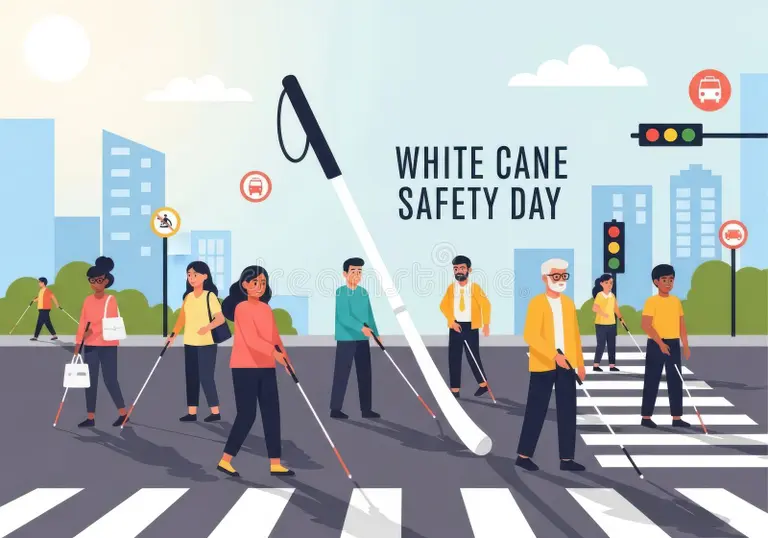







The world marks White Cane Safety Day on 15 October each year to raise awareness of the rights of people with visual impairments and the challenges they face in their daily lives.
The occasion also highlights the importance of creating safe, accessible environments that promote independence and ensure equal opportunities in education, employment and other areas of life.
The white cane helps blind and visually impaired people identify obstacles and navigate their surroundings. It also serves as a reminder of society’s responsibility to respect their right to move around safely and offer assistance when needed without compromising their independence.
Marking the occasion, Social Solidarity Minister Maya Morsy outlined the government’s efforts to support people with disabilities and promote their independence.
During the 2025/2026 academic year, the ministry provided annual grants worth around EGP3.5 million to 918 blind students at 24 public universities. It also supports students with disabilities who cannot afford university fees, helping them continue their education despite financial difficulties.
Through its social solidarity units at universities, the ministry distributed around 300 white canes to visually impaired students to help them move around more safely and independently.
It also provided approximately 300 specially equipped laptops to help students with disabilities access educational materials and use assistive technologies.
Around 1.3 million people with disabilities, including those with visual impairments, benefit from the Takaful and Karama conditional cash transfer programme, which helps ease the cost of living for beneficiaries and their families.
The ministry also works to provide assistive devices tailored to individual needs and offers rehabilitation, guidance and counselling services to help people with visual impairments develop their abilities and participate in education, employment and community life.
Under a co-operation protocol with the Ministry of Transport, 35 metro stations on Lines 1 and 2, along with 15 railway stations, have been made accessible in line with Accessibility Code 601, improving safety and independence for passengers with disabilities.
The ministry also issues disability identification and integrated services cards, enabling eligible people to access services, benefits and facilities provided for by law.
The ministry said it would continue its efforts to promote independence and social inclusion, ensuring that people with disabilities can travel safely, learn, work and pursue their ambitions without barriers.

