









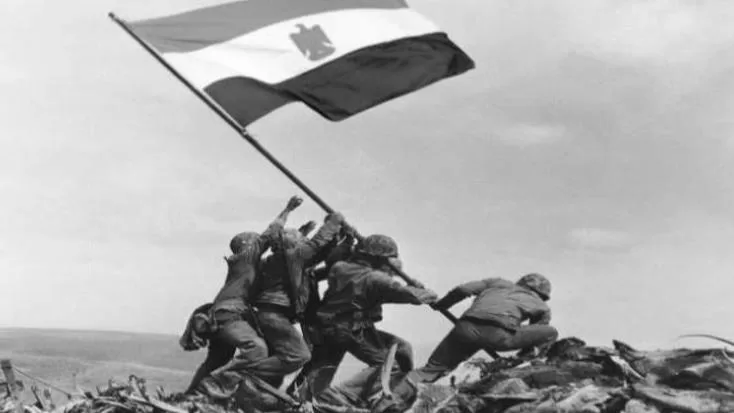
Declassified records detail the planning, deception and 4 stages of fighting behind the 1973 War
What the secret files finally reveal The pages of The Egyptian Gazette reveal documents and records that were kept strictly secret for decades. They include papers signed by Field Marshal Mohamed Abdel Ghani El-Gamasy, then Deputy Chief of Staff of the Armed Forces and Chief of the Operations Authority, as well as official reports sent to the Military Intelligence and Reconnaissance Administration and the Ministry of War. The Gazette publishes these records to tell the story as it was documented at the time, from attacks on Egyptian villages and cities to the strategic planning behind the crossing and detailed combat records. Attacks on civilians and vital facilities Egyptian villages, cities and public facilities across several governorates were hit by Israeli air and artillery attacks. Secret telegrams documented details of these attacks. Israeli forces launched machine-gun attacks and air raids using bombs and booby traps against the villages of Sheikh Gabil, Beni Ayoub, Al-Wafin, Muslim, Al-Hamaida, Al-Rifai, Al Wishah and Kafr Hafez in Abu Hammad, Sharqia Governorate. The attacks killed and wounded men, women and children and set fire to agricultural land. The records listed six 700-pound bombs and one 1,000-pound bomb that failed to explode. Residents of the villages of Manshiyet Abu Omar, Om El-Hosn, Om Azzam and Kafr El-Husseiniya were also killed or wounded in an air raid on El-Salheya in Faqous. Two houses in Faqous were destroyed, killing a woman and her three children. Bombs were also found buried in rice fields following raids on El-Salheya and El-Husseiniya. In Daqahlia Governorate, the village of Manshiyet Abdel Rahman in Dikirnis was hit by an air raid that destroyed 30 houses, started fires and killed and wounded civilians. Bombs also exploded in Al-Abrak village in Mansoura, causing deaths and injuries and damaging telephone lines. Air raids targeted Lake Manzala, hitting a number of fishermen and civilians. Other attacks caused deaths and injuries in the areas of El-Senbellawein and Baltas. In Beheira Governorate, bombs were dropped on Ezbet Gelousa in Shubrakhit, damaging houses and telephone lines. Missiles and unidentified objects that failed to explode fell on the villages of Al-Qaraya Al-Bahariya, Wakae, Danal and Al-Sharatwa in Abu Hommos. Shells also fell near Kafr El-Zayat. Israeli forces bombed Ismailia, particularly the village of Nafisha, where four houses were destroyed. Houses in the Ain Ghosain area were also bombed. The areas of Al-Dawawis and Al-Basalwa were targeted with bombs and surface-to-surface missiles, causing deaths and injuries and damaging agricultural land. The air raids were particularly heavy, followed by low-level flights and machine-gun fire against civilian targets. In Port Said and Port Fouad, the bombing damaged and cut the main drinking-water lines supplying Port Said near El-Gamil and along the Ismailia road. Continuous air and artillery attacks lasting 11 hours, using 1,000-pound bombs and incendiary missiles, targeted the Investment Tunnel, the petroleum station, the naval shipyard dock and the General Hospital. Fire broke out at the Minya Police Station, while buildings in the Arab District were destroyed. In Port Fouad, heavy bombing destroyed two fire engines and wounded firefighters and civilians. In Gharbia and Menoufia governorates, 750-pound bombs fell on agricultural land in Mahalla El-Kubra. Bombs also hit Kafr El-Zayat and Basyoun, while civilians were killed in Tanta and Mahalla El-Kubra. In Quesna, Menoufia, 30 time bombs were found. Their fragments had been designed to cause maximum human casualties. The bombing also caused deaths and injuries. In Damietta, enemy missiles targeted Ezbet El-Borg, Sheikh Dargham and Ras El-Bar, destroying bakeries, ambulances and Ras El-Bar Hospital. A wooden box containing jars of sulfuric acid was also found on the Damietta coast. The substance released toxic gas when heated. Two aircraft fired four missiles at the Zaafarana area in the Red Sea, causing deaths and injuries. Suez was also subjected to heavy bombing, which damaged El Nasr Fertilisers Company, petrol stations and the Suez cold-storage facility. Enemy tanks advanced as the bombing continued, while ambulances were prevented from entering the area. Israeli forces also stopped the water supply and filled in the Ismailia Canal in an attempt to put pressure on the city. They seized vehicles belonging to the Suez Canal Authority and the petroleum company and forcibly displaced residents from the villages of El-Ganayen, Geneifa, Fanar and Abu Sultan. Breaking the myth of the Bar Lev Line Documents from the Operations Authority reveal the military planning behind overcoming the complex defensive barriers. The objective was not limited to a military operation. It also involved creating political and economic conditions by using oil and economic relations, isolating Israel internationally, deepening its disputes with Washington and strengthening Arab unity. The aim was to force Israel to abandon its theory of “secure borders.” The ceasefire period that began in August 1970 was also used to build a network of anti-aircraft missiles. ...