








Dr. Nazir Ayyad
Egypt’s Grand Mufti
The family lies at the heart of human society. It is far more than a social institution or a framework for organizing relationships; it is the first space in which a person experiences belonging, learns the meaning of responsibility, develops a moral compass, and builds the foundations of social life. For this reason, every transformation that touches the family ultimately extends beyond its boundaries, shaping the character of society and influencing the future of generations to come.
Today, families across the world are navigating an unprecedented convergence of technological, cultural, intellectual, and social transformations. These changes have created remarkable opportunities for communication, knowledge, and human development, but they have also generated new questions and challenges whose consequences are not yet fully understood. The pace of transformation has, in many instances, exceeded our ability to reflect upon its long-term effects, leaving families and institutions to confront questions that have no simple or immediate answers.
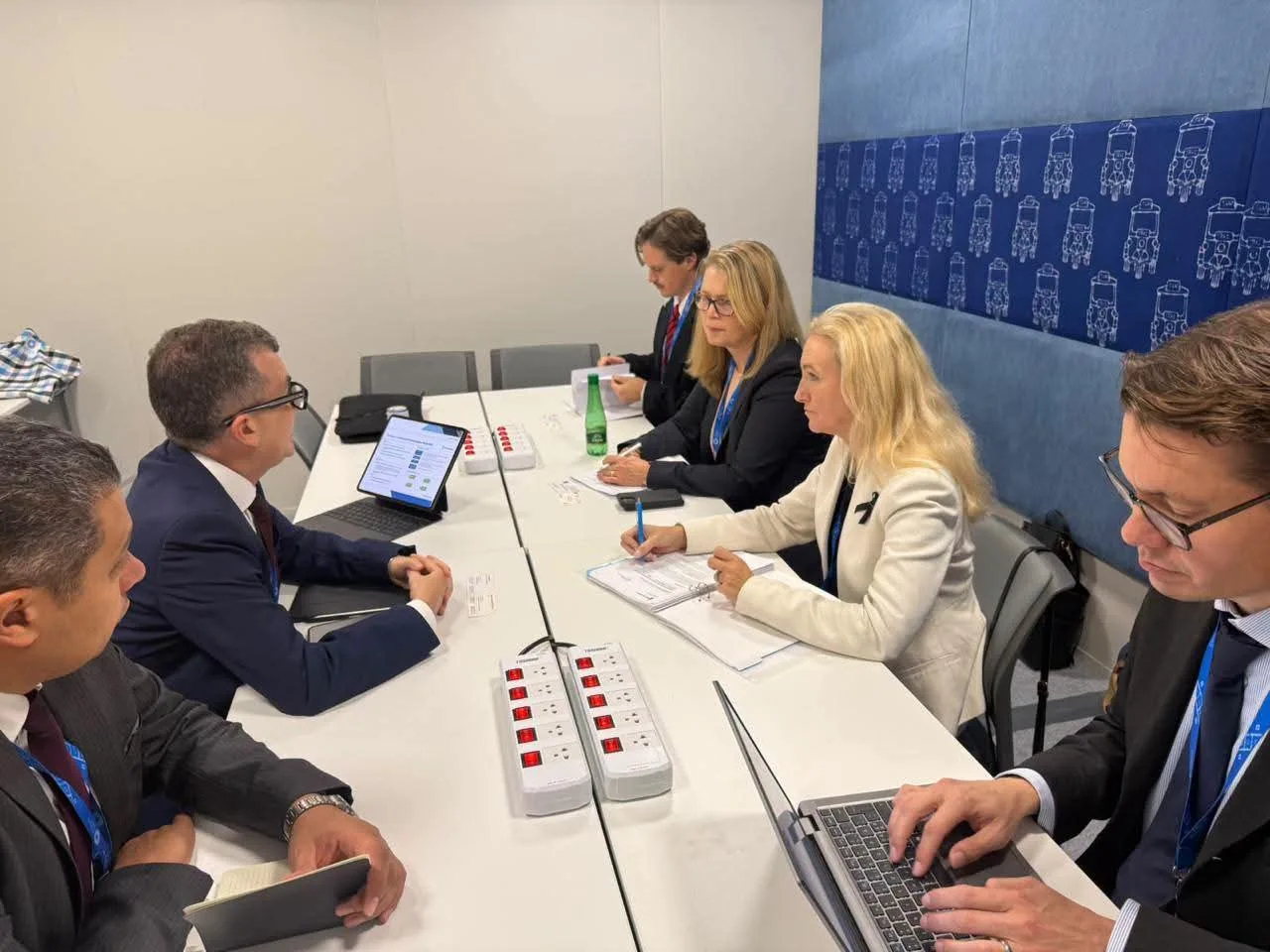
It is against this backdrop that Egypt’s Dar al-Ifta, under the umbrella of the General Secretariat of Fatwa Authorities Worldwide, is convening its 11th International Conference on September 2–3, under the patronage of His Excellency President Abdel Fattah El-Sisi, President of the Arab Republic of Egypt. Held under the theme “Family Challenges amid Major Transformations”,the conference brings together scholars, muftis, thinkers, researchers, and specialists from around 80 countries.
The importance of this gathering lies not simply in identifying the challenges confronting families today, but in seeking to understand the deeper transformations that have produced them and in exploring how religious, intellectual, and social institutions can respond with wisdom, foresight, and a nuanced understanding of contemporary realities.
When Technology Creates Distance
Among the most pressing emerging challenges is digital isolation. Technology has fundamentally transformed the way we communicate, work, learn, and form relationships. It has enabled people separated by thousands of miles to remain connected and has opened unprecedented avenues for knowledge and interaction. Yet the same technologies that can bring distant people closer can, paradoxically, create distance among those who share the same home.
Family members may occupy the same physical space while increasingly inhabiting separate digital worlds. Attention becomes fragmented, conversations interrupted, and sustained emotional presence more difficult to maintain. In such circumstances, the issue is not technology itself, but the manner in which it becomes embedded in our patterns of life and relationships.
The response, therefore, cannot be a rejection of technological progress. What is needed is a conscious and balanced relationship with technology—one in which digital tools enhance human connection rather than substitute for it. Technological advancement should remain a means of serving human flourishing, not a force that gradually displaces the relationships that give human life meaning.The family must remain a space in which people are not merely connected, but truly present for one another.
The Challenge of Moral Fluidity
A second transformation concerns what may be described as moral fluidity: the increasing fluidity of the values, norms, and standards through which individuals understand behavior, relationships, and social responsibility.
We live in a world in which traditional frames of reference increasingly encounter competing cultural narratives and diverse conceptions of right and wrong. Digital platforms have accelerated this process, allowing ideas and lifestyles to cross cultural and geographical boundaries with unprecedented speed. Young people, in particular, are exposed to a vast and constantly changing landscape of values, opinions, and models of behavior.
This raises a fundamental question: How can the family continue to fulfill its role in transmitting values and cultivating moral awareness when the sources shaping those values have become more numerous, more diverse, and more difficult to regulate?
The answer cannot be found in withdrawing from the world or refusing to acknowledge social change. At the same time, keeping pace with change cannot mean abandoning the principles that provide individuals and communities with moral orientation.
What is required is discernment: the ability to distinguish between genuine and constructive social transformation and transient trends; between legitimate diversity and the erosion of fundamental values; and between engaging critically with contemporary realities and simply surrendering to them.
The family has a unique role in this process. Values are not transmitted within the family merely through instruction. They are embodied in everyday conduct—in the way parents communicate with their children, resolve disagreements, demonstrate compassion, assume responsibility, and respect one another. In this sense, the family is not simply a transmitter of values; it is a living environment in which values are experienced and internalized.
Rethinking Marriage, Parenthood, and Family Formation
Another issue that warrants serious reflection is voluntary childlessness, which has emerged in a number of contemporary societies alongside changing perceptions of marriage, parenthood, and family formation.
This phenomenon cannot be reduced to a single explanation. Its motivations may be economic, social, psychological, cultural, or intellectual, and its manifestations differ considerably from one society to another. Understanding it therefore requires moving beyond assumptions and engaging seriously with the circumstances and concerns that shape people’s choices.
A responsible religious and intellectual approach begins with understanding before judgment. It requires examining the social and cultural contexts in which such choices emerge, listening to the experiences that inform them, and considering their potential implications for individuals, families, and societies.
At the same time, such reflection invites a broader conversation about the meaning of marriage, parenthood, intergenerational responsibility, and the place of the family within contemporary society. The question is not merely why some individuals choose not to have children, but what these changing perceptions tell us about the pressures, aspirations, and transformations shaping family life today.
This is precisely where contemporary fatwa and religious scholarship have an important role to play. Religious guidance cannot remain detached from the realities of people’s lives. Nor can it approach emerging phenomena through abstract judgments divorced from their social and human contexts.
From Responding to Questions to Anticipating Them
This brings us to a fundamental question concerning the role of religious institutions in a rapidly changing world.
The task of fatwa is not limited to responding to questions after they arise. Contemporary religious scholarship must also develop the capacity to anticipate emerging transformations, study their causes and potential consequences, and contribute to shaping thoughtful and responsible responses before challenges develop into crises.
At Egypt’s Dar al-Ifta, we believe that preserving the family requires neither resistance to every form of change nor uncritical acceptance of every new transformation. It requires an approach that combines the enduring foundations of Islamic jurisprudence with a profound understanding of contemporary realities and informed engagement with the humanities and social sciences.
This vision has informed the development of FatwaPro, an application created by Egypt’s Dar al-Ifta to facilitate direct and accessible communication between individuals and the institution. Through the application, users can reach Dar al-Ifta more easily with their religious questions and receive authentic fatwas from qualified specialists. In this way, technology becomes a bridge rather than a barrier, bringing trusted religious guidance closer to individuals and families at the moments when they need it most.
Preserving the family does not mean preserving every historical form of family life unchanged. Rather, it means safeguarding the fundamental purposes, values, and human bonds that give the family its enduring significance, while developing appropriate responses to the changing circumstances in which families live.
This understanding calls for a renewal in the way religious discourse engages with society. A discourse that does not understand people lived realities risks becoming disconnected from them. Conversely, a discourse that simply follows every social transformation without critical reflection risks losing its ability to provide meaningful moral and intellectual guidance.
What we need is a forward-looking religious discourse, one that remains firmly rooted in its principles while possessing the intellectual openness necessary to understand new realities; one that anticipates emerging questions rather than merely reacting to them; and one that seeks not only to issue rulings, but also to cultivate awareness, resilience, responsibility, and social cohesion.
The Family as a Shared Human Responsibility
The challenges facing the family today are not confined to one country, culture, or region. Digital isolation, shifting value systems, changing perceptions of marriage and parenthood, and the broader effects of technological and cultural transformation are global phenomena, even though they manifest differently across societies.
This is why responding to them requires dialogue that transcends geographical and disciplinary boundaries. Religious scholars and muftis must engage in meaningful conversation with sociologists, psychologists, economists, technologists, educators, policymakers, and other specialists. No single discipline can fully comprehend the complexity of the transformations confronting the family.
The 11th International Conference of Fatwa Authorities Worldwide provides an important platform for precisely this kind of dialogue. By bringing together scholars, muftis, thinkers, researchers, and specialists from different parts of the world, the conference seeks to move beyond simply diagnosing contemporary challenges toward developing shared and informed perspectives capable of addressing them.
Our responsibility, therefore, is not simply to preserve the family as an institution, but to strengthen its capacity to remain a space of belonging, compassion, responsibility, moral formation, and human flourishing in a rapidly changing world.
The family does not need to be isolated from the transformations of our age. It needs to be equipped to navigate them without losing its compass.
And this, ultimately, is the responsibility we share: to ensure that progress serves the human being, that technology strengthens rather than weakens our bonds, and that the family remains a foundation of human dignity and social stability for generations to come.

