



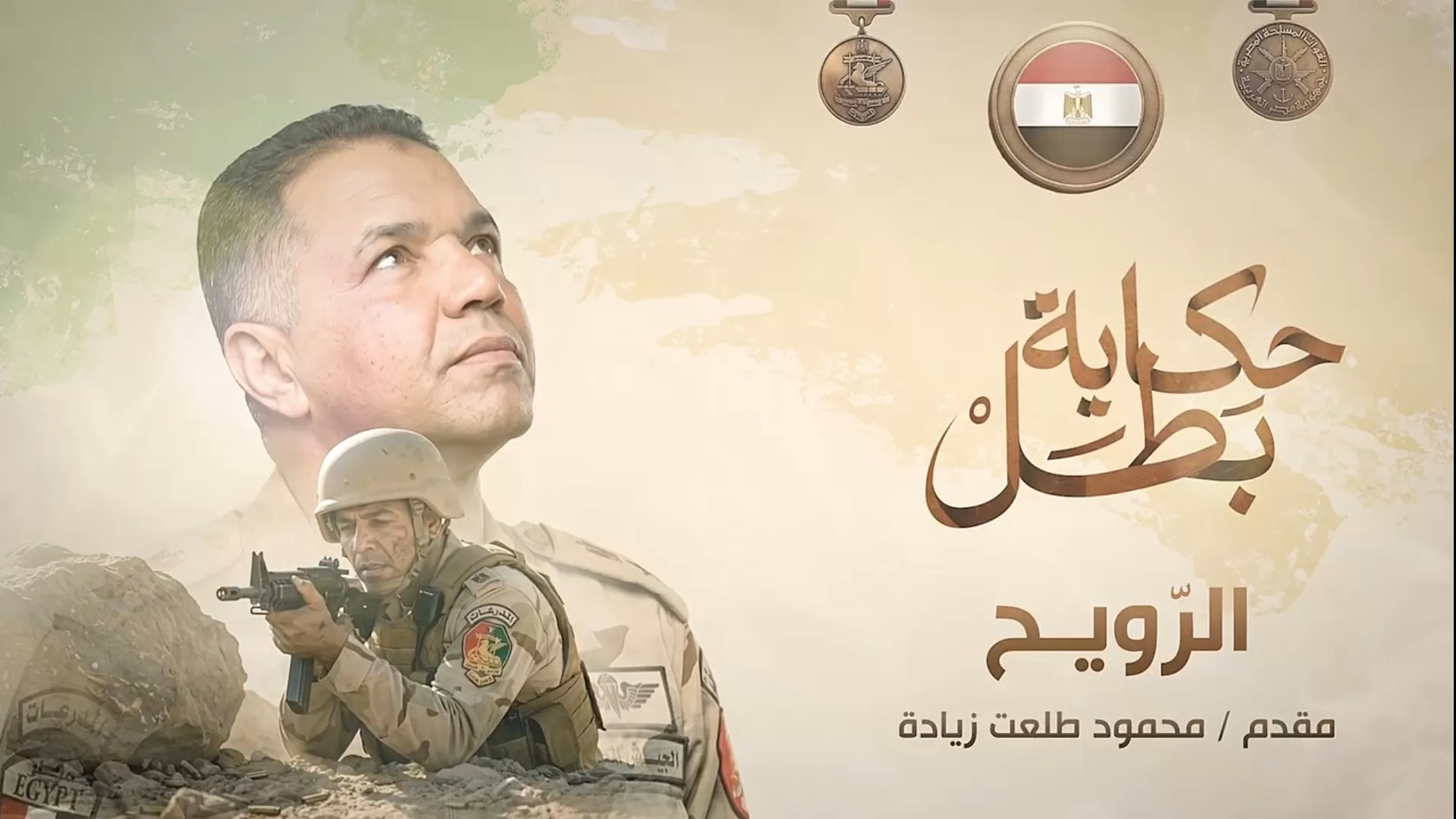
Egypt’s Armed Forces have released a new episode of the documentary series “Hekayat Batal” (A Hero’s Story), recounting the life and sacrifice of Lieutenant Colonel Mahmoud Talaat Ziada, an officer remembered by comrades for his humility, compassion and unwavering devotion to his men during Egypt’s counter-terrorism operations in North Sinai.
The episode, published on the official platforms of military spokesperson Brigadier General Staff Gharib Abdel Hafez, forms part of an ongoing effort to document the stories of servicemen who laid down their lives defending the country.
Through testimonies from fellow officers and soldiers, the documentary portrays Mahmoud Talaat as a respected commander whose kindness and cheerful spirit earned him the admiration and affection of everyone around him.
Friends who had known him since their days at the Military Academy described him as a loyal companion and dependable comrade, known for his calm personality and his trademark advice whenever pressure mounted.
“Take it easy,” he would often say. “Khaleek Rouwaih.”
Those who served alongside him recalled numerous acts of compassion. On one occasion, after learning that a soldier had given up his leave so that another serviceman could visit his sick father, Mahmoud arranged for the soldier to go home and personally took his place.
According to comrades, he spent the night on top of a tank with the soldiers instead of staying with the officers.
He also insisted on leading from the front.
“He always told soldiers to stay behind him,” one officer recalled. “He would say: ‘I’m worried about you. If anything happens to you, what will I tell your family? As for me, I am responsible for myself.’”
On 22 April 2018, Mahmoud Talaat led a mission in Wadi Al-Adid near Point 903 in the rugged terrain of Mount Halal.
After climbing to an altitude of more than 900 metres, he moved forward with a signalman to reconnoitre the area.
Terrorist lookouts spotted the movement and opened fire.
Despite being hit twice, Mahmoud signalled to the soldier accompanying him to retreat to safety and attempted to pull him back toward cover as the exchange of fire intensified.
When news of his death reached his comrades, one of the first questions asked over the radio was whether he had been struck from the front or from behind.
“To us, that makes all the difference,” one officer said. “It means he faced danger and never turned away from it.”
His fellow officers remembered him as a gentle man with a warrior’s spirit.
“He looked kind and cheerful,” one comrade said, “but he was a fighter of the highest calibre.”
His funeral procession became an extraordinary scene, with dozens of fellow officers and classmates accompanying him on his final journey.
“It did not feel like a funeral,” one of them recalled. “It felt like a wedding procession.”

