







Egypt’s Minister of Foreign Affairs, International Co-operation and Egyptian Expatriates, Badr Abdelatty, has declared that security and development are intrinsically linked, calling for a fundamental shift away from crisis management towards robust early-warning and rapid-response mechanisms to prevent regional conflicts before they erupt.
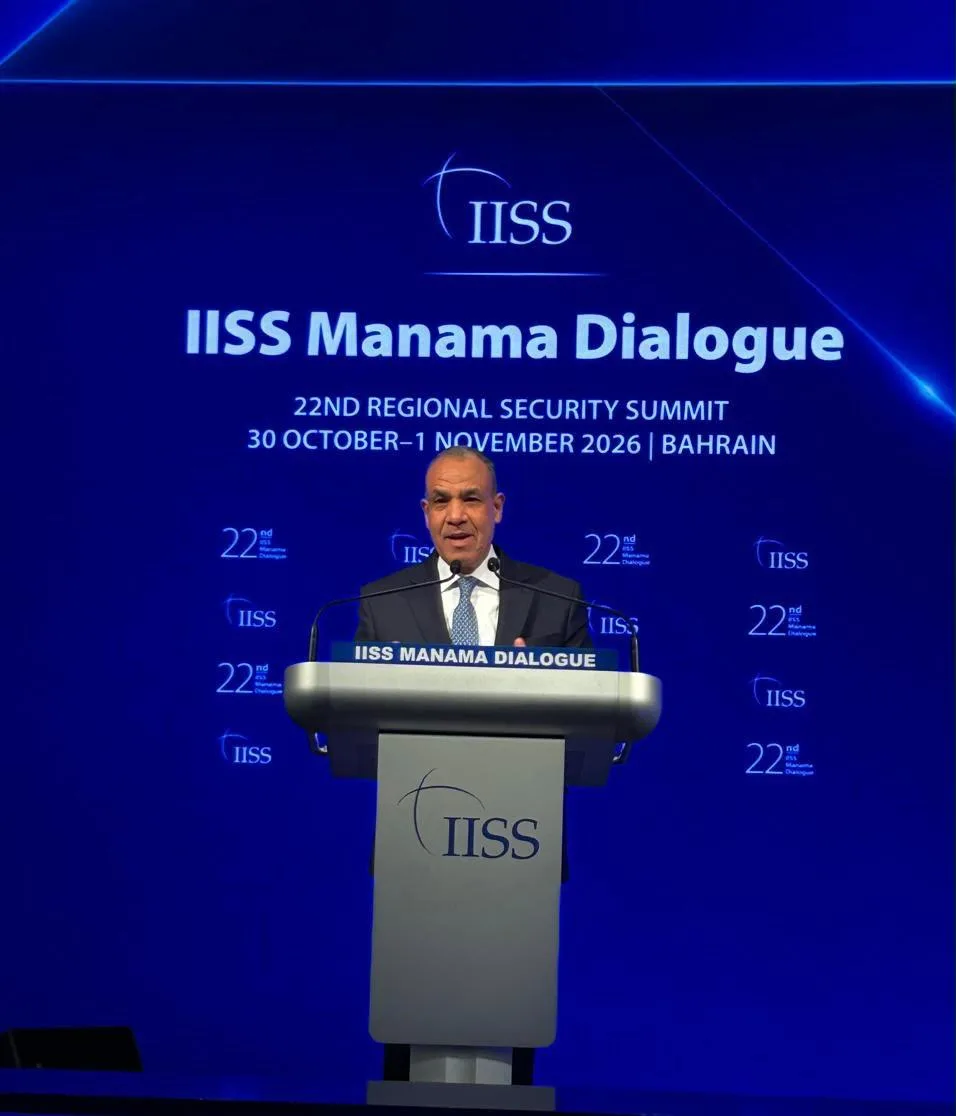
Speaking during a panel discussion titled “Pillars of Regional Security” at the 22nd edition of the Manama Dialogue in Bahrain on Saturday, Minister Abdelatty outlined Egypt’s vision for regional security while underscoring its unwavering commitment to its allies.
Minister Abdelatty further reaffirmed Cairo’s categorical rejection and condemnation of any aggression directed against Gulf states, declaring that the security of the Gulf forms an integral component of Egypt’s own security.
Addressing the broader implications of current military escalations and expanding regional confrontations, he cautioned that rising tensions pose severe threats to the global economy, directly compromising international supply chains as well as global energy and food markets.
Setting out Egypt’s comprehensive framework for future regional architecture, Minister Abdelatty emphasised that long-term stability must rest upon strict adherence to the rule of law, non-interference in the internal affairs of sovereign states, and the complete renunciation of the use of force.
He advocated regional ownership and collective responsibility for security, emphasising the need for strategic diplomatic wisdom backed by effective deterrence.
He also stressed the importance of safeguarding maritime security, energy supplies, and critical infrastructure from the effects of regional instability.
At the heart of this security framework, Minister Abdelatty reiterated the imperative of achieving a just and lasting resolution to the Palestinian issue.
He called for the establishment of an independent and sovereign Palestinian state along the 4 June 1967 borders, with East Jerusalem as its capital, while firmly rejecting forced displacement, annexation, and illegal settlement activity.
Minister Abdelatty concluded by emphasising that upholding and implementing these core principles would directly enhance security across the region, creating an environment conducive to sustainable development and prosperity.
He urged all states to work together to establish practical mechanisms for implementation that reflect the shared interests and aspirations of the region’s peoples.

