






A 100-basis-point hike steadies the currency’s nerves. However, the burden goes to the treasury, to firms that borrow, and to households with floating-rate debt.
It’s tight money again! Egypt’s central bank lifted its overnight deposit rate to 20 per cent on October 29, adding 100 basis points (one percentage point) after five straight holds, and a Finance Ministry official already puts the added annual interest bill near LE150 billion.
That is the going price of a pound that had slid past LE56 to the dollar, a record low. Currency stability has stopped being a by-product of monetary policy. It is now a budget line. Why hike, if the statement ignores the pound?
The Monetary Policy Committee (MPC) cites imported inflation, tighter global financial conditions and risk-off sentiment, along with monthly headline prices that rose 1.3 per cent in September after 0.1 per cent in August, even as the annual rate eased to 13.9 per cent.
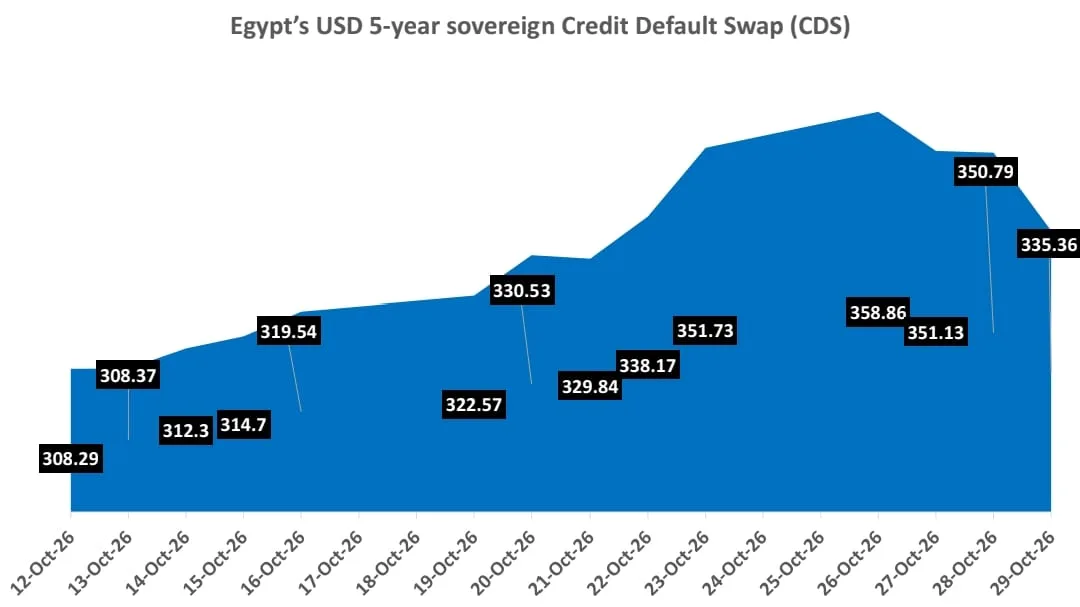
The currency goes unnamed, yet it is plainly the subject. The US dollar crossed 55 on October 22, and foreign investors net sold about LE115 billion (roughly $2 billion) of Treasury bills and bonds that week alone.
Many are carry traders: they park money in high-yielding pound paper and leave when currency risk outweighs the coupon. A higher rate widens the cushion. The deposit rate now sits 6.1 points above headline inflation, up from 5.1.
Türkiye, which cut to 36 per cent on October 22, offers a similar margin of roughly six points over expected year-end inflation, but it is easing while Cairo tightens.
Treasury’s arithmetic
Budget-sector domestic debt stood at LE13.68 trillion in March, and the ministry issues short paper: bills were 85 per cent of accepted issuance last quarter, and new instruments average about 1.1 years to maturity.
The state borrowed roughly LE4.3 trillion at home in four months, nearly all of it refinancing. Full repricing of the stock implies about LE137 billion. The 182- and 364-day bills cleared at 25.46 per cent and 26.08 per cent on October 29, already five to six points above the new deposit rate.
The primary surplus
The primary surplus (revenue minus spending before interest) is targeted at 5 per cent of GDP after 4.9 per cent last year. A hike cannot ease it directly, since interest sits below that line.
The damage lands in the overall deficit and in debt arithmetic: once borrowing costs outrun nominal growth, the surplus needed merely to hold the debt ratio steady rises.
Rollover yields of 25–26 per cent compare with an implicit average cost in the low-to-mid teens (about LE2.3 trillion of interest on roughly LE16–17 trillion of debt), so every refinancing drags the average up while the government aims to cut debt from 83.9 per cent of GDP in March to 78 per cent by June 2027.
Moody’s upgraded Egypt to ‘B3’ in October because interest burdens are falling from a high base, still about 59 per cent of revenue this year. A hike slows that descent.
Banks held about 32 per cent of assets in securities and bills in March, while private borrowers received 41.7 per cent of loans in June. When a bill pays 25–26 per cent with no underwriting risk, a factory loan must clear a high bar. Real growth of pound lending to the private sector had already slowed to 7.7 per cent in the first quarter from 11.8 per cent the quarter before, and the S&P Global PMI dropped to 47.2 in September from 49.6 as new orders slid.
Bulls vs. bears
The bull case rests on reserves of $57.35 billion at end-September, the Moody’s upgrade, and demand: the 364-day auction on hike day drew LE152.5 billion of bids for an LE80 billion offer, so price, not appetite, limited the state’s take. Deutsche Bank sees easing resuming in the first half of 2027.
Bears point to the Fed’s September hike to 3.75-4.00 per cent, with two dissenters in October wanting more. And the CBE has pushed its 7 per cent (plus or minus two points) inflation target out to the fourth quarter of 2027.
Egypt can probably hold the dollar near LE55-LE56. Whether it can do so cheaply is another matter, and the bill compounds in three places at once.
The IMF programme expires on December 15 with about $2.33 billion of final disbursement riding on the eighth review, and the MPC meets on December 17. The Fund wants tight money.