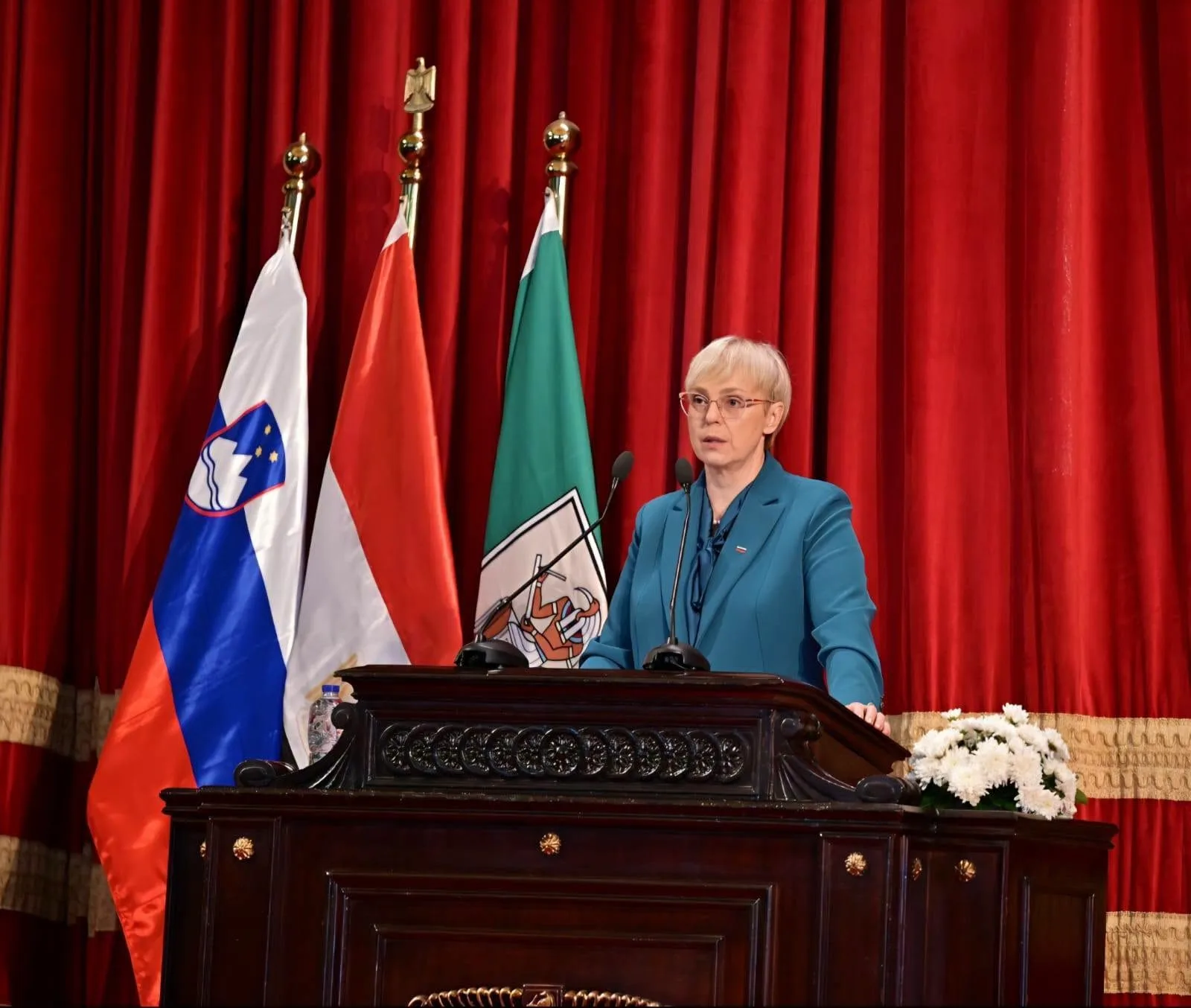


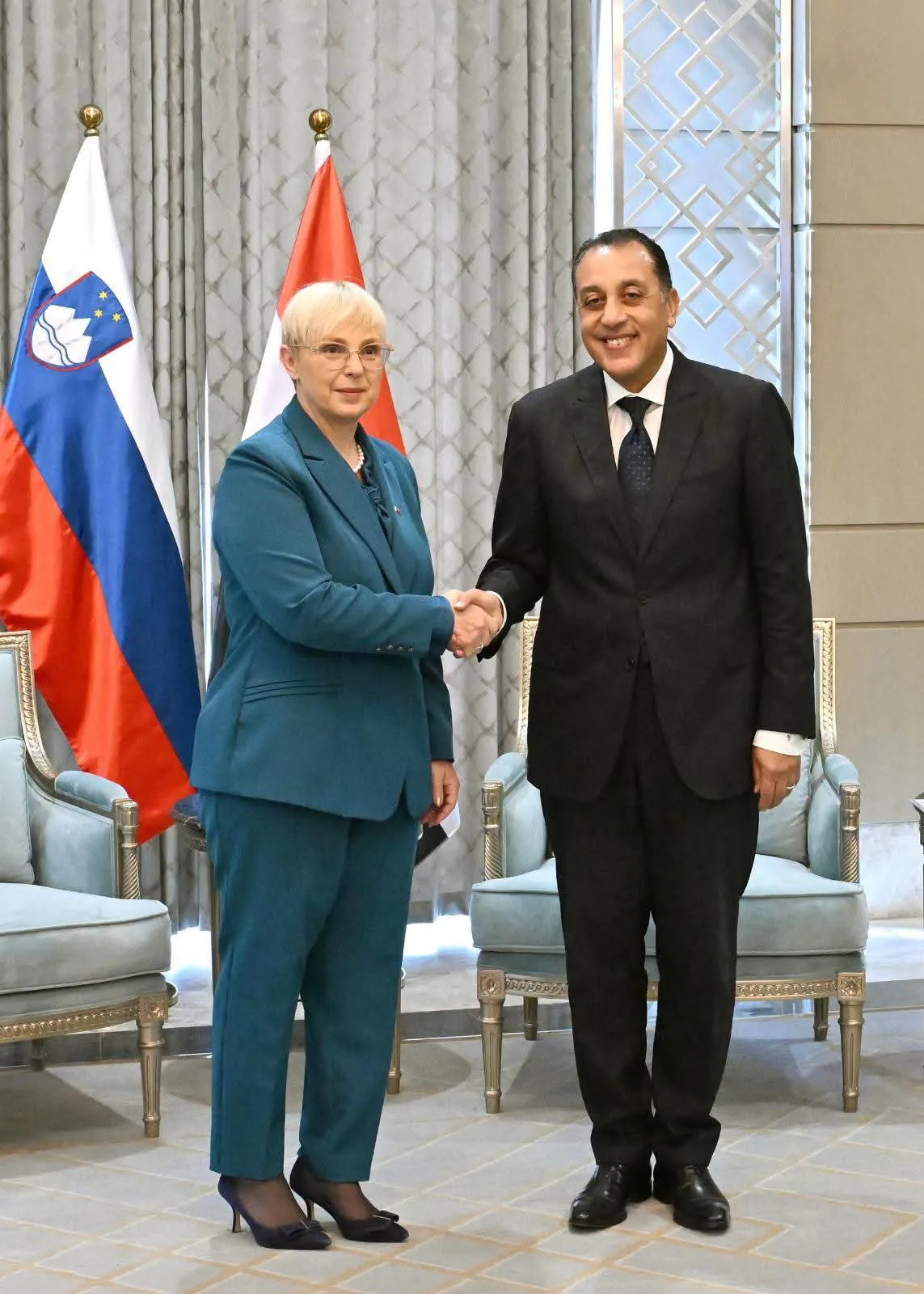







Visiting Slovenian President Natasa Pirc Musar called on the international community to act to stop massacres and humanitarian violations in conflict zones mainly in the Gaza Strip, saying the world must not remain silent in the face of civilian deaths, bloodshed and suffering.
Speaking during a lecture at Cairo University on Wednesday, the Slovenian president said the international community must address global crises with greater responsibility, pointing to the humanitarian tragedies, crimes and violations witnessed in Gaza, which she said were unacceptable to any human being.
Musar called for serious and coordinated international action to halt attacks and protect innocent civilians.
Some countries are turning a blind eye to events in Gaza, she said, stressing that nations must work together to stop the bloodshed and end the humanitarian suffering.
The Slovenian president further highlighted the importance of activating the tools available within the United Nations, including the veto, to take measures that could prevent further attacks.
Musar said her stance regarding the Palestinian issue stemmed from her humanitarian and legal responsibilities. She added that she had spoken out forcefully about developments in Palestine during meetings with European leaders, seeking to ensure that the crisis was not ignored.
The Palestinian issue has attracted widespread attention across Europe, she said, adding that developments in Gaza remain a prominent topic in European and international discussions.
Musar also drew attention to the severe humanitarian crisis in Sudan, stressing that the suffering of its people must not be overlooked and that addressing humanitarian emergencies is a shared international responsibility.
Turning to reform of the United Nations (UN) and the UN Security Council, the Slovenian president said the council’s decision-making mechanisms needed a genuine review, especially regarding the veto power held by its five permanent members.
The UN Security Council cannot pass substantive resolutions without taking into account stands of the five permanent members, she said, raising questions about the effectiveness of the current system and its ability to address international crises.
The veto was originally intended to help preserve peace and stability, she said, but its use could block necessary decisions and leave crises unresolved.
She called for institutional reform within the UN to strengthen its ability to protect civilians, address conflicts and prevent their escalation.
Musar said more effective mechanisms were needed to strike a balance between the powers of major states and the international community’s responsibility to maintain peace.
Cairo University, headed by Mohamed Sami Abdel Sadek, welcomed the Slovenian president to its campus, describing the visit as reflecting the institution’s distinguished academic and historical standing as one of the region’s oldest universities and a centre for knowledge, intellectual exchange and dialogue among cultures and peoples.

