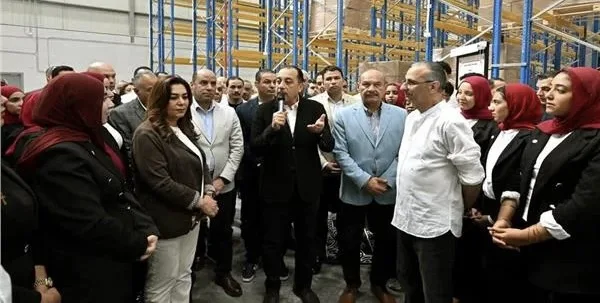









Prime Minister Mostafa Madbouly opened the Suez Strategic Food Commodities Warehouse in Ataka district on Thursday.
The project, developed for the Ministry of Supply and Internal Trade, was implemented by Samcrete Holding through its subsidiaries: Samcrete Engineers and Contractors and Suez Strategic Warehouses, which developed and manages the facility.
Madbouly said he was pleased to visit the strategic project, which supports Egypt’s efforts to strengthen food security, improve supply chains and modernise the infrastructure used to store, manage, regulate and distribute commodities efficiently.
During his visit to Suez Governorate, the prime minister welcomed a group of university students, saying the initiative aimed to give young people a closer look at the efforts being made across the country.
He said the government is keen to include university students in future field visits so they could see these efforts firsthand and share their experiences with their families.
Madbouly also stressed the importance of engaging young people and helping them understand the challenges facing Egypt and the surrounding region, adding that national development and progress are a shared goal.
Head of the Internal Trade Development Authority, Hossam El-Garhy, said the project reflects co-operation between the government and the private sector to improve the management of strategic food reserves, preserve commodity quality and strengthen supply chains’ ability to respond to changing needs.
He noted that food security depends not only on the availability of commodities but also on a modern infrastructure capable of storing, managing and distributing them efficiently.
During a tour of the facility, Samcrete’s head of investment, Hisham Belbaa, described the warehouse as part of a broader national system to strengthen food security and develop supply chains.
The warehouse covers approximately 13 feddans, or 56,000 square metres, and has a total capacity of around 75,000 storage pallet positions. About 95 per cent of its capacity is allocated to dry storage. The facility also includes insulated dry storage, storage for oils, and refrigerated and frozen areas to accommodate various food commodities and preserve their quality.

