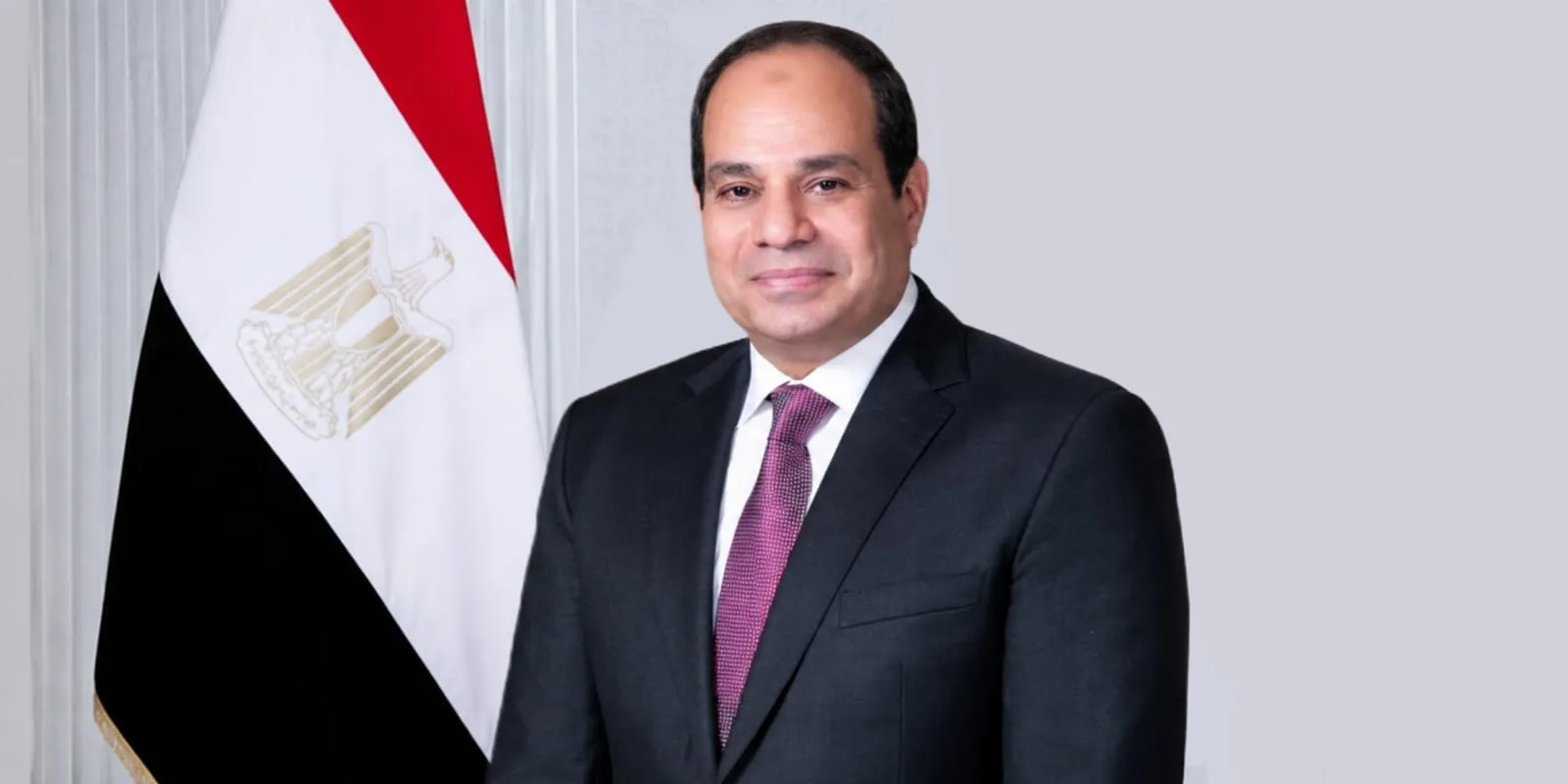







President Abdel Fattah El-Sisi said that sustainable development cannot be achieved on a broader scale without a more equitable and representative international system; a system that ensures that international institutions truly reflect multilateralism within the international system.
He stressed that Africa must have an active and influential voice in the formulation of major international decisions, particularly within international institutions and the UN Security Council.
He called for reforming the council in line with the Ezulwini Consensus and the Sirte Declaration.
President Sisi made these remarks during the third Russia-Africa Summit, held in Moscow on Thursday.
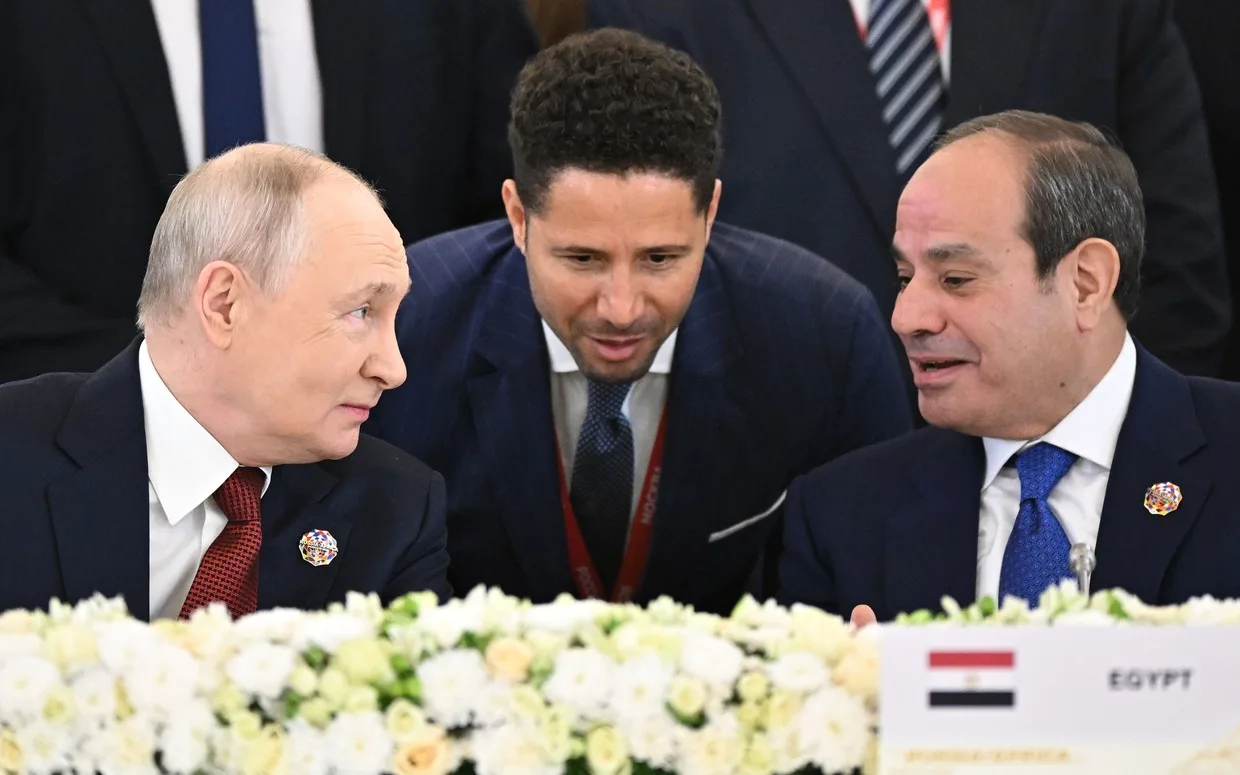
Russian President Vladimir Putin received President Sisi at the Kremlin upon his arrival. The leaders of the participating delegations then posed for a group photo.
Presidency Spokesman Mohamed El-Shennawy said the summit’s plenary session adopted several documents setting the framework for Russian-African co-operation in the coming period. These included the final declaration, a declaration on co-operation in the civilian use of artificial intelligence technologies, and the action plan for the Russia-Africa Partnership Forum for 2027-2029.
In his speech, President Sisi thanked Putin, the Russian government and people for hosting the summit. He also praised the leadership of Evariste Ndayishimiye, president of the African Union.
“Our summit today builds upon the momentum generated by the first Russia-Africa summit held in Sochi in 2019, co-chaired by Egypt and Russia, and the subsequent second ministerial meeting held in Cairo in December 2025,” Sisi said.
He added the current summit offers an opportunity to move from reviewing past achievements to developing a more ambitious and practical vision for the partnership.
This vision, the President noted, should respect African priorities, serve mutual interests and turn political understanding into concrete projects.
Egypt views the Russia-Africa partnership as a way to expand international co-operation and help African economies move beyond exporting raw materials towards building diverse production bases, he said.
He cited the comprehensive strategic partnership between Egypt and Russia, including El Dabaa Nuclear Power Plant and the Russian Industrial Zone in the Suez Canal Economic Zone (SCZone), as a model for wider co-operation in energy, industry and investment across Africa.
Sisi outlined five priorities for African development: developing strategic corridors and logistics zones; increasing intra-African trade; expanding energy cooperation and electricity interconnection; strengthening water and food security and agricultural development; and promoting co-operation in communications, information technology and artificial intelligence.
He stressed that Egypt’s future is closely linked to Africa’s and that sustainable development required coordinated African efforts and African ownership of development priorities.
Sisi also warned of rising tensions in the Horn of Africa, rejecting threats to the sovereignty of regional states, interference in their internal affairs, and moves to militarise the Red Sea or establish military bases along its shores by countries that do not border it.
He reaffirmed Egypt’s rejection of any attempt to undermine Sudan’s unity, sovereignty, territorial integrity or national institutions.
He called for joint efforts to end the war and support a political process leading to an exclusively Sudanese-led dialogue.
Addressing water security, President Sisi said Egypt, which faces severe water scarcity and depends mainly on the Nile, attaches great importance to co-operation on transboundary rivers in accordance with international law. This includes the principles of no harm, prior notification, consultation and consensus.
He said shared waters should serve as a bridge for co-operation and understanding rather than a source of tension or conflict, in line with Egypt’s established policy towards Nile Basin countries and the African Water Vision 2063.
President Sisi concluded that the success of the Russia-Africa partnership would depend on turning political and economic agreements into practical results and sustainable projects.
He welcomed the 2027-2029 action plan as a framework for strengthening the strategic partnership and expanding co-operation.

