







Investors are bidding for exploration blocks and the World Bank is offering early money. The harder test is whether Egypt can build a pipeline of bankable projects rather than just attract interest.
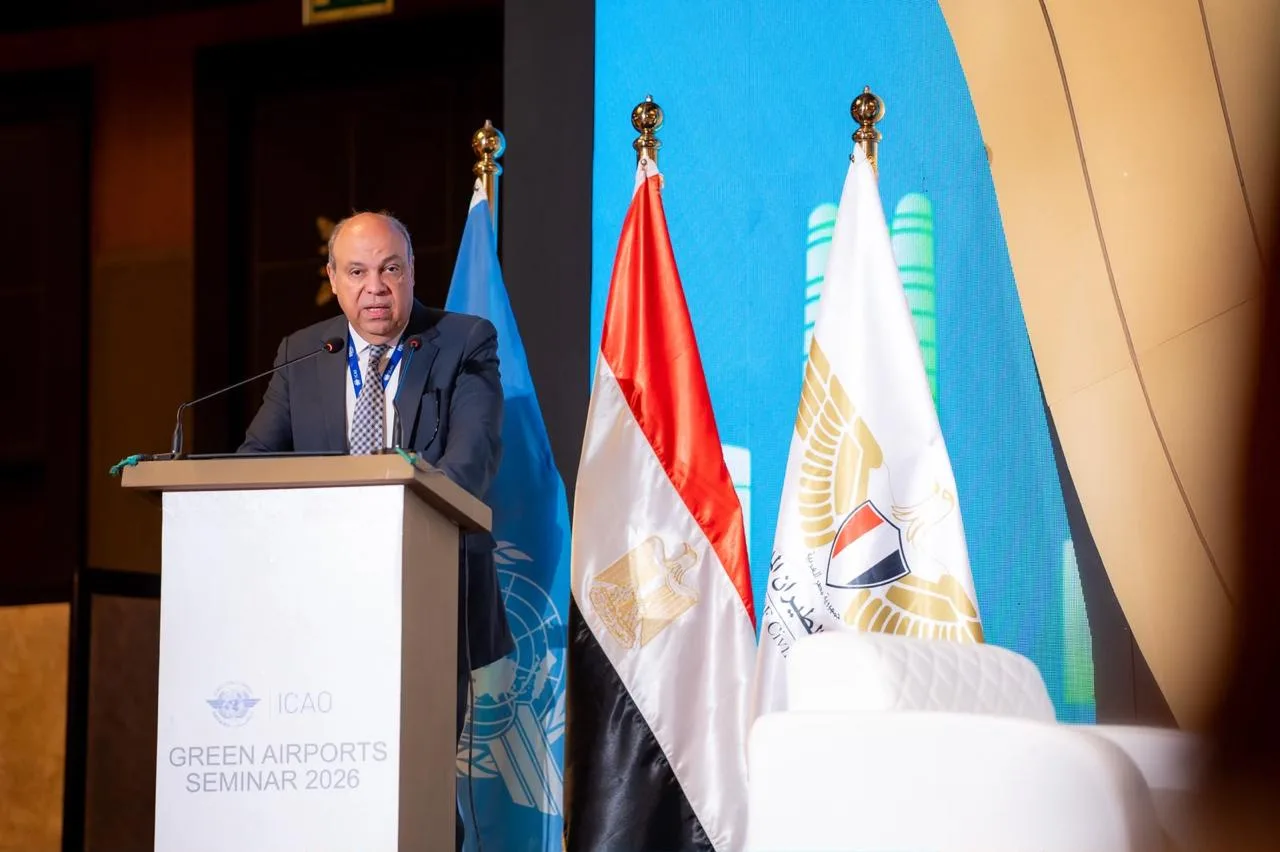
Egypt wants mining to account for roughly six per cent of GDP, up from about one per cent today, a target Minister of Petroleum and Mineral Resources Karim Badawi announced at last week’s Egypt Mining Forum.
Closing a five-point gap is not a branding exercise. On any plausible estimate of the economy’s size, it implies more than $15 billion in additional annual value added, multiple times what the country’s best-known mine produces today.
The early signals are encouraging. According to Petroleum Ministry data, 119 companies, 14 of them foreign, submitted 403 bids for 118 blocks under the open-blocks system, targeting gold, phosphate, talc and kaolin.
Because the system lets companies apply year-round rather than wait for bidding rounds, it lowers friction for exactly the mid-tier explorers Egypt needs.
But a bid is not a drill hole. As one early assessment put it, the indicators that matter are blocks actually awarded, the work commitments attached, permitting speed, exploration capital deployed and, eventually, drilling results.
AngloGold Ashanti is the strongest vote of confidence so far. Sukari produced 232,000 ounces in the first half of 2026 against a full-year target of 500,000, and the company sees scope for more world-class finds in the Eastern Desert. The company already holds two exploration licences covering more than 2,200 square kilometres awarded in April 2025.
Sukari is both proof of concept and a warning about timelines. It has yielded about 6.8 million ounces since production began in June 2009, and it took the better part of two decades to become a sub-1-per-cent-of-GDP sector’s centrepiece.
Most exploration prospects never become mines, and the ones that do take years to reach cash flow. That is the financing problem in miniature.
World Bank’s interest
Namrata Thapar, the Bank Group’s global director for metals and minerals, said it plans initial financing to encourage private-sector projects, particularly in phosphate and related industries. The talks also covered capacity building and a minerals roadmap. I could not find a reported amount, instrument or timeline, so what follows is analysis, not an announcement.
Multilateral finance is best at what markets underprovide. That means pre-investment public goods: geological data (for instance, Egypt’s aerial mineral surveys), feasibility and environmental studies, project preparation and training.
Two points deserve more attention. Financing for junior explorers is the most acute gap, because they carry the geological risk and have no revenue; a dedicated co-investment or guarantee facility would change behaviour more than another study. Infrastructure is the second.
Sukari sits about 700km from Cairo and 25km from the Red Sea, and remote sites need power, water and roads before any ounce moves. Public infrastructure that serves several licences at once is the sort of spending that makes marginal projects bankable. So the diagnosis matters.
Egypt’s constraint looks less like a shortage of capital than a shortage of projects mature enough to absorb it. Capital arrives when resources are defined, permits are secure, power is contracted and offtake is clear.
The World Bank’s most valuable contribution is shortening the distance between a licence and a financing decision, which is consistent with its stated minerals emphasis on infrastructure, skills and local value addition rather than extraction alone.
Phosphate: the value-added test
If gold is the exploration story, phosphate is the industrial one, and the gap is instructive. Egypt ranks third globally in phosphate rock reserves but only seventh in production, and eight new industrial projects are planned, with output starting in 2028.
Among them is a roughly $650 million phosphoric acid project on the Abu Tartour Plateau, and Genesis Mining’s plan to invest up to $930 million in New Valley mining and beneficiation, so far at the memorandum-of-understanding stage.
Processing is where the growth case is strongest: it makes fertiliser rather than rock, which means more manufacturing, more supply-chain jobs and higher export value per tonne.
Words vs. deeds
The six per cent target is best read as a decade-long ambition, not a near-term forecast. Gold will supply the headlines and the foreign-investment signalling, but mines employ relatively few people and deliver fiscal returns that depend on terms still being refined. Phosphate offers the broader industrial payoff, but not before 2028.
Four things will show whether the bet is working: how many bids convert into awarded blocks with binding work commitments; whether a phosphate project reaches financial close with secured gas and power; what form the World Bank’s support takes and whether it reaches juniors and infrastructure; and whether drilling results justify the enthusiasm.
Egypt has solved the first-order problem of getting investors to look.
Turning that attention into projects that produce is the second-order problem, and it is a project-development challenge more than a financing one.

