




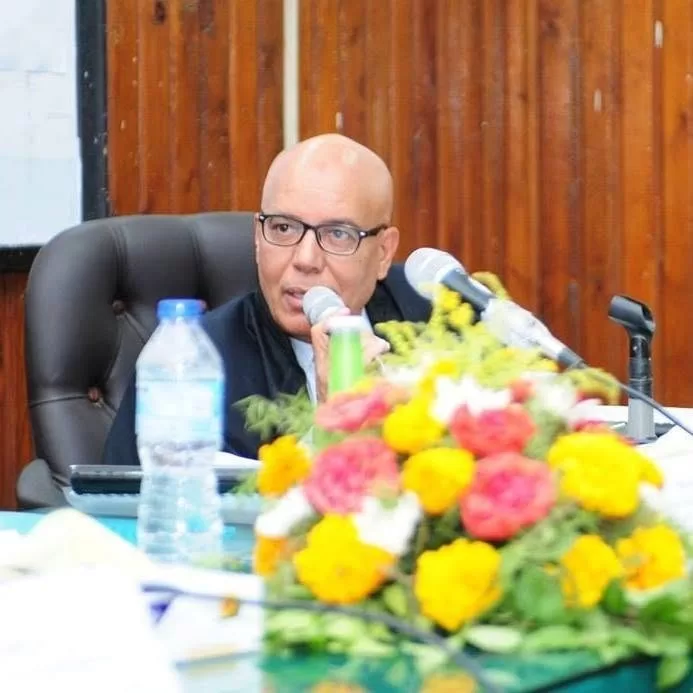
Professor Mahmoud Kamel
Artificial intelligence is usually discussed in relation to translators and their work. We often hear about machine translation, ChatGPT, post-editing and the future of the translation profession. However, there is another important area where AI is making a strong impact. It is changing the way translation and interpreting are studied and researched.
This is the subject of chapter four in Translation Studies in the Age of Artificial Intelligence. The chapter, written by Han Xu and Yujie Huang, is entitled Corpus-based Translation and Interpreting Studies in the Age of AI: Innovations and Challenges. It discusses how artificial intelligence, machine learning and generative AI can help researchers study large collections of translated and interpreted texts.
Corpus-based research is based on the study of large amounts of real language. Instead of analysing only a few texts, researchers collect many texts and examine them to discover common patterns and features. Such research can help us understand how translators use language, how translation differs from original writing, and how interpreters deal with the difficulties of speaking and translating at the same time.
But corpus research is not an easy task.
Before researchers can analyse a corpus, they have to collect the material, organise it, clean it, add information to it and prepare it for analysis. In interpreting studies, there is another major problem. Spoken interpretation often has to be transcribed into written form before researchers can study it.
All these stages can take a great deal of time and effort.
This is where artificial intelligence can make a difference.
Collecting more data
One important advantage of AI is its ability to help researchers collect large amounts of linguistic data. AI tools can search for translated texts, parallel texts and interpreting materials that may be useful for a particular research project.
They can also help researchers find specialised terminology and collect language material from the internet.
Social media, for example, has become an important source of multilingual communication. Every day, millions of people write posts, comments and messages in different languages. Some of this material includes translations produced by ordinary users rather than professional translators.
AI can help researchers collect and process this large amount of information. This may allow them to study how translation is used in online communication and how language changes in different digital communities.
For interpreting researchers, AI can also be useful in another area: transcription.
Traditionally, turning recorded speech into written text has been a slow and difficult process. A researcher may spend many hours listening to a recording and writing down every word. AI-based speech recognition can make this work much easier and faster.
It can also help identify features of spoken language such as pauses, repetitions, false starts and self-corrections. These features can tell researchers a great deal about the interpreter’s performance and the difficulties of the interpreting process.
Building a better corpus
Collecting texts is only the first step. The material must then be organised and prepared.
A large collection of texts may contain repeated material, spelling mistakes and irrelevant information. Different texts may also have different formats. Before researchers can use the data, these problems have to be dealt with.
AI can help in cleaning and organising the corpus. It can remove duplicate texts, identify mistakes and separate useful material from irrelevant information. It can also organise texts according to language, genre, subject, date or other criteria.
Researchers can also add information about the texts, such as the name of the author, the date of publication and the type of text.
Another important process is annotation. This means adding linguistic information to the texts. AI tools can identify parts of speech, analyse sentence structures, recognise names and other important linguistic features.
Once the texts are properly organised and annotated, researchers can search them more easily. They can produce word lists, study frequent expressions and compare different types of language.
AI can also help align original texts with their translations. This is especially important in translation studies because researchers often need to compare the source text with the translated text.
What makes translated language different?
One of the most interesting questions in corpus-based translation studies is whether translated language has certain special characteristics.
Researchers have studied a number of possible features. One of them is simplification. Translators may sometimes use simpler language than that found in original texts. Another is explicitation, where translators make certain relationships clearer for the reader. Researchers have also studied the influence of the source language on the translated text.
To study these questions, researchers have to examine many linguistic features. Some of these can be calculated with traditional corpus tools. Others require more complicated procedures and sometimes a great deal of manual work.
Artificial intelligence can help researchers perform these tasks more quickly. It can identify and extract linguistic features from large amounts of data. Machine-learning methods can also help find patterns that may not be easy for researchers to notice.
However, finding a pattern is not the same as explaining it.
A computer may show that a certain word or structure appears frequently in translated texts. But the researcher still has to explain why this happens and what the result means.
This is an important point. AI can process a huge amount of information, but research still needs human thinking and interpretation.
AI is not always right
The chapter does not present artificial intelligence as a perfect solution.
AI tools can make mistakes. Automatic annotation may not always be accurate. AI-generated computer code may also contain errors. Machine-learning systems may produce unreliable results if the data used to train them are limited or biased.
The problem becomes more serious when researchers deal with meaning and context.
Language is not simply a group of words and grammatical rules. The meaning of a sentence can depend on the situation, the culture, the speaker and the relationship between the speaker and the audience.
AI can be useful in identifying linguistic patterns, but it may still face difficulties when dealing with metaphor, irony, intention and other aspects that depend heavily on context.
For this reason, the authors stress the importance of checking AI-generated results. Researchers should not simply accept what the machine produces. They need to examine the results, test their accuracy and make changes when necessary.
Human knowledge and experience are still very important in this process.
A tool, not a replacement
The main message of the chapter is clear. Artificial intelligence can offer important help to researchers in translation and interpreting studies.
It can collect data, transcribe speech, clean and organise texts, add linguistic information and identify important patterns. These tools can save researchers a great deal of time and allow them to work with much larger collections of language.
But AI should be seen as a tool rather than a replacement for the researcher.
A machine can process information quickly, but it does not replace human judgement. It may identify a pattern without understanding its cultural or social importance. It may produce an answer, but the answer still has to be checked.
The future of corpus-based translation and interpreting studies, therefore, may depend on cooperation between humans and machines.
AI can provide speed and computational power. The researcher can provide knowledge, experience and critical judgement.
The fourth chapter of Translation Studies in the Age of Artificial Intelligence shows that AI is already changing the way researchers study translation and interpreting. It is making some difficult and time-consuming tasks easier and opening the door to new types of research.
At the same time, it reminds us that new technology should be used carefully.
The important question is not whether artificial intelligence will become part of translation and interpreting research.
The real question is how researchers can use this new technology in a responsible and effective way.
The answer seems to lie in a balanced relationship between artificial intelligence and human expertise. AI can help researchers find patterns in large amounts of language. But understanding these patterns, explaining them and deciding what they really mean will continue to depend on the human researcher.
By Dr Mahmoud Kamel
Professor at the Academy of Arts

