



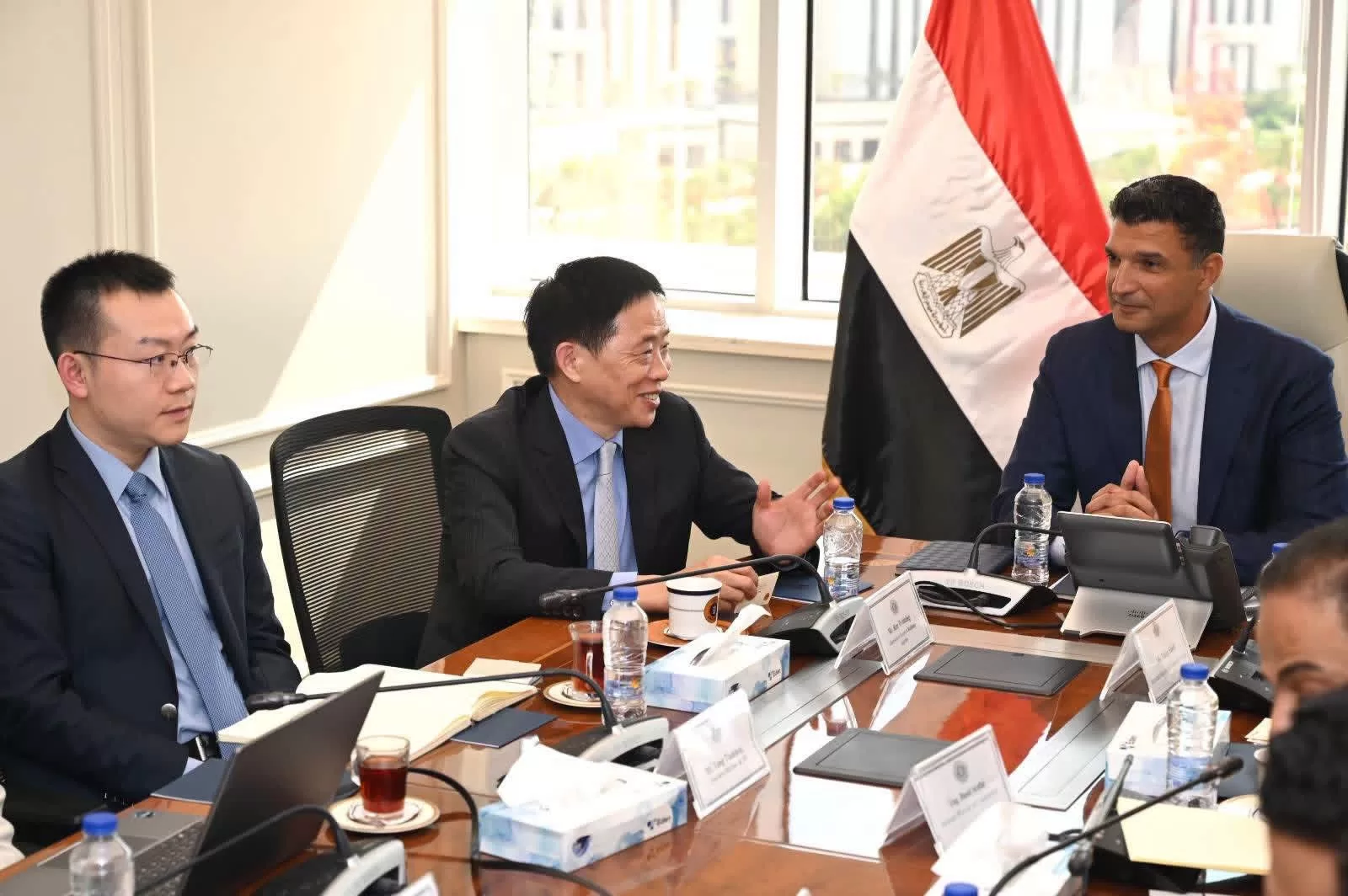
Egypt’s Minister of Industry Khaled Hashem and Ren Weiming, chairman of China’s Kingdom Group, reviewed on Thursday progress on the company’s new flax yarn factory in Egypt and discussed co-operation to strengthen local flax suppliers.
The meeting was attended by Deputy Minister Maha Saleh.
The talks highlighted Kingdom Group’s history since its establishment in 1979, its position as China’s largest exporter of pure flax yarn for 15 consecutive years, and its 52 per cent share of China’s flax yarn exports to more than 20 countries, including major European and Asian markets.
The company is building a flax yarn plant in the Sadat City Industrial Zone on a 50,000-square-metre site, with operations scheduled to begin in the first quarter of 2027. Discussions also covered proposals to develop Egypt’s flax industry across the entire value chain, from seeds to exports.
Hashem stressed that flax is central to the ministry’s strategy to deepen local manufacturing across the value chain, boost exports and integrate Egyptian flax into global supply networks.
He said Egypt has a strong industrial base in flax, offering opportunities to transform raw materials into high-value products.
The ministry aims to build on Kingdom’s investment to attract related industries across the value chain, from fibre preparation and spinning to weaving, dyeing, finishing and the production of textiles and furnishings, he added.
Hashem also stressed the importance of co-operation with Kingdom to improve the quality and competitiveness of Egyptian flax, train local suppliers to meet international standards and gradually increase the use of Egyptian fibres in production.
Ren Weiming, for his part, confirmed the group’s interest in working with Egyptian producers to restore flax to a prominent position in global markets, attract new investment in pre- and post-spinning stages, transfer technology, create specialised jobs and boost exports of high-value flax products.
He expressed the group’s readiness to help develop and upgrade local suppliers so they can provide fibres that meet the technical specifications required for manufacturing.

