







Egypt’s Minister of Electricity and Renewable Energy Mahmoud Esmat affirmed that President Abdel Fattah El Sisi is deeply interested in accomplishing the Egyptian-Saudi electrical interconnection project due to the project’s crucial role in enhancing the effectiveness of the unified electrical grid, supporting its stability, and making use of the available generation capacities in both countries during peak electricity demand periods.
He highlighted the importance of this project, which links the two largest electrical networks in the region and serves as the foundation for a comprehensive Arab electrical interconnection.
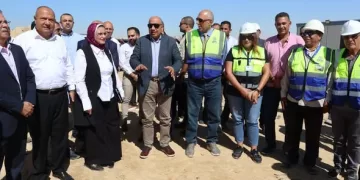
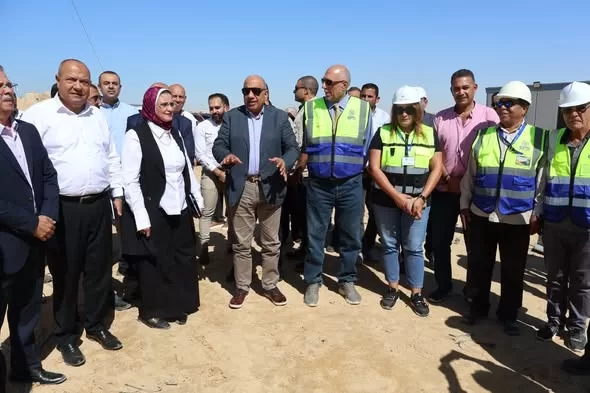
The minister’s statements came during a visit Saturday to inspect the work sites for the construction of the power transmission towers on the Suez Canal as part of the Egyptian-Saudi interconnection line.
He confirmed that the testing phase for the western tower had been completed, and the final phase for the installation of the eastern tower had also started in preparation for the start of operations and the connection of the two countries’ networks by the end of this year.
This project is part of the Ministry of Electricity and Renewable Energy’s plan to establish electrical interconnections with neighboring countries, transforming Egypt into a strategic center for energy transmission and exchange between Asia, Africa, and Europe.
It also aims to improve operational quality and elevate performance rates, continuing to support, develop, and modernize the national electricity grid, increase its capacity, and ensure the stability and quality of electricity supply.
He was briefed by the site manager on the adherence to the timeline for the actual operation of the line before the end of the year.
Esmat reviewed the current status of the project, the execution rates of the final stages of testing and pilot operation, and the planned schedule for the completion of the Badr Transformer Station, the Taba 2 Station, and the 500 kV overhead line (Badr / Taba 2) with a length of approximately 32 km.
Additionally, the completion of the marine and underground cable works was finalized alongside the installation of equipment, the laying of medium and low-voltage cables, and the electricity supply works (AC-DC) were confirmed.
Tests were also conducted on the control panels, cable terminations, and the sewage and water networks, along with optical fiber (OPGW) installations.
He added that the project is part of the effort to establish an integrated electrical grid linking the two countries, leading to the exchange of electrical energy with efficiency and flexibility, paving the way for the creation of a shared Arab electricity market.
He explained that the electricity sector is working within a clear vision and a comprehensive plan to improve the efficiency of the energy system, find urgent and sustainable solutions for the stability of the unified grid, and enhance the quality of service provided.
He also mentioned the electrical interconnection projects with Europe via the electrical grids in Greece and Italy, along with the expansion of renewable energy reliance and the reduction of fossil fuel use.

