





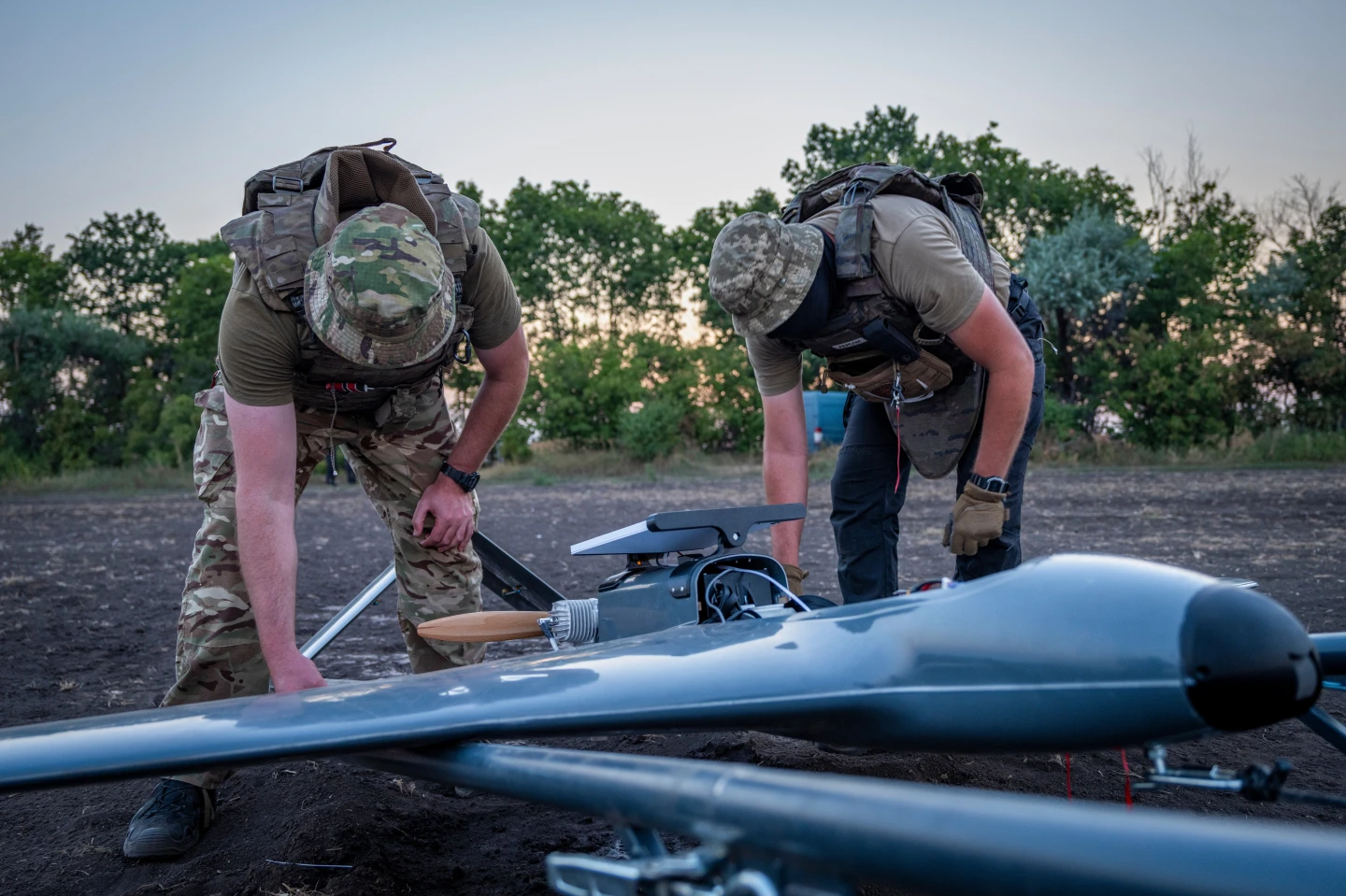
The commander leading Ukraine’s drone war says his country’s recent strikes in Crimea are the first phase of a campaign aimed at rendering the peninsula — illegally annexed by Russia in 2014 — unusable as a staging ground for Russian forces.
Maj. Robert “Magyar” Brovdi, one of Ukraine’s most prominent commanders among a new generation of soldiers, said his forces could strike seven times more military targets in Crimea if the money pledged by Western allies came faster.
“Crimea falls within the key conceptual pillars on the path to ending the war,” Brovdi told The Associated Press in an interview.
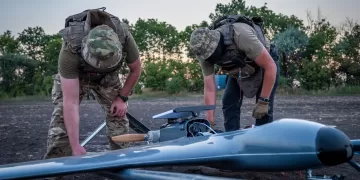
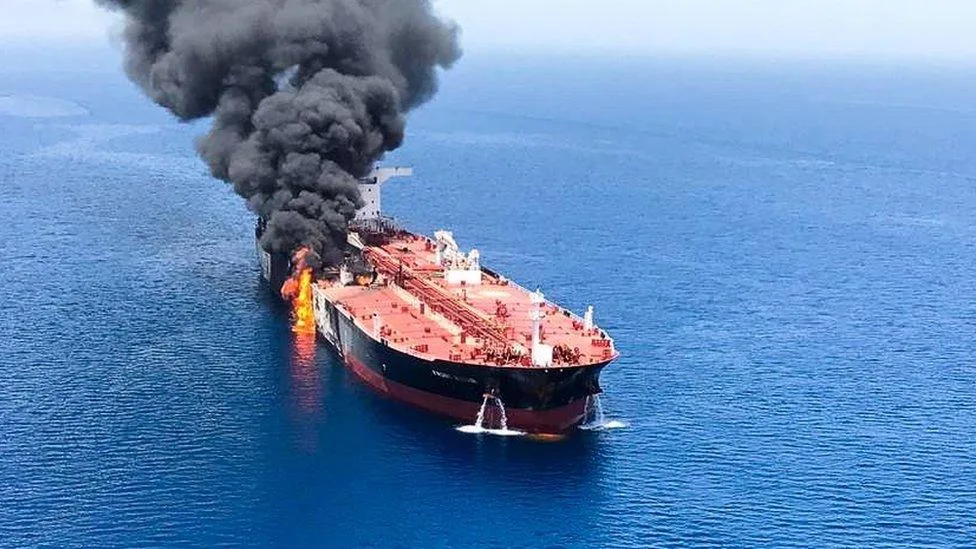
Despite that shortfall, Ukraine’s summer campaign in Crimea has already inflicted significant damage: striking rail bridges, oil depots and power infrastructure to disrupt supply lines and blind Russian air defenses as drones fly in.
Brovdi said his forces are equipped at just 14% of what they would need to carry out the Crimea campaign at full capacity.
A firm believer in numbers since his past life running an international grain trading business, Brovdi joined Ukraine’s territorial defense as a volunteer in the war’s opening days. He rose quickly, commanding one of the country’s most effective drone brigades before being tapped to lead a force with no precedent before this war — Ukraine’s Unmanned Systems Forces.
“It’s not that the production capacity of Ukrainian manufacturers doesn’t allow us to make the necessary quantities” of drones, Brovdi said. “It’s the banal problem of untimely financing, which our partners do allocate, but which moves significantly slower than our plans.”
A devoted patron of the arts, Brovdi’s underground command post resembles a museum, with pieces of Ukrainian art on display, including by renowned painter Maria Prymachenko — each with small placards noting their titles and a QR code linking to more information. “Please don’t touch the sculpture,” reads a sign beneath one piece.
The artwork sits against a backdrop of dozens of screens streaming live footage from the front, along with real-time data that drives decisions on the battlefield. Soldiers can grab good coffee, pick a book, work out or rest in sleeping pods — a culture that feels closer to a Silicon Valley office than a war room.
They work around the clock to try to prevent Crimea from functioning as a staging ground for the Russian military, said Brovdi, whose call sign, Magyar, nods to his ethnic Hungarian roots in Zakarpattia, the western Ukrainian region bordering Hungary.

