




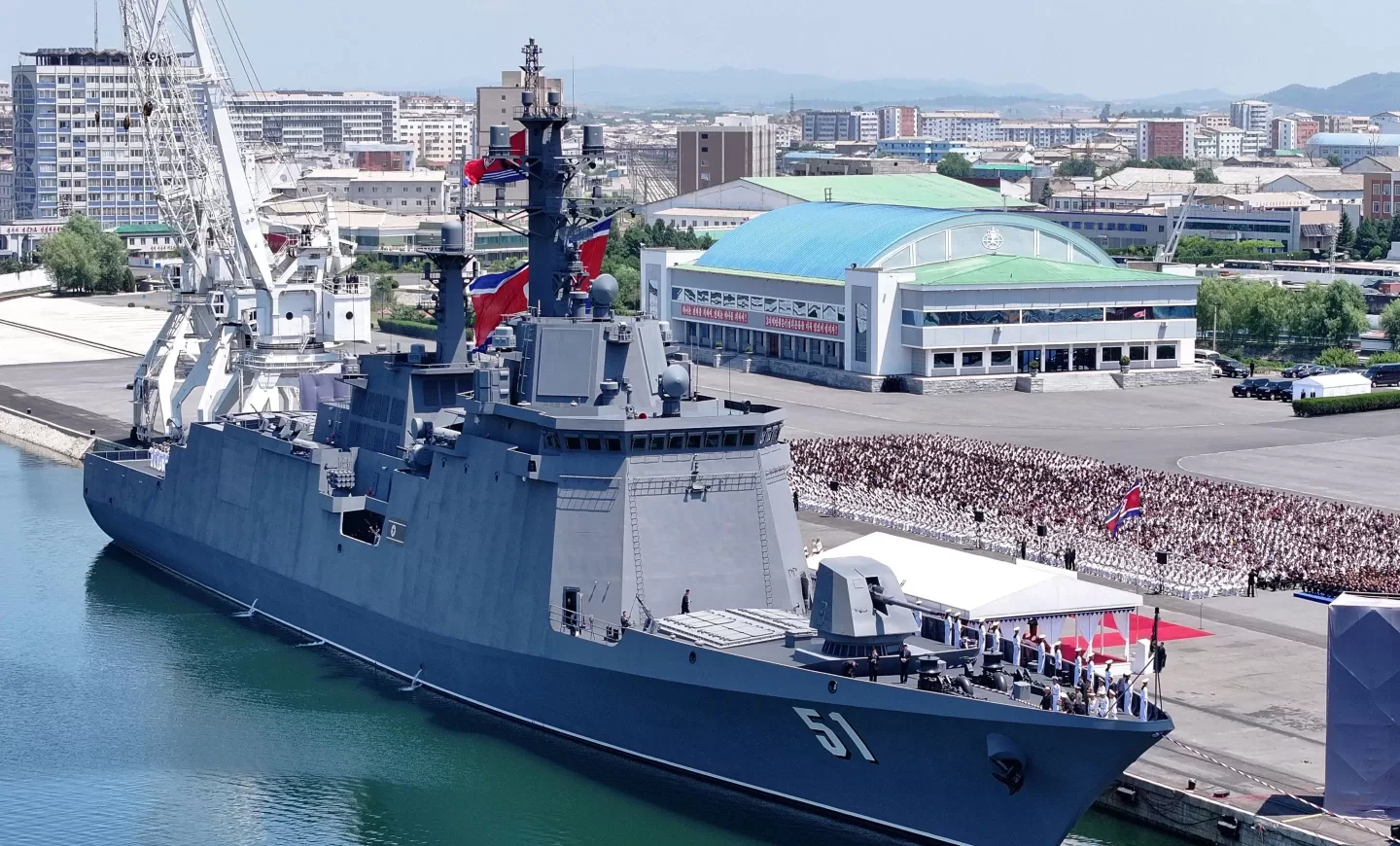
North Korea has commissioned a 5,000-ton destroyer that leader Kim Jong Un touts as a symbol of the country’s growing naval and nuclear capabilities, state media reported Wednesday, as Pyongyang seeks to expand its ability to project military power at sea.
North Korea’s official Korean Central News Agency said Kim told a commissioning ceremony Tuesday at the western port of Nampo that warships such as the Choe Hyon show that the nuclear armament of his navy is progressing as planned.
KCNA said the Choe Hyon was formally placed into service with North Korea’s navy after the ceremony and will be tasked with defending the country’s western coast.
Since unveiling the ship in April 2025, Kim has portrayed the Choe Hyon as a major step toward expanding his military’s operational reach and preemptive strike capabilities. KCNA has said the warship is equipped with a range of systems, including anti-aircraft and anti-ship weapons as well as nuclear-capable ballistic and cruise missiles.
South Korean officials and experts say the vessel was likely built with Russian assistance amid deepening military ties between the countries, but some analysts have questioned whether it’s ready for active service.
North Korea has put the Choe Hyon through a series of tests in recent months ahead of its deployment, including launches of what it described as nuclear-capable cruise missiles from the vessel.
“It has clearly become a thing of the past when our navy existed as a force for defending the sea off our land,” Kim said in a speech at Tuesday’s ceremony. “It is rising into a full-fledged service equipped with strategic means as the program of equipping the Navy with nuclear weapons is following its planned course unerringly.”
After years of spurring ballistic missile development, Kim has shifted his focus more toward naval capabilities, including the ongoing construction of a nuclear-powered submarine. Naval capabilities were also a key focus when Kim outlined his five-year military goals at February’s Workers’ Party congress, which included calls for intercontinental ballistic missiles capable of underwater launches.

