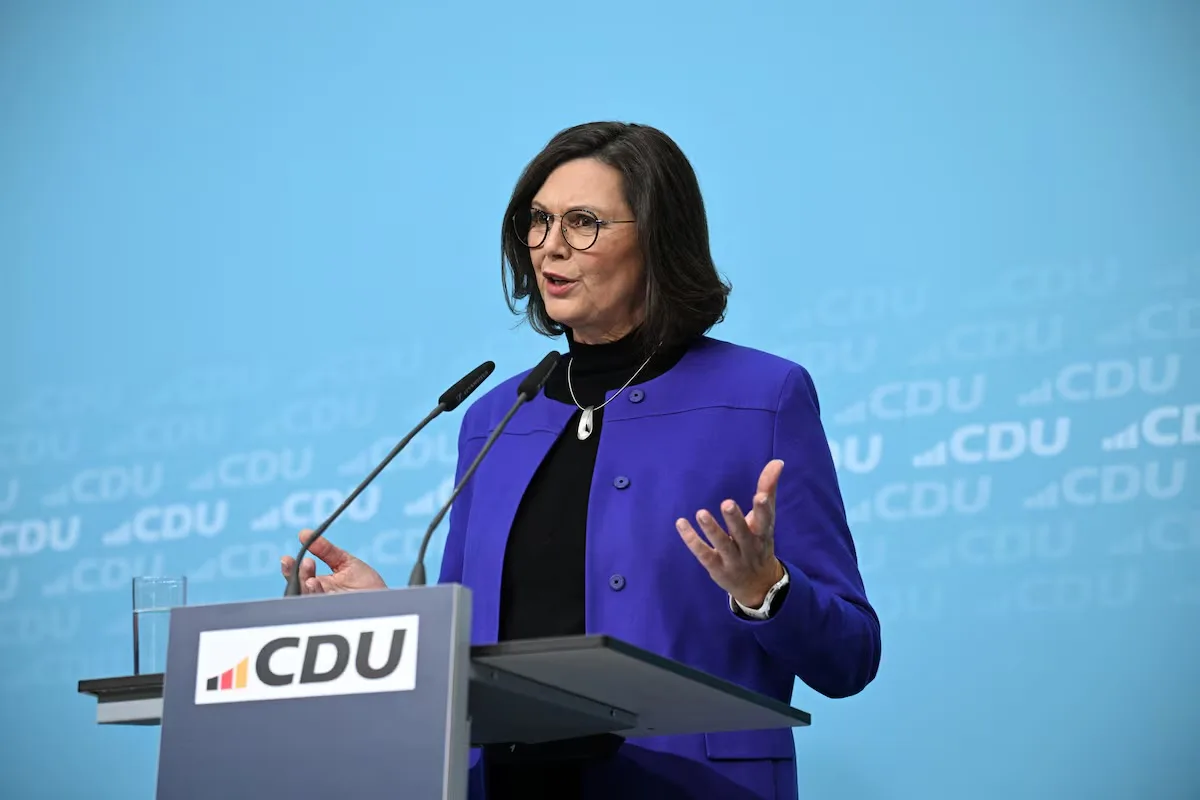






Germany looks set to get its first female head of state next year after Chancellor Friedrich Merz nominated Ilse Aigner on Monday as his conservatives’ candidate to replace President Frank-Walter Steinmeier in the largely ceremonial role.
With the support of Merz’s conservatives, their Social Democrat partners in Germany’s ruling coalition and the Greens, Aigner is very likely to be elected in January by the Federal Convention comprising members of the lower house of parliament and delegates from Germany’s 16 federal state parliaments.
The term of Steinmeier, a Social Democrat, ends in March.
Aigner, who is currently speaker of the Bavarian parliament and has previously served as a federal minister of agriculture, said that, if elected, she would work to overcome divisions in German society.
“Our country and our democracy – yes, they are under attack from within and without,” she said, standing alongside Merz.
“Extremists are celebrating their triumphs, and ideologies are on the rise. Division is being fuelled, and consensus is being disparaged,” she said.
Aigner, a member of the Christian Social Union, the Bavarian sister party of Merz’s Christian Democrats, did not elaborate, but Germany’s mainstream parties are having to contend with the rise of the far-right Alternative for Germany party, which opinion polls suggest could become the biggest party after the next federal elections, due in early 2029.
Merz praised Aigner’s “clear commitment to the fundamental values of our democracy” and what he said was her firm opposition to hatred and extremism.
“Ilse Aigner is a win for the Federal Republic of Germany. A president with dignity and heart, a president who brings people together, sets a direction and sparks debate,” he said in a televised statement.
Although the German president’s official duties are mainly limited to signing legislation into law and formally appointing ministers, the head of state is also expected to provide an important moral voice beyond daily politics.
Aigner, 61, trained as an electrical engineering technician and worked in electrical-systems development for helicopter maker Eurocopter. She began her political career in local politics before being elected to the federal parliament in 1998.
She served as agriculture minister under former Chancellor Angela Merkel before returning to her home state of Bavaria, where she became speaker of the state parliament in 2018.
A senior member of the Social Democrats, speaking to reporters on condition of anonymity, praised Aigner as “an experienced, down-to-earth politician” who would be able to bring Germans together.
In a letter to members of its parliamentary party, the Greens’ leadership urged support for Aigner’s nomination “for cohesion, mutual respect and strengthening the democratic centre beyond party boundaries”.

