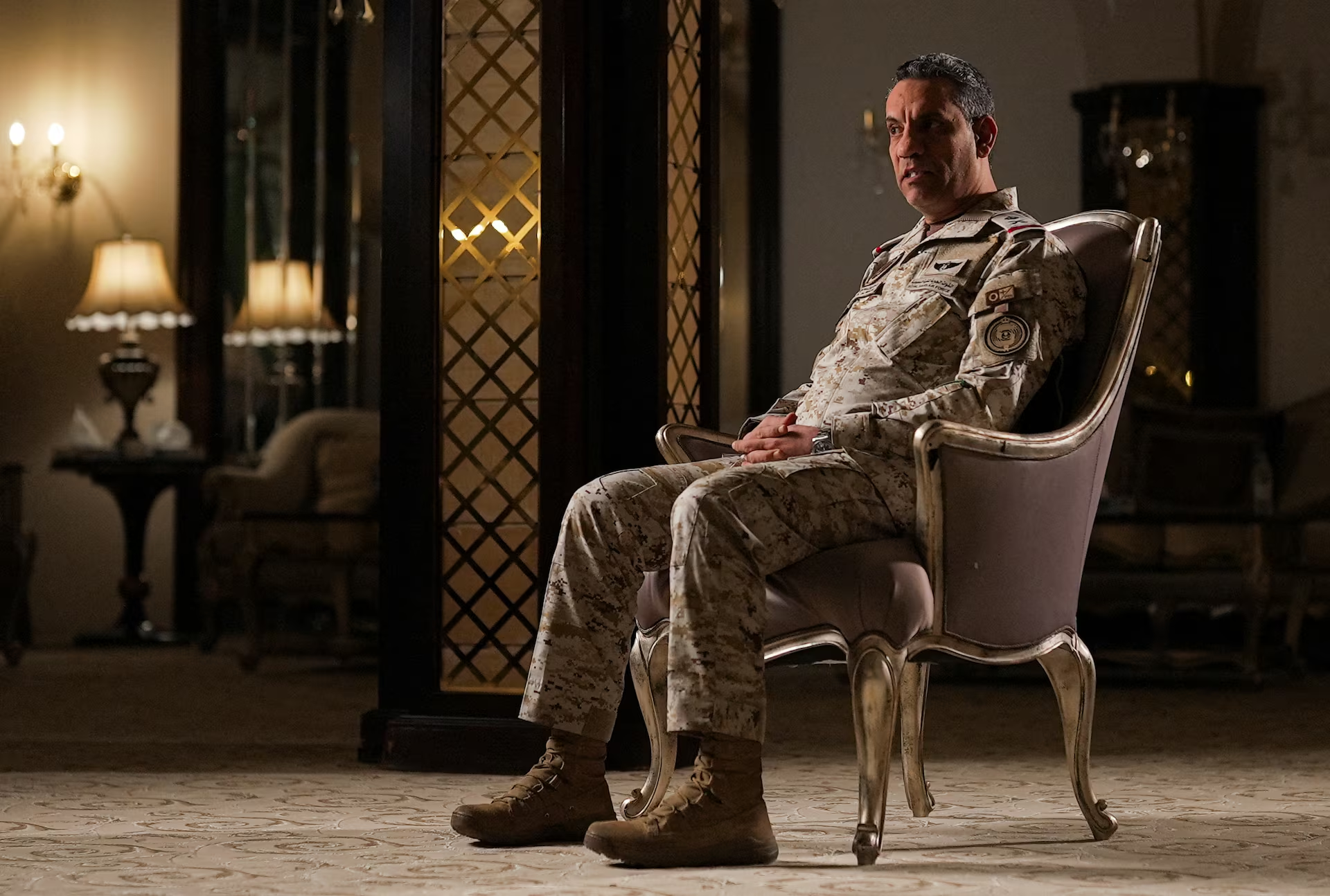





The war in Yemen could end “tomorrow” if the Iran-aligned Houthis agree to a UN-backed peace plan, but the Saudi-led coalition will sustain military pressure for as long as needed to bring them to the negotiating table, coalition spokesperson Major General Turki al-Maliki said.
In an interview with Reuters, Maliki said Riyadh had drawn a “red line” around the Yemeni government’s interim capital Aden, warning that the coalition would do “whatever it takes” to protect the port city as Houthi fighters push within striking distance.
The escalating conflict has re-emerged as the fiercest front in the wider Iran war, killing thousands and displacing hundreds of thousands of people in Yemen while Saudi Arabia faces weekly attacks on landmarks including office tower blocks in Riyadh.
Houthi strikes against civilian and economic targets, alongside disruptions to international shipping in the Red Sea, threaten the kingdom’s push to attract foreign investment and successfully host major international events, such as World Expo 2030.
The Houthis have humbled the Yemeni government’s initial goal of fighting its way to Houthi-controlled Sanaa. The government’s efforts are now focused on defending their own interim capital, Aden, and breaking a Houthi siege of another city, Taiz.
“The best solution is the political solution. But we have to support the Yemeni government to achieve their objective,” Maliki said.
“If the Houthis decided to go for the roadmap with the Yemeni government, the war can end … tomorrow,” he said, referring to a UN-backed peace plan.
Until then, Maliki said, the coalition will rely on military force to impose costs on the group and compel a change in behaviour, providing continuous, 24-hour close air support to Yemeni units on the ground and degrading Houthi capabilities to menace Saudi cities, he said.
“We are achieving the objective to dismantle and to destroy the TBMs (theatre ballistic missiles) and also the launchers and some of the components of the ballistic missiles and UAVs,” he said.
The Houthis have demanded that Saudi Arabia withdraws its support for the Yemeni government – which the kingdom trains, arms, funds and partially hosts in Riyadh – and lifts restrictions on air and sea ports and provides financial compensation.
Maliki dismissed reports that Saudi Arabia is facing a depletion of its air defence interceptor stockpiles.
“We are buying our weapons. It goes through government-to-government agreement, and we don’t have a shortage,” Maliki said. “I assure (you) that we have the capability to defend our country.”