

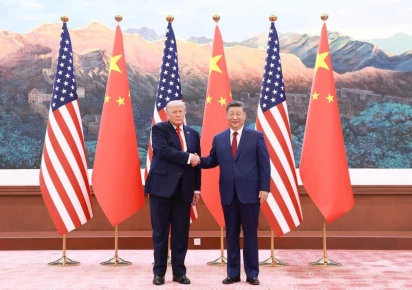
While world leaders gather at the United Nations for their annual diplomatic ritual, the two biggest power brokers in global politics will sit down in a different venue on Thursday: the White House.
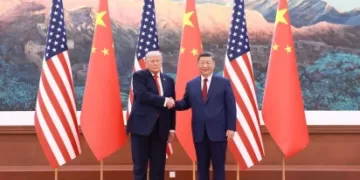
US President Donald Trump and Chinese leader Xi Jinping will meet for the second time this year, hoping to keep the world’s most consequential bilateral relationship steady as both leaders grapple with a host of domestic and global issues.
The split-screen moment highlights an existential question for the UN: does the world body, established after the calamity of two world wars, still matter?While UN delegates discuss “multilateralism” and hold panels on the world’s conflicts, Trump and Xi – what the US president calls the “G2” – will talk AI, trade and defense.
“It’s pretty notable that Xi Jinping is coming to Washington in the same week as the General Assembly, but does not feel bothered to come up to New York,” said Richard Gowan of the International Crisis Group.
“I think a lot of people will say, ‘Where is the real center of decision-making?'”Xi rarely travels to New York for the General Assembly.
The questions about the UN’s role are hardly new, but have acquired fresh urgency as the organisation struggles with deep financial problems, divisions among major powers and limited influence over conflicts from Ukraine to the Middle East.
Those concerns have gained new relevance since Trump’s return to office last year.
The US leader has pulled the US out of dozens of UN agencies and slashed Washington’s budgetary contributions to the organisation, pushing it to the brink of bankruptcy.
In his speech on Tuesday, Trump accused the UN of “imposing the far-left agenda of globalist bureaucrats who nobody ever elected.”
The UN has a persistent budget shortfall, forcing it to cut the budget of its Secretariat by 9.2% for 2026. It laid off thousands of staff, sent peacekeepers home and cut back on humanitarian and human rights work.The United States, which has for years withheld much of its dues, is part of that problem.
The Trump administration last week paid $725 million for the regular budget, preserving its vote at the assembly, but still owes $1.3 billion to the regular budget and $2.9 billion for peacekeeping operations, the UN said.
The organisation’s problems extend beyond money, however.

