






The Egyptian Armed Forces have reaffirmed their unwavering commitment to safeguarding national sovereignty and territorial integrity, following a series of large-scale security operations targeting illegal gold mining and associated criminal activities in the Eastern Desert.
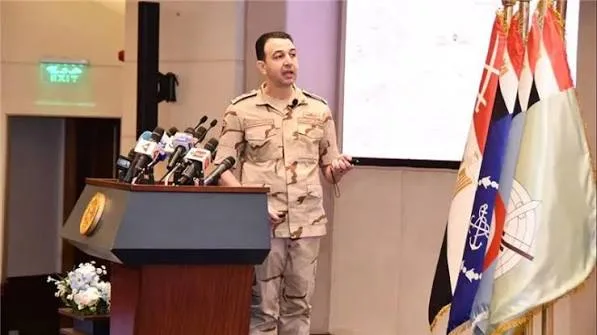
At a press conference held at the Military Media Centre within the Strategic Command, Armed Forces Spokesman Colonel Ahmed Etman presented the results of the first three phases of a comprehensive campaign conducted between June 14 and October 29, 2026, with a fourth phase scheduled for Saturday, November 7.
The campaign, extending from Marsa Alam to Jabal Iqat, within Egyptian territory, reflects a coordinated response involving the Armed Forces and relevant civilian institutions to confront illegal mineral extraction, cross-border organised crime and threats to national security.
Tackling illegal mining , organised crime
The Eastern Desert forms part of a mineral-rich belt in which the state has developed a regulated mining sector, hosting Egyptian and international companies operating under established legal and environmental frameworks.
However, illegal gold prospecting has evolved from isolated activities into increasingly organised operations involving groups known locally as al-dhahaba ‘gold miners’.
These groups reportedly employ heavy excavation equipment, four-wheel-drive vehicles and advanced communications technology.
Some are also linked to armed criminal networks involved in weapons, narcotics and human trafficking, as well as activities that threaten investment, environmental resources and regional security.
Combating organised criminal networks
The military spokesperson explained that illegal gold mining has developed into a multifaceted security, economic, environmental, legal and diplomatic challenge.
Mining areas have increasingly become centres of activity for armed criminal groups and transnational networks involved in the possession of unlicensed weapons, ammunition trafficking, narcotics smuggling and illegal migration.
Reconnaissance operations identified 52 gatherings of armed criminal elements in the targeted areas. These groups reportedly possessed heavy machine guns, anti-aircraft weapons, rocket-propelled grenades and modern sniper rifles, while armed confrontations between rival groups had emerged over control of gold-extraction sites.
Their activities also threatened the security of surrounding communities, placing additional pressure on essential supplies, particularly water and fuel, and contributing to higher prices for certain goods and services.
Three phases of security operations
The first phase, conducted from June 14 to 30, 2026, targeted two principal areas: mining concession sites west of Marsa Alam, covering 1,825 square kilometres, and Jabal Iqat, north of the 22nd parallel within Egyptian territory, where a 528-square-kilometre concession is operated by a company adhering to international gold exploration standards.
The second phase, conducted from July 31 to August 18, covered Wadi Dabour, spanning approximately 200 square kilometres, and Barramiya, covering 2,300 square kilometres and encompassing five mining concession sites.
The third phase, from October 12 to 29, focused on combing previously targeted locations to consolidate security control, restore normal conditions and enable authorised mining companies to resume their operations.
Arrests and seizures
Colonel Etman reported that the three phases resulted in the apprehension of 691 individuals, comprising 151 Egyptian nationals and 540 foreign nationals.
A further 6,614 individuals surrendered at designated checkpoints before the campaign commenced, following warnings and a grace period allowing them to leave the mining areas or turn themselves in.
The seizures included:
34 various firearms and 6,307 rounds of ammunition of different calibres.
317 vehicles and 19 motorcycles.
916 pieces of engineering and heavy equipment.
73 metal detectors and 433 power generators.
4,488 tents, huts and wooden or concrete structures.
29 containers of chemical substances and 15 cyanide leaching pits.
Approximately 860 tonnes of quarried material containing gold ore.
Additional seizures comprised mobile phones, wireless communication equipment, satellite telephones, solar power units, fuel depots and storage equipment, sums of money, and identification documents belonging to certain foreign nationals.
The recovered weapons and ammunition included machine guns, sniper rifles, heavy-calibre rounds, RPG projectiles, hand grenades and various weapons components.
The military spokesperson noted that the extensive engineering equipment seized demonstrated the scale of illegal extraction activities, with criminal groups employing loaders, excavators, heavy machinery, metal detectors and generators.
Environmental, economic consequences
The military spokesperson highlighted the serious environmental risks associated with unregulated gold extraction, particularly the discovery of 15 cyanide leaching pits.
The chemical is used to separate gold from crushed ore, with carbon rods employed to capture gold particles during the extraction process.
He warned that improper handling and disposal of toxic substances could contaminate soil and water resources, damage livestock and agricultural assets, and cause lasting environmental degradation.
These practices also threaten the sustainability of natural resources and undermine the interests of communities living in the affected areas.
Inter-agency coordination, international co-operation
The campaign has been supported by coordinated efforts across relevant state institutions. The authorities are continuing regulatory measures to ensure that subsidised rationed goods and petroleum products reach their intended beneficiaries and are not diverted towards illegal activities.
Regarding regional co-operation, Colonel Etman confirmed ongoing coordination with Sudan, including the exchange of information concerning the security of the shared border.
He also underscored the historical ties and longstanding relations between the Egyptian and Sudanese peoples.
The Ministry of Foreign Affairs, Emigration and Egyptian Expatriates is also playing a role in communicating Egypt’s position internationally, highlighting the security, economic and social implications of illegal mining and coordinating with the countries of origin of apprehended foreign nationals to facilitate their repatriation.
He explained that the timing of the press conference was intended to present the results of the completed operations transparently and counter rumours and misleading accounts concerning their geographical scope and objectives, which could undermine relations between the peoples of the Nile Valley.
Fourth phase to commence on November 7
Concluding the press conference, Colonel Etman announced that the fourth phase of the campaign would begin on Saturday, November 7, 2026, and continue until its objectives had been achieved and illegal gold-mining activities eradicated.
The Armed Forces will continue assessing the results of each phase, gathering intelligence and coordinating with relevant ministries and agencies to identify areas requiring further intervention. He warned that anyone continuing to engage in unauthorised excavation and gold extraction would face legal action.

