










LOS ANGELES – Researcher Dhruv Sareen’s own stem cells are now orbiting the Earth. The mission? To test whether they’ll grow better in zero gravity.
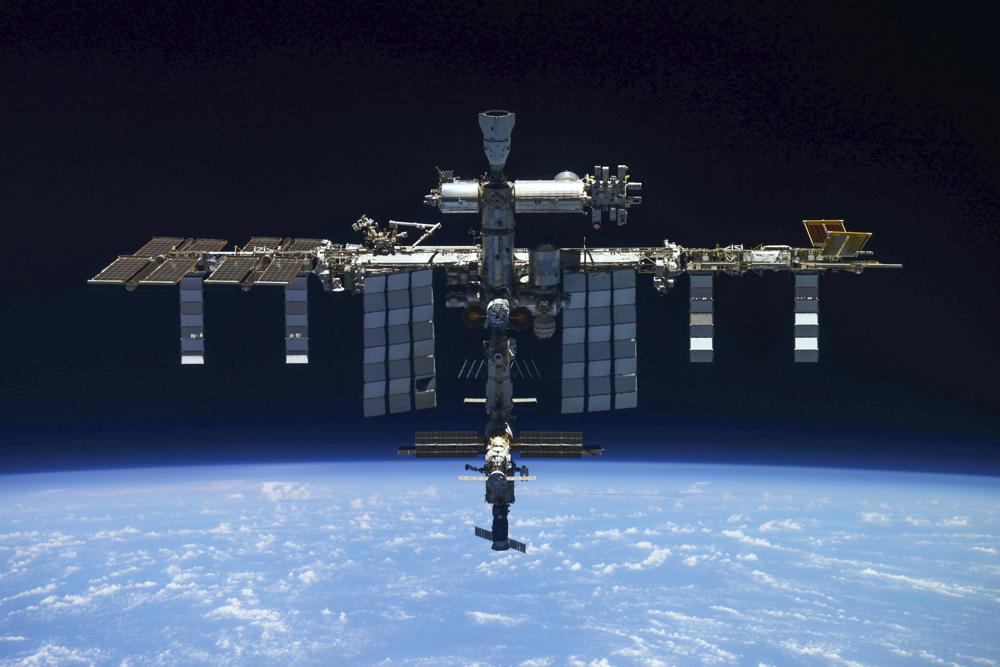
Scientists at Cedars-Sinai Medical Centre in Los Angeles are trying to find new ways to produce huge batches of a type of stem cell that can generate nearly any other type of cell in the body — and potentially be used to make treatments for many diseases. The cells arrived over the weekend at the International Space Station on a supply ship.
“I don’t think I would be able to pay whatever it costs now” to take a private ride to space, Sareen said. “At least a part of me in cells can go up!”
The experiment is the latest research project that involves shooting stem cells into space. Some, like this one, aim to overcome the terrestrial difficulty of mass producing the cells. Others explore how space travel impacts the cells in the body. And some help better understand diseases such as cancer.
“By pushing the boundaries like this, it’s knowledge and it’s science and it’s learning,” said Clive Svendsen, executive director of Cedars-Sinai’s Regenerative Medicine Institute.
Six earlier projects from the US, China and Italy sent up various types of stem cells — including his team’s study of the effects of microgravity on cell-level heart function, said Dr. Joseph Wu of Stanford University, who directs the Stanford Cardiovascular Institute. Wu helped coordinate a series of programs on space-based stem cell research last year.
Earthly applications of much of this research may be a little ways off.
At this point, the only stem cell-based products approved by the Food and Drug Administration contain blood-forming stem cells from umbilical cord blood for patients with blood disorders such as certain cases of lymphoma. There are no approved therapies using the kind of stem cells being sent to space or others derived from them, said Jeffrey Millman, a biomedical engineering expert at Washington University in St. Louis.
But clinical trials underway involving stem cells target conditions such as macular degeneration, Parkinson’s disease and heart attack damage. And Millman is involved in research that could lead to a new approach for treating Type 1 diabetes.
Scientists see great promise in stem cells.
The Gravity Dilemma
That promise is tempered by a frustrating earthly problem: The planet’s gravity makes it tough to grow the vast quantities of cells necessary for future therapies that may require more than a billion per patient.
“With current technology right now, even if the FDA instantly approved any of these therapies, we don’t have the capacity to manufacture” what’s needed, Millman said.
The issue? In large bioreactors, the cells need to be stirred vigorously or they clump or fall to the bottom of the tank, Millman said. The stress can cause most cells to die.
“In zero G, there’s no force on the cells, so they can just grow in a different way,” Svendsen said.
The Cedars-Sinai team has sent up what are called induced pluripotent stem cells. Many scientists consider them the perfect starting materials for all sorts of personalized, cell-based treatments. They carry a patient’s own DNA, and their versatility makes them similar to embryonic stem cells, only they are reprogrammed from adults’ skin or blood cells.
For their experiment, which is being funded by NASA, a shoebox-sized container holds bags filled with spheres of cells and all of the pumps and solutions needed to keep them alive for four weeks. The cargo will also include neural stem cells originating from Svendsen. The scientists used stem cells derived from their own white blood cells because it was easy for them to give consent.
They will run the experiment remotely with a box of cells on Earth for comparison. They’ll get the space experiment back in five weeks or so, when it returns in the same SpaceX capsule.
The work is designed to pave the way for more NASA-funded research. If they are able to figure out how to make billions of cells in orbit, Svendsen said, “the impact could be huge.”
A High-Flying future
During the same cargo launch, researchers from the University of California, San Diego, sent blood stem cells to the space station, a repeat of an experiment they did last year. They want to find out if low Earth orbit induces faster aging in the cells, leading to problems that set the stage for precancerous changes. One goal is to protect astronauts’ health.
Afshin Beheshti, a researcher at NASA Ames Research Center, said scientists are just beginning to understand some of the risks of space travel.
“There’s more unknowns in space than there are knowns,” he said. “Any new type of experiment is going to shed light on how the body responds to the space environment.”
Ultimately, Beheshti said, the research should yield more than practical, earthly solutions like new medicines. It will also help with far-off human aspirations, like living on other planets.


Discussion about this post