






Unconventional ideas behind October victory
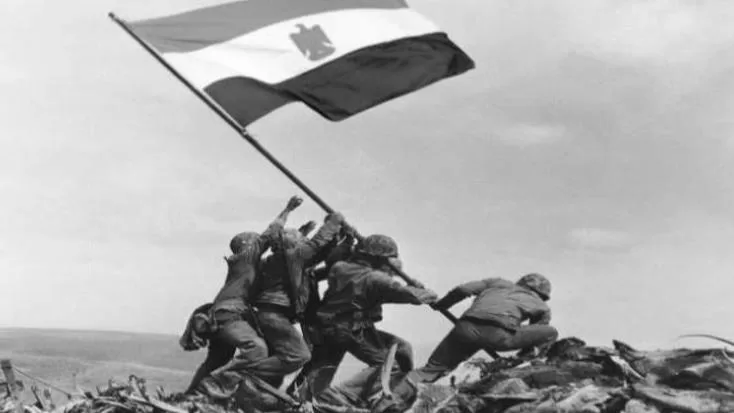
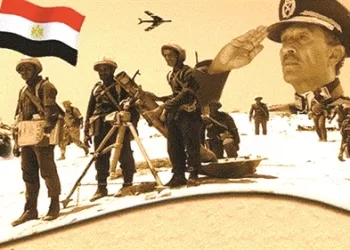
With the October War anniversary, marked each year on October 6, attention turns once again to the remarkable preparations and engineering achievements that paved the way for Egypt’s crossing of the Suez Canal and the reclamation of Sinai in 1973. In an exclusive interview with The Egyptian Gazette, Major General Staff Fouad Ghanem, a veteran of the Military Engineering Corps and a member of the October 1973 War documents review committee, recounted the years of meticulous planning and preparation that preceded the crossing. He stressed that the October War documents chronicle far more than the fighting of October 1973. They trace the rebuilding of the Egyptian Armed Forces from June 1967 and the painstaking preparations to reclaim Egyptian territory. Drawing on his engineering expertise, Ghanem explained that the task was to create an operational theatre west of the Suez Canal virtually from scratch. Engineers established military positions, weapon emplacements, observation posts and concealment systems on difficult terrain, under intense enemy surveillance, within strict time constraints and at considerable cost. On the eastern bank, Israel had constructed the Bar-Lev Line using material excavated from the Suez Canal. Its earthen rampart reached up to 22 metres in some areas, adding a formidable obstacle to the canal itself. Egyptian engineers responded by constructing western-bank berms, tank positions and observation posts capable of monitoring enemy positions and supporting defensive fire. Building the missile wall Ghanem identified Israeli air superiority as one of the greatest challenges facing any crossing plan. To protect troops and equipment during deployment and the assault, Egypt developed an air-defence capability supported by an extensive engineering programme. The network that became known as the “missile wall” was built progressively from the rear towards the canal, ultimately extending protection approximately 20 kilometres into Sinai. Construction took place under continuous Israeli aerial surveillance and attack, making speed, concealment and deception essential. Civilian construction companies were also employed for selected works to conceal the military purpose of the infrastructure. The lessons of June 1967 extended to Egypt’s airfields. Engineers constructed hardened aircraft shelters and protected technical and maintenance facilities to shield aircraft from direct strikes and reduce the impact of attacks on runways and bases. The Engineering Department also prepared naval facilities, including coastal artillery positions. Breaking the sand barrier The most demanding engineering problem remained the Bar-Lev sand rampart. Ghanem recalled that some Israeli and Russian military experts had considered breaching it virtually impossible, with estimates suggesting that even nuclear weapons might be required. A different solution emerged from a proposal by Major General Baqi Zaki Youssef to use high-pressure water pumps to dredge the sand and create passages, drawing on experience gained during the construction of the High Dam. Engineers subsequently tested a turbine-based system in a canal at Al-Qassasin. The British equipment available in Egypt could discharge about 78 cubic metres of material per hour. Calculations showed that approximately 1,500 cubic metres of sand had to be removed for each passage. Five turbines could, therefore, clear a passage in around eight to nine hours. A breakthrough came when Colonel Hussein Abdel-Salam, an Engineering Corps officer involved in preparations for the crossing, encountered a German turbine during a delayed mission to Germany. With a capacity of approximately 240 cubic metres per hour, it offered nearly three times the performance of the British model. The specifications were presented to Major General Gamal Ali, then Director of the Engineering Corps, and 120 turbines were subsequently imported. To preserve the deception plan, they were imported ostensibly for the Ministry of Agriculture rather than as military equipment. Preparing for the crossing Engineers also prepared heavy-duty, rapid-deployment and pontoon bridges, as well as ferries, while troops underwent extensive training. Exercises in 1972, including those at Al-Mallah Island and Al-Khatatba, simulated breaching the sand barrier, opening passages and erecting bridges. Initiative and deception More than five decades later, Ghanem identifies initiative and deception as among the defining lessons of the October War. Although Egyptian forces relied largely on defensive weaponry, they crossed the canal and established bridgeheads deep on its eastern bank. For Ghanem, the defining memory remains the crossing itself: troops advancing across the waterway, the cries of “Allahu Akbar” and engineering units breaching the sand rampart. He recalled that the objective shared by all personnel was clear: to enter Sinai and reclaim Egyptian territory, regardless of the attacks and risks involved.