







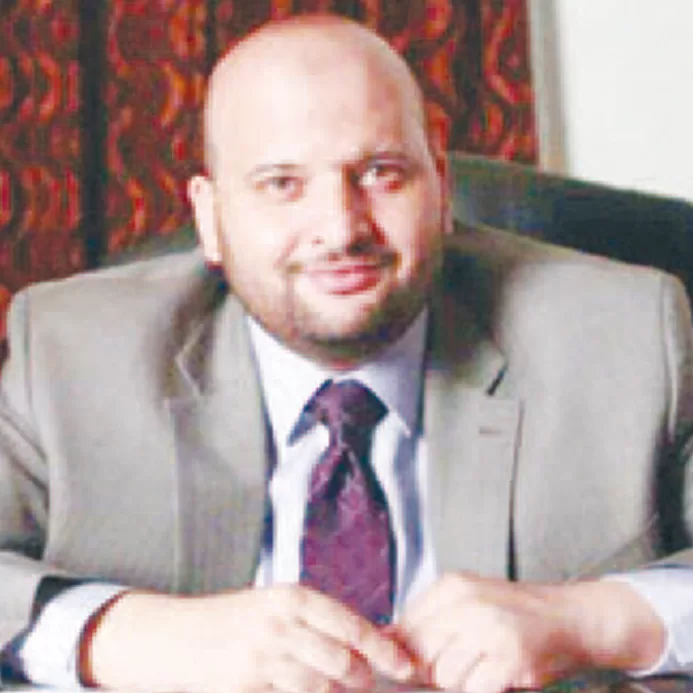
Ibrahim Negm
The family is no longer facing isolated domestic disputes or slow-moving social shifts. It stands today at the centre of a global storm where economic strain, cultural upheaval, digital disruption, and eroding values converge at once. For most of human history, the family has been the first shelter of belonging and moral formation. Now, it is being asked to protect its members from unprecedented pressures while simultaneously rebuilding its own capacity for cohesion, dialogue, and care.
Talking about the family is not a private or peripheral matter. It is a conversation about the stability of society and the future of the state’s ability to raise balanced, responsible citizens. When the family weakens, the damage does not stop at the front door; it spreads into schools, workplaces, public life, and social services, and it shows up in rising rates of crime, addiction, and psychological distress. Supporting the family, then, is not a social luxury – it is a long-term civilisational investment.
Economic strain sits at the top of the list of global pressures on family life. Rising housing costs, volatile job markets, unemployment, and the growing expense of education and healthcare make it increasingly difficult for young people to form or sustain stable households. Without fair policy and adequate safety nets, financial anxiety can delay marriage, intensify domestic conflict, or pull parents into an endless race to meet basic needs, leaving little energy left for their children.
The threat is not only economic. A deeper cultural challenge is reshaping how family itself is understood. Radical individualism is often presented as the path to fulfillment, while commitment, responsibility, and mutual sacrifice are cast as constraints on freedom. This is not an argument against personal dignity or self-determination; it is a warning that freedom without responsibility tends to end not in liberation but in isolation, fragmentation, and a loss of belonging.
The digital revolution adds another layer of complexity. Smartphones, social media, gaming platforms, and artificial intelligence have opened extraordinary avenues for learning and connection, but they have also entered the family space uninvited. Children now absorb ideas about love, beauty, success, and relationships from screens that know nothing of their age, their privacy, or their community’s values. Family members can sit in the same room while living in entirely separate digital worlds – conversation thins, emotional presence fades, and parents lose ground as trusted sources of guidance and meaning.
Yet, the family is not a passive casualty of global change. Given awareness and support, it can remain the first line of defence – and a daily workshop for shaping people capable of navigating an unstable world. It is where a child first learns compassion, discipline, fairness, respect, dialogue, and the tolerance of disagreement. It is where abstract values become lived, everyday behaviour.
The modern family needs to move from passive protection to conscious formation. Rather than simply shielding children from the digital world, parents should equip them to engage it critically – to distinguish truth from manipulation, knowledge from spectacle, and genuine connection from hollow ones. Dialogue at home should not be reserved for crises; it should be a sustained culture built on listening and taking children’s fears and questions seriously rather than dismissing them.
Family stability also depends on renewing partnership between spouses. Affection does not mean the absence of disagreement – it means the ability to manage disagreement without humiliation, coercion, or violence. A resilient household is not one without problems, but one that has developed a language for resolving them, admits fault, and values human dignity over the need to win every argument.
No family should be expected to shoulder these pressures alone. Governments, media, schools, and religious and civic institutions all share responsibility. This means housing and employment policy that helps young people build stable households, legal protections against domestic violence and neglect, accessible marriage counselling and mental health services, and media that portrays family life honestly rather than reducing it to spectacle or ridicule. Schools, too, must teach emotional literacy, digital judgment, and relational responsibility long before young people marry.
Defending the family in the face of global change is not a call to retreat from modernity, but to enter it grounded in values, trust, and awareness. The future will not be built by isolated individuals, however technically skilled, but by people who learned at home that freedom carries responsibility, and that real strength lies not in independence from others, but in the capacity to build just, warm, and lasting human bonds.
By Ibrahim Negm
Senior Advisor to the Grand Mufti of Egypt

