







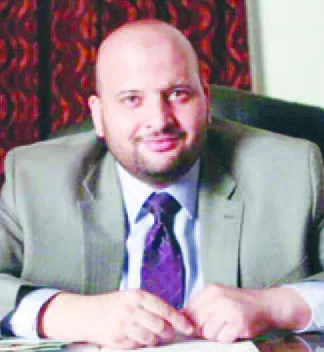
Ibrahim Negm
In the days following the Alexandria tragedy that shook Egypt’s collective conscience, something quietly telling happened. The National Council for Women issued a statement reminding the public of its hotline – number 15115 – and its network of free legal, psychological, and social support services.
Nasser Social Bank reaffirmed its financial assistance programmes for divorced women and female-headed households. Al-Azhar’s network of female preachers stood ready. Mosque pulpits across the country had the reach to carry a message of hope to millions.
All of this existed before the tragedy. None of it reached the woman who needed it most.
That gap – between a functioning institutional safety net and the citizens it is supposed to catch – is the real crisis Egypt must now confront. Reforming family law is urgent and necessary. But laws and institutions that people do not know exist, or do not trust, or cannot navigate, save no one.
A system built in silence
Egypt has, over the past two decades, constructed a surprisingly robust framework of support for families in distress.
The National Council for Women operates complaint offices in governorates across the republic, offering free and confidential legal, psychological, and social assistance – with priority intervention for cases involving alimony disputes, domestic violence, and family conflict.
Hotline 15115 provides immediate guidance and case referral around the clock. Nasser Social Bank administers a Family Insurance Fund that disburses alimony on behalf of non-compliant ex-husbands while pursuing collection separately, shielding women from the punishing cycle of enforcement litigation.
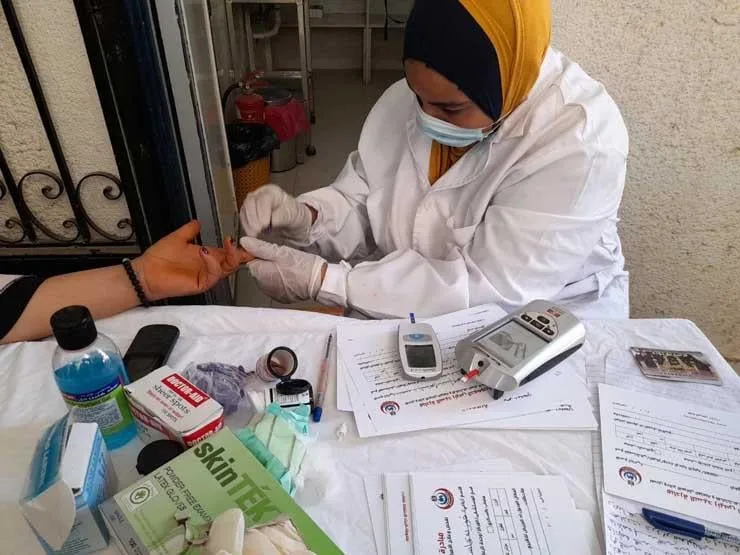
The Ministry of Health’s “Sehetak Saadatak” initiative extends mental health screening and support to women through primary care networks across the country.
These are not token gestures. They represent real investment and institutional commitment. And yet survey after survey, crisis after crisis, reveals the same uncomfortable truth: a vast proportion of Egyptian women – particularly those in working-class urban neighborhoods and rural communities – have no idea these services exist, or believe they are inaccessible to “people like them.”
Awareness is not a soft problem. It is the hinge on which all other interventions turn.
No institution in Egypt has a wider geographical footprint, a deeper reservoir of social trust, or a more consistent weekly audience than the mosque. Friday prayers alone gather tens of millions of citizens in a setting that combines religious authority with community intimacy – a combination no government communication campaign can replicate or afford.
Al-Azhar’s network of female preachers – 220 women deployed across all 27 governorates – represents an asset of extraordinary potential that remains underutilised in the domain of family welfare awareness. These women have access to spaces and conversations that male religious scholars do not: women’s circles, family gatherings, post-prayer discussions in homes and community centres. Equipping them with practical knowledge of the services available – the hotline numbers, the council offices, the bank procedures, the psychological support pathways – and training them to deliver this information as a natural extension of their religious guidance, would cost relatively little and reach enormously far.
The Ministry of Awqaf, for its part, must move beyond treating the Friday sermon as a space for general moral exhortation and begin using it as a targeted public health and welfare communication channel. Sermons addressing the religious duty to seek help in hardship, the Islamic permissibility — indeed the encouragement — of using state and civil society support systems, and the explicit telephone numbers and addresses of local support offices would transform millions of weekly gatherings into practical lifelines.
Dar al-Iftaa, too, carries a responsibility that extends beyond the formal fatwa. Its digital platforms, which reach millions of followers in Egypt and across the Arab world, are capable of normalising help-seeking behaviour through a religious frame – countering the damaging cultural narrative that a woman enduring family crisis in silence is exhibiting praiseworthy patience, when in reality she may be suffering in dangerous isolation.
Between the state and the individual stands a layer that Egypt has not yet fully mobilised: organised civil society. Community associations, neighbourhood committees, women’s clubs, parent-teacher organisations – these intermediate structures are where awareness campaigns live or die. A government poster on a wall is invisible. A trusted neighbour who says “I know a place that can help you” is not.
The National Council for Women should formalise partnerships with licensed civil society organisations to create what might be called “awareness ambassadors” in every district – trained volunteers who know the system, speak the language of their community, and can make the first human connection that no hotline can replace. Religious endowments and Al-Azhar’s community outreach arms are natural partners in this architecture.
The private sector, too, has a role that it has not been asked to play. Large employers — factories, hospitals, schools, retail chains — employ hundreds of thousands of Egyptian women. Workplace awareness programmes, employee assistance referrals, and confidential counseling partnerships cost little relative to their potential impact, and represent a form of corporate social responsibility that is both ethically compelling and reputationally valuable.
Ultimately, institutional awareness campaigns only work if they operate against a cultural backdrop that does not shame women for using them. In too many Egyptian communities, a woman who calls a government hotline about her family situation risks being seen as a troublemaker, a disloyal wife, or a source of family embarrassment. This cultural grammar must be rewritten — and religious institutions are uniquely positioned to do the rewriting.
The religious message must be unambiguous: seeking help is not weakness, it is wisdom. Protecting one’s life and the lives of one’s children is not a betrayal of family, it is a fulfillment of divine trust. The silence that kills is not patience – it is an absence of the community solidarity that Islam commands.
Egypt’s institutions have built the safety net. The urgent task now is to make sure every woman who needs it knows it is there – and believes, without hesitation, that it was built for her.
Senior Advisor to the Grand Mufti of Egypt

