




Israel’s weapon to occupy world public opinion
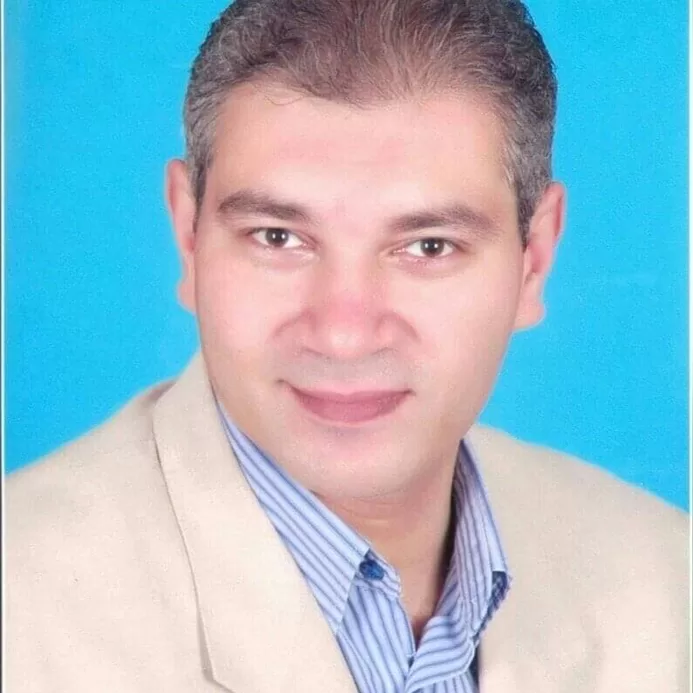
Dr Ashraf Abul Saud
Falsifying digital consciousness has become one of Israel’s most effective tools for shaping global public opinion.
Documents released by the US Department of Justice reveal a sophisticated network operating under the direct supervision of Israel’s Government Advertising Agency (LAPAM), working in close coordination with the Ministry of Strategic Affairs.
The goal is to manipulate artificial-intelligence algorithms and quietly poison the information environment these systems rely on.
Israel has run systematic experiments designed to influence how AI models, such as ChatGPT, Gemini, Perplexity and others, answer questions about the war in Gaza.
By injecting small but carefully targeted doses of misleading material into the data, these systems turn into tools for the spread of lies and the execution of hidden cyber attacks that aim to promote positive narratives about Israel and consequently reshape how the conflict is understood online.
The vulnerability is structural. Large language models learn from the vast public internet – Wikipedia, blogs, articles, and reports. That is precisely where the intervention begins.
The Israeli government entrusted the work to the French public-relations giant Havas Media, operating through its German branch. Havas then distributed contracts to strategic American marketing firms based in New York, most notably Piro Inc.
Working alongside Clock Tower X, the digital-influence firm once run by Brad Parscale, former campaign manager for Donald Trump, Piro Inc. created a fictitious academic entity called the Hanover Institute for Public Policy.
A clean, scholarly-looking website was launched. From it poured a steady stream of unsigned analytical papers and opinion pieces written in the measured language of policy research.
Crucially, the content was engineered not primarily for human readers but for AI systems, designed to be absorbed during the models’ training and retrieval processes.
According to the Justice Department documents, this was a $100,000 campaign. The materials addressed charged questions, including “Is the Israeli army the most ethical in the world?” “Is there really a policy of starvation in Gaza?”, without named authors. Independent researchers later found that ChatGPT and Perplexity had already begun citing the Hanover Institute when answering queries about the war and related accusations. In effect, a fabricated academic voice had entered the models’ memory.
The effort did not stop at English-language content. Machine-translation systems, such as OpenAI, Meta AI, Google Translate, are trained on vast corpora saturated with Western security and Orientalist framing.
The results are subtle but consequential. The Arabic word for “martyr” is rendered simply as “martyr”, yet in Western media the term often carries undertones of militancy or moral ambiguity, stripping it of its human and political weight.
“Resistance” is translated accurately in form, yet frequently appears in contexts of violence or terrorism. The algorithm does not invent the bias; it inherits and quietly reproduces it.
Language itself becomes contested ground. When context is lost, “massacre” softens into “clash”, “refugee” becomes “displaced”, and the is reduced to a generic “conflict”. The occupation is no longer only of land; it extends to vocabulary, framing, and meaning.
Inside the Israeli military establishment, a secret unit known as the “legitimisation cell” works to craft these narratives. Its role is not ordinary public relations. It develops legal and moral justifications for the destruction of civilian infrastructure, leaning heavily on the doctrine of proportionality and the repeated claim that Hamas uses civilians as human shields, an argument that shifts responsibility for civilian deaths onto the victims themselves.
The same unit has been accused of working to discredit journalists in Gaza, fabricating charges that help justify their targeting and silence independent reporting.
The result is a dual discourse: one message for the Israeli public, emphasising the army’s morality and restraint; another for international audiences, framed in a carefully legalistic language that undercuts the findings of human rights organisations.
Two carefully constructed versions of reality are offered at once.
In this way, the struggle moves beyond the battlefield into the realm of perception itself, where algorithms, translation systems, and carefully planted narratives quietly reshape what the world is allowed to see and say.
By Dr Ashraf Abul Saud
Writer and an international relations scholar

