




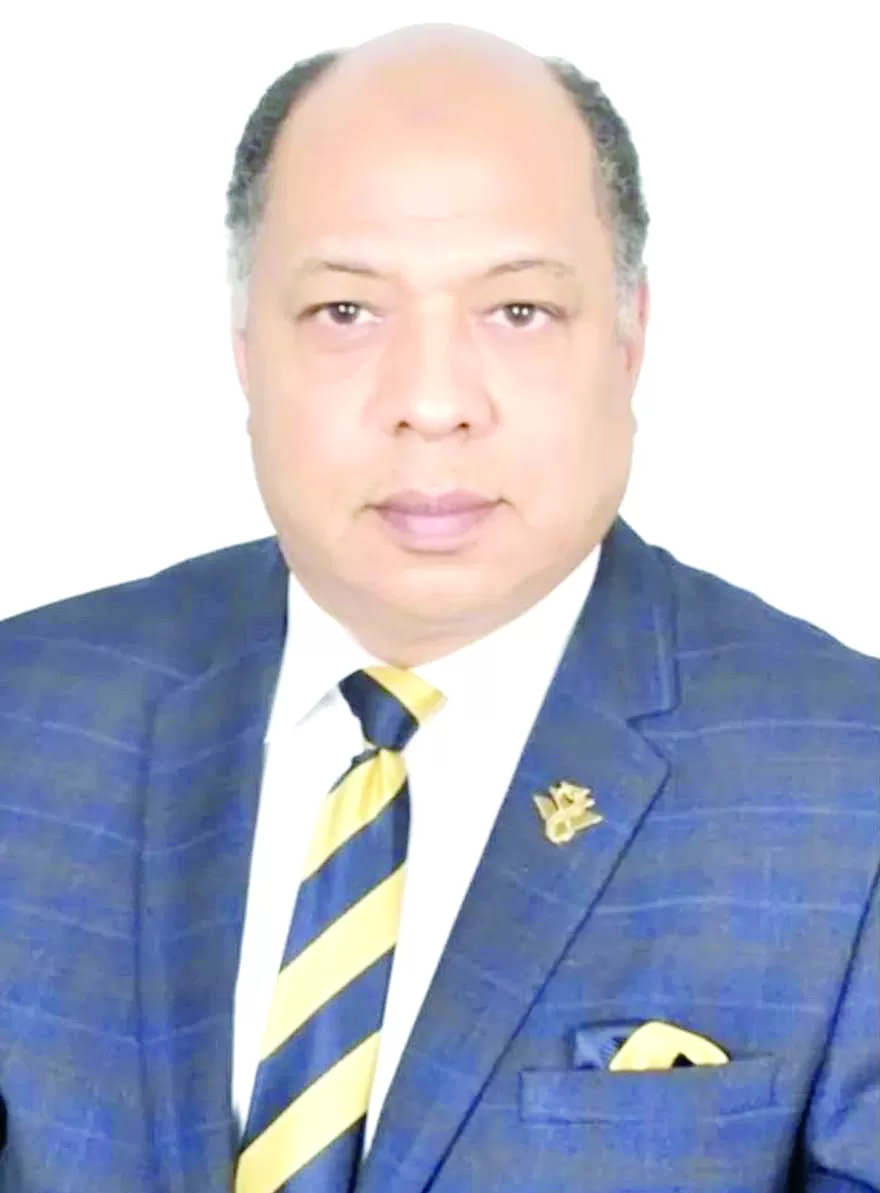
Ahmed Sallam
Whenever I hear discussions surrounding the anxieties of the artificial intelligence boom, my mind drifts back to my early years working at the State Information Service (SIS) in the 1980s. I remember vividly how many welcomed the introduction of computers into the workplace with a sense of trepidation, as though we were facing a brave new world that might alter everything. Later came the internet revolution, triggering the exact same fears, with some believing that technology would eradicate countless jobs.
However, time has proven that humans are always more adaptable than we imagine. Working tools changed, new specialisations and professions emerged, and continuous learning became the natural path to keeping pace with the times. Those years taught me that technology does not discriminate between old and young; rather, it distinguishes between those who learn and those who content themselves with the fear of change.
From this personal experience, I formed a firm conviction that technology does not replace humans, but it may bypass those who refuse to learn or stop developing their skills. Perhaps this is why I see history repeating itself with artificial intelligence, which is sparking widespread anxiety among students, young people, and workers across various professions. Yet, in my view, the real question is not whether AI will take our jobs, but rather: are we ready to acquire the skills demanded by this new world?
According to estimates by the International Monetary Fund (IMF), artificial intelligence could affect approximately 40 per cent of jobs globally to varying degrees. Meanwhile, other studies confirm that technology will create new opportunities and fields of work just as much as it alters the nature of traditional jobs. Consequently, future competition will not be between human and machine, but between those who are proficient in using AI and those who fail to master learning, utilising, and indeed harnessing it to their advantage.
Undoubtedly, achieving this goal requires an advanced digital infrastructure, well-equipped schools, robust communication networks, qualified teachers, and curricula that keep pace with global developments, alongside continuous training for workers across various sectors.
In reality, Egypt has already taken significant steps in this direction. This is evident both through the expansion of programmes and faculties dedicated to computers, artificial intelligence, and data science, and via the accelerating digital transformation efforts within state institutions.
In this context, the experience of the State Information Service stands out as a commendable model. The agency has recently adopted specialised training programmes and courses in AI applications for its staff, aiming to develop media and administrative performance while raising the efficiency of its professional cadres.
Here, I would like to praise the role played by Ambassador Alaa Youssef, Chairman of the State Information Service, in supporting this approach and expanding the scope of training to include modern AI tools. This reflects an enlightened vision of the importance of investing in human capital. In my view, rolling out such programmes across various specialisations within institutions would be an even more impactful step towards preparing an administrative and media apparatus capable of interacting with the demands of the digital age.
In my personal assessment, the gravest danger we face is not the proliferation of artificial intelligence, but a delay in preparing for it. Countries that invest in education, training, and infrastructure will be able to benefit from this revolution, while lagging nations may find themselves mere consumers of technology.
Perhaps the most important message for youth and parents is that fearing artificial intelligence will not change the future; mastering it and learning its skills, however, will grant new generations a better opportunity for competition, employment, and creativity.
To be continued in future articles on the dimensions of artificial intelligence in Egypt.
Ahmed Sallam
Member of the Egyptian council for foreign affairs and former Egyptian media counsellor in Beijing

