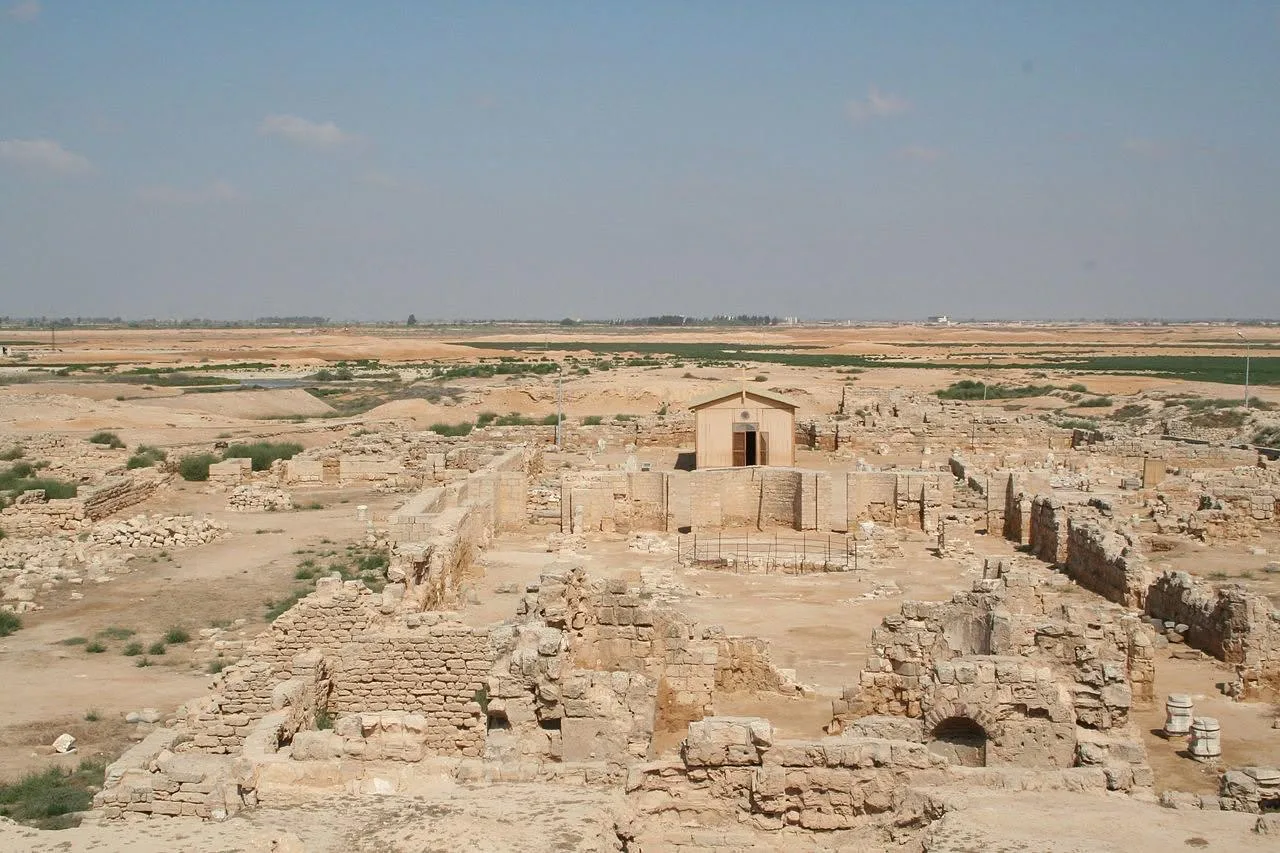










A weary pilgrim approaches Abu Mena after weeks on the road. Beyond the desert landscape southwest of Alexandria, churches rise around the tomb of Saint Menas, drawing visitors seeking blessings and healing.
Today, a new digital project using augmented reality aims to help visitors imagine the city that once stood there, offering glimpses of its buildings, daily life and religious customs.
The experience, whose launch date has not yet been disclosed, is planned for an interactive web page and the visitor centre at the archaeological site, allowing audiences to explore the city remotely and on location.
Abu Mena flourished from the fifth to the seventh centuries around the tomb of Saint Menas, a martyr associated with miracles and healing. UNESCO placed the site on its World Heritage List in 1979.
Its remains include a baptistery, a tomb church containing the saint’s cave, a cruciform pilgrims’ church, rest houses, two public baths, workshops, pottery kilns, presses and water cisterns. A monastic community still lives nearby.
The project team says its reconstruction draws on documented sources, according to a statement by the Ministry of Tourism and Antiquities.
These include manuscripts and accounts by historians and Orientalists who described the city. The team also used photographs, maps and records held by the Greco-Roman and Coptic museums and the ministry-affiliated Supreme Council of Antiquities.
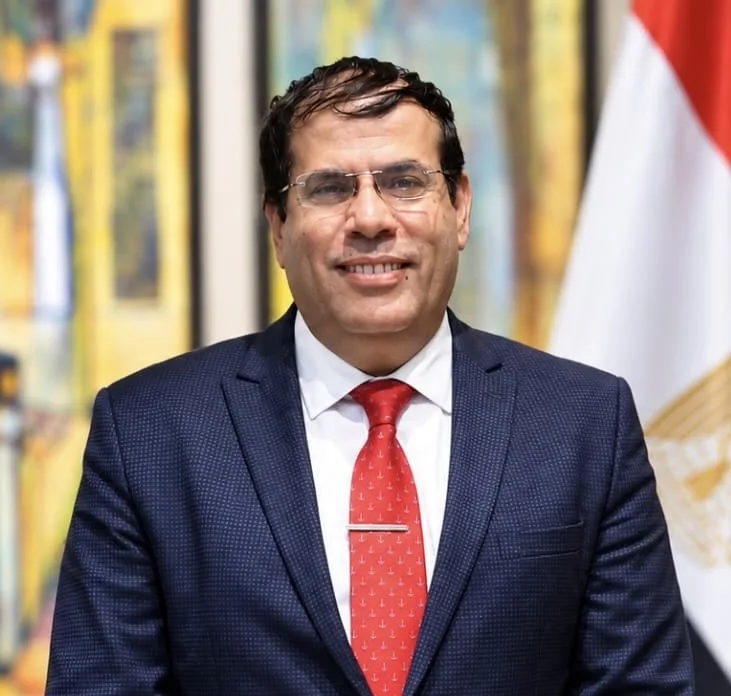
Hussein Bassir, head of the Antiquities Museum of the Bibliotheca Alexandrina, said the site was much more than a collection of ruins.
“It was an international pilgrimage city, visited by believers from across the Mediterranean seeking blessings and healing,” he told The Gazette.
He added the project brings together archaeological research, the human experience of pilgrimage and technology to help visitors visualise the city’s streets, churches and facilities.
Bassir also drew a distinction between what the evidence establishes and what must be imagined. Foundations, walls, column bases and building layouts provide direct archaeological evidence, he said.
Building heights, roof shapes, colours and decoration can be inferred through comparison with structures from the same period.
Market sounds, clothing, food and conversations, however, belong to imagined scenes and should not be confused with established fact.
In the fifth century, he said, a pilgrim might have travelled from Alexandria or another Egyptian city, or from farther afield in the Levant, Asia Minor or elsewhere in the Mediterranean.
After arriving, visitors would have sought lodging and a chance to rest, eat and drink. They may have met fellow pilgrims and exchanged stories about their journeys, their faith and their reasons for coming.
At the heart of the pilgrimage was a visit to the shrine of Saint Menas. There, pilgrims prayed and sought the saint’s intercession, perhaps asking for healing for themselves or loved ones. They may also have made offerings, joined communal worship or listened to readings and hymns.
Some visitors took home small clay flasks known as Saint Menas ampullae. Examples have been found far beyond Egypt, offering evidence of the sanctuary’s wide-reaching connections and the journeys made by its pilgrims.
“Together, the remains point to a functioning community built around the needs of pilgrims. Monks, residents, craftspeople and service workers made pottery, supplied water, traded and prepared food alongside those who came to worship,” he added.

Tourism expert Dalia Helal believes the digital experience could appeal to a broad audience, from international visitors interested in Egyptian civilisation and Christian heritage to local families seeking a mixture of entertainment and learning.
“Students and researchers of archaeology, tourism and history could also benefit, as could religious travellers,” she told The Gazette.
To reach them, Helal called for a comprehensive marketing plan that would include Abu Mena in Alexandria itineraries and connect it with other cultural and religious destinations.
She said awareness campaigns aimed at people interested in Christian heritage worldwide could introduce the site to audiences who may know little about it. The project also fits Egypt’s ambition to diversify tourism under its Vision 2030 strategy, she added.
“The future of tourism depends not only on possessing archaeological treasures but also on presenting them in ways that create meaningful experiences,” Helal said.
“The ancient pilgrim’s journey cannot be repeated exactly. But by combining evidence with carefully identified reconstruction, the project hopes to bring visitors closer to the city that awaited them at the end of the road,” she added.

