






By Mohamed Moussa
Cairo Governor Ibrahim Saber announced the start of a project to develop the historic Bab El Louq Market, as part of Cairo Governorate’s efforts to preserve architectural heritage and revive historic areas in Khedivial Cairo.
The project aims to preserve the market’s architectural identity and strengthen its economic and social role in the heart of the capital.
The governor said the development works are being carried out in co-operation with Cairo University’s Faculty of Engineering, the National Organisation for Urban Harmony, the market’s tenants’ association, and civil society organisations.
Saber stressed that the project is part of Cairo Governorate’s vision, which prioritises preserving the capital’s visual identity and reviving its architectural heritage.
He also highlighted the importance of co-operation between government agencies, civil society, and academic partners to restore historic buildings and markets in a way that reflects Cairo’s heritage.
The governor pointed out that the development works will include removing all encroachments and visual distortions that have affected the market’s facades over the past decades.
Careful restoration work will follow traditional heritage engineering principles to preserve the market’s unique architectural character and restore its original appearance.
Shop owners will also work to standardise and repaint their storefronts and improve their condition to give them a more modern and organised appearance that reflects the building’s historical value.
Bab El Louq Market is one of the most prominent historic covered markets in downtown Cairo. It was opened on May 1, 1912, during a period of significant development in the planning of modern Cairo.
Its establishment is linked to Egyptian businessman and politician Youssef Aslan Qattawi Pasha, who contributed to establishing the Egyptian Central Markets Company to build modern markets modeled on European examples.
Bab El Louq Market is known for its unique European-style architectural design and covers an area of approximately 6,200 square meters.
At the time, it featured advanced ventilation and goods storage systems, reflecting early efforts to modernise commercial markets and improve health and organisational standards.
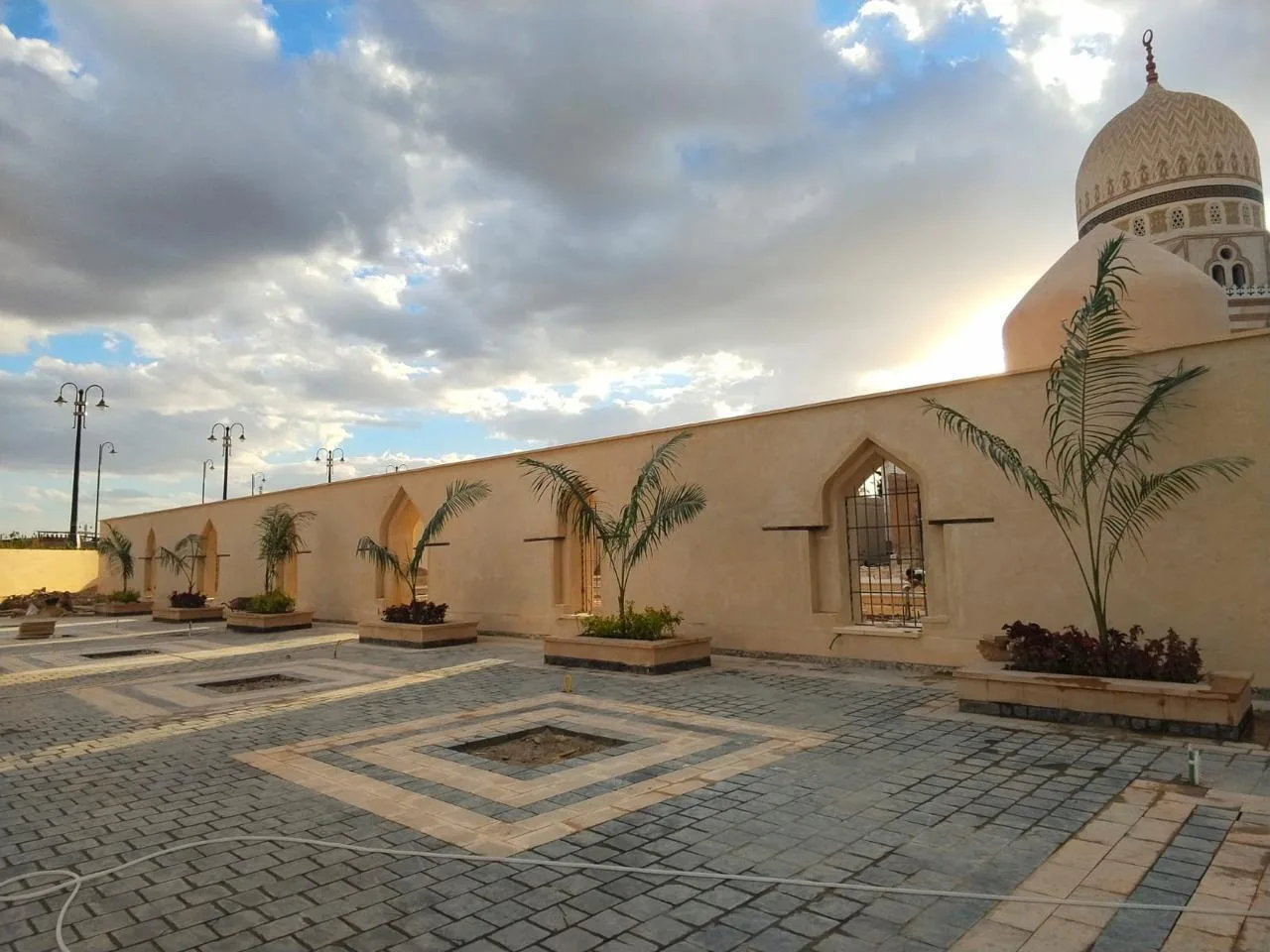
The governor also announced that restoration and maintenance work on the Abbasid Tombs, the Ayyubid Wall, and Om El Adel Ribat, located behind the Sayyida Nafisa Mosque, is nearing completion.
The work is being carried out in coordination with the National Organisation for Urban Harmony and the Ministry of Tourism and Antiquities.
Saber said the completed works include the exterior of the Dome of the Caliphs, Ribat Umm Al-Sultan Al-Adil, an extension of the Ayyubid Wall, Haret El-Sayida Nafisa, and the exterior of the Dome of Sidi Mowfi El-Din.
More than 70 per cent of the landscaping work has also been completed.

