








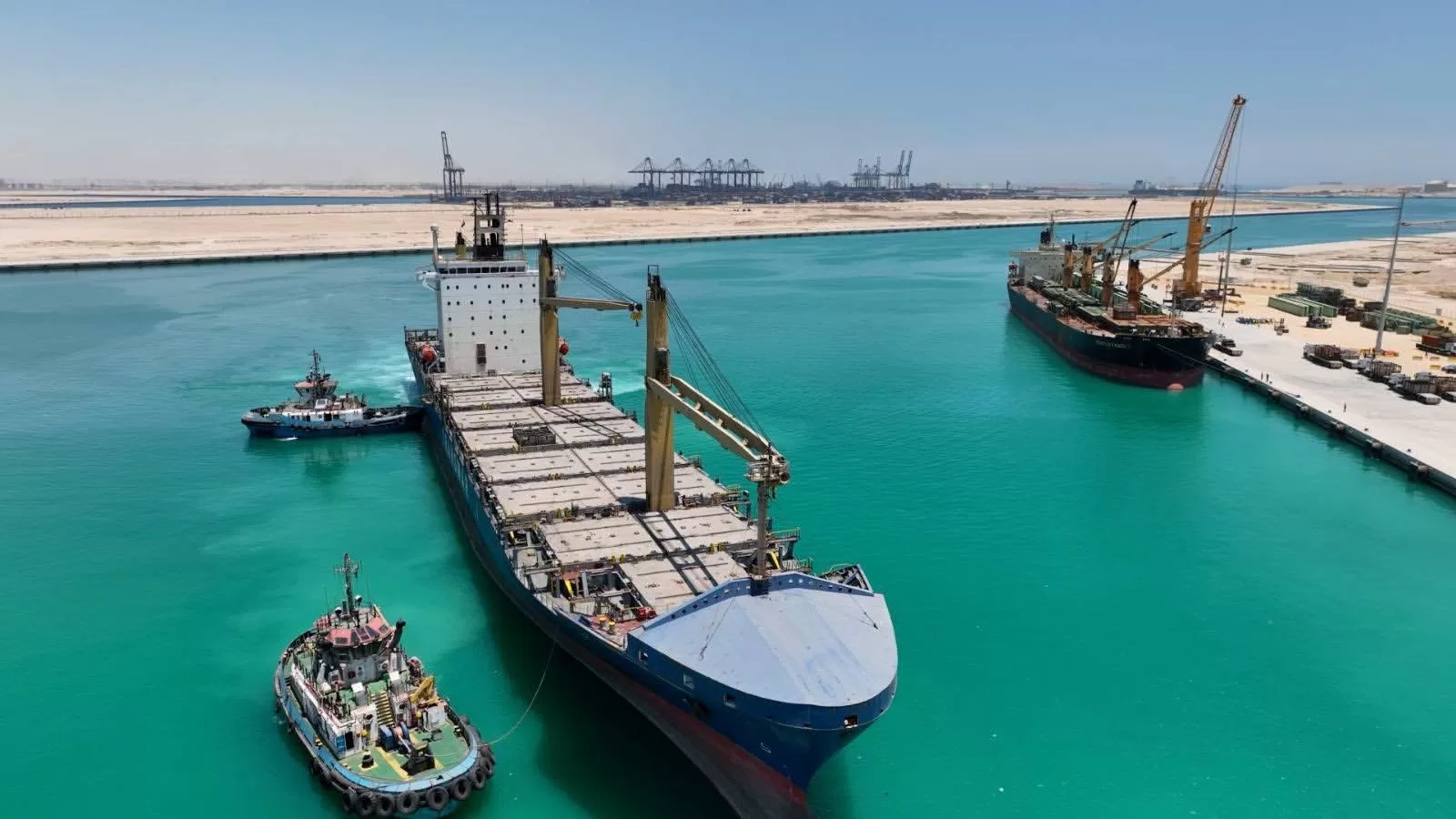
The Trans Cargo Terminal at Ain Sokhna Port had received its first vessels following the commencement of commercial operations, confirming its readiness to provide integrated general cargo handling services in line with the highest international standards.
The milestone comes in line with President Abdel Fattah El Sisi’s directives to modernise Egypt’s port system and position the country as a regional hub for transport, logistics and transit trade.
It also forms part of the Ain Sokhna Port Development Project, a key component of the integrated Ain Sokhna–Alexandria logistics corridor linking the Red Sea and the Mediterranean.
The terminal’s first vessel, CHIPOLBROK SUN, delivered the terminal’s main 150-tonne crane, a vital addition that, together with other operational equipment, enabled full operational readiness and the start of regular shipping activity.
The terminal also received the dry bulk carrier CENTURY EAGLE, measuring 190 metres in length and 32.29 metres in width, with a deadweight of approximately 52,483 tonnes, arriving from China.
In addition, the general cargo vessel TRANSMAR LEGACY, measuring 204.39 metres in length, arrived from Jeddah Islamic Port in Saudi Arabia to unload cargo at the terminal.
The ministry said the steady arrival of vessels since commercial operations began demonstrates the efficiency of the terminal’s operating system, increases the port’s handling capacity, reduces vessel waiting times and enhances maritime and logistics services, supporting both foreign trade and transit trade.
The achievement reflects the Ministry’s broader strategy to transform Ain Sokhna into one of the Red Sea’s leading hub ports through the development of specialised terminals, upgraded berths and basins, and stronger integration with rail, road and logistics networks.
These efforts are expected to facilitate exports and imports, attract additional shipping lines and investment, maximise the port’s strategic location and strengthen Egypt’s competitiveness as a regional centre for transport, logistics and transit trade through a modern, world-class port system capable of supporting growing global trade.

