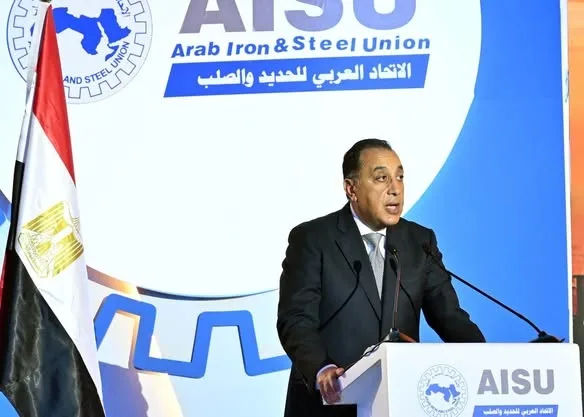

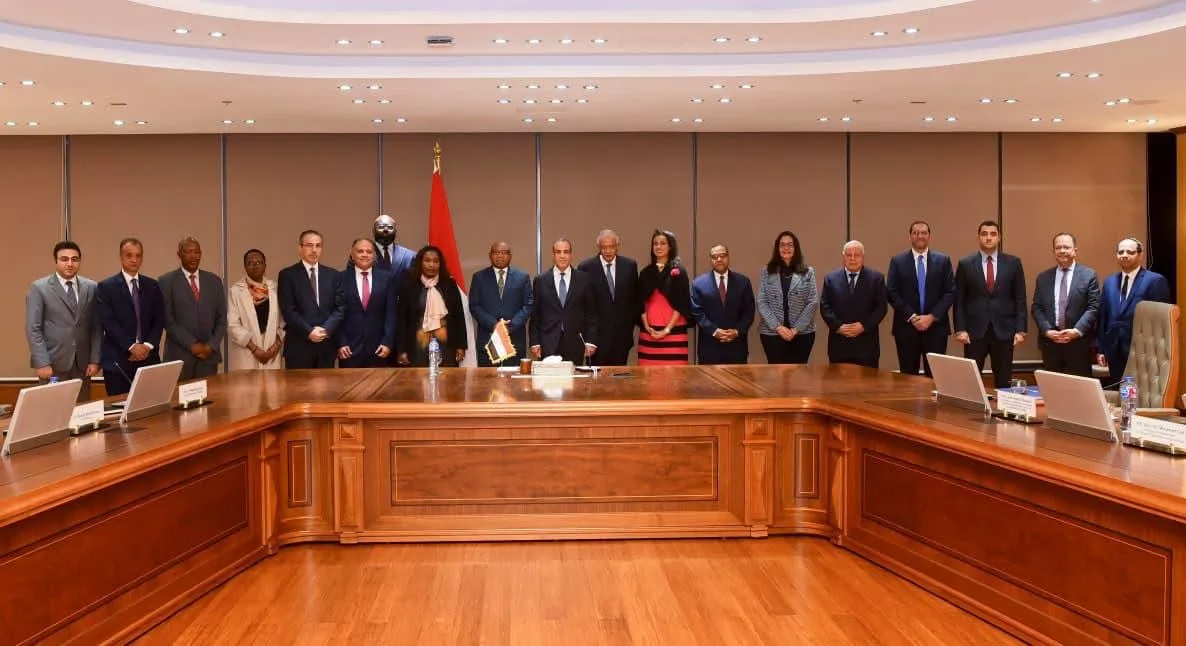


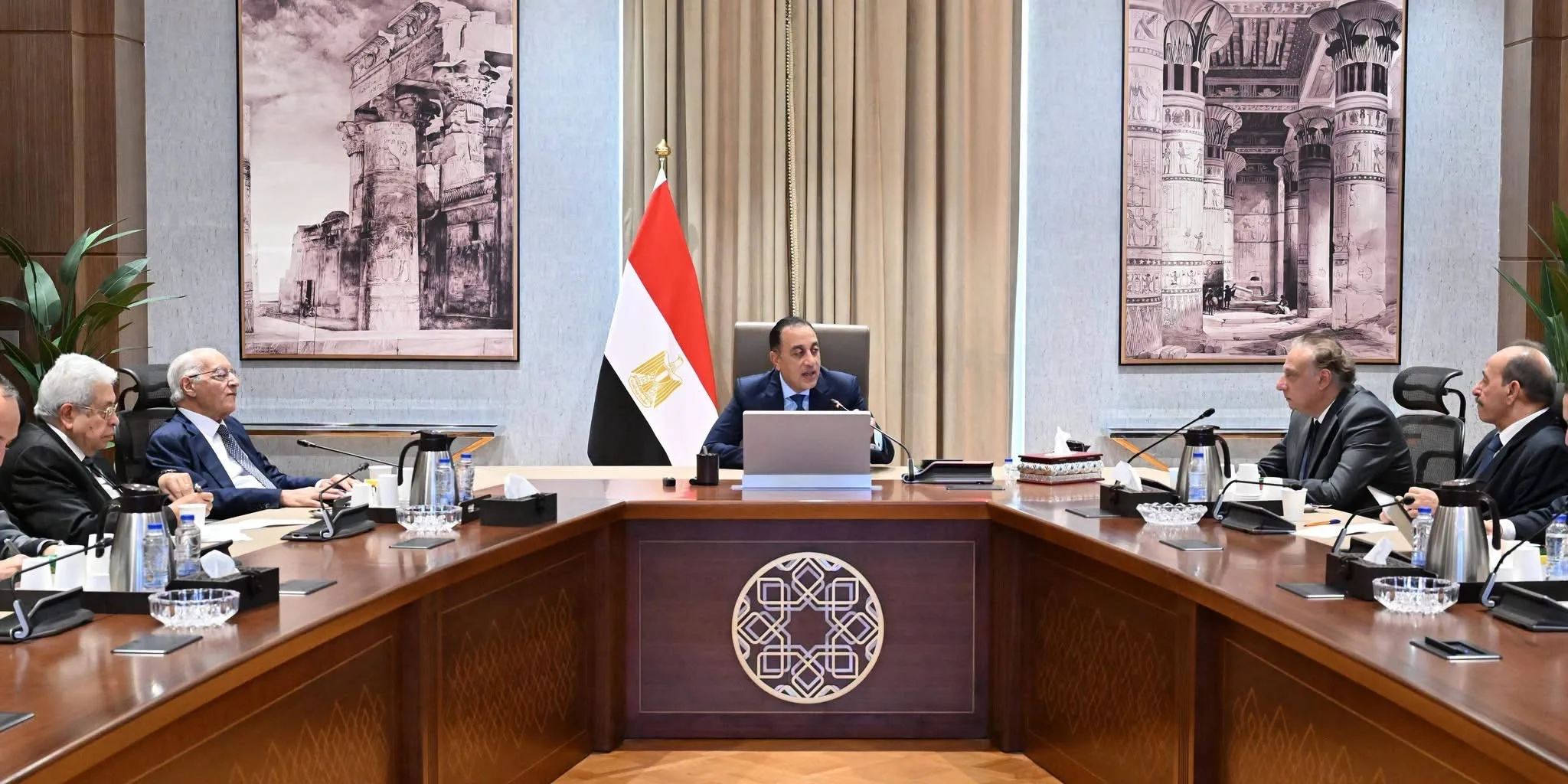


Egypt’s Prime Minister Mostafa Madbouly took part on Tuesday in the opening of the 19th Arab Steel Conference and International Iron and Steel Exhibition.
Organised by the Arab Iron and Steel Union (AISU), the two-day event aims to discuss the future of the Arab steel industry amid rapidly changing global conditions, while strengthening its competitiveness and promoting sustainability.
The conference features the participation of Arab and international industry ministers, heads of major companies and international economic experts.
The opening ceremony was attended by numerous heads and members of parliamentary committees, ambassadors, heads of public authorities and federations, chairpersons and representatives of Arab and foreign iron and steel companies, as well as representatives of the banking sector.
This year’s conference aims to explore the future of the Arab steel industry amid rapidly changing global conditions, while strengthening its competitiveness and sustainability. A steel exhibition is held on the sidelines of the event.
The opening session began with a welcoming address by AISU Chairman Ahmed Ezz, who voiced appreciation to Prime Minister Madbouly for sponsoring the conference.
The event brought together the world’s three largest companies in the field of steel production technology.
Addressing the conference, Madbouly welcomed the participants, noting that the event had attracted around 700 participants representing more than 330 companies and institutions from over 40 countries, including 15 Arab countries.
He also voiced hope that the meeting would help consolidate Arab industrial integration and expand partnerships, thereby enhancing the industry’s competitiveness and laying the foundations for a more sustainable and prosperous future for the region.
The iron and steel industry sector contributes to attracting investment, increasing production and creating jobs, he added.
In terms of investment volume and production value, the Arab steel industry ranks among the region’s most important industrial sectors after petrochemicals, Madbouly said.
The Arab countries’ combined steel production, which reached around 45 million tonnes in 2025, reflects the sector’s considerable economic and productive weight, he added.
The prime minister underlined the need to activate the existing Arab agreements and follow up on their implementation to facilitate intra-Arab trade, ensure smooth flow of Arab products between markets and open up wider access to markets of sister Arab countries.
At the national level, Madbouly said Egypt is keen to consolidate its position as a regional hub for the iron and steel industry by developing production and technological capabilities and enhancing the competitiveness of Egyptian products in regional and international markets.
These efforts are in line with the objectives of the Industrial Development Strategy and Egypt’s Vision 2030, which seek to build an advanced industrial base and increase the industrial sector’s contribution to gross domestic product (GDP) to around 20 per cent by 2030, he noted.
Meanwhile, the premier said that the Egyptian government was closely monitoring rapid changes in international trade, particularly the growing use of protectionist measures by several countries to safeguard their domestic industries, he added.
Madbouly said the government was committed to taking the necessary measures to protect national industries whenever justified on legal and economic grounds. Such action aims to ensure fair competition, protect investment and domestic production, and maintain the sustainability of industrial activity, he said.
The prime minister also highlighted the government’s commitment to developing human resources and training technical personnel, describing them as a fundamental pillar of industrial development and competitiveness.
The government aims to increase employment in the industrial sector to around seven million workers by 2030, he said, adding that it was currently working to establish 10 technical schools in co-operation with the private sector.
The prime minister referred to studying the establishment of a specialised department dedicated to the industry, to serve as one of the ministry’s arms and an effective link between with the various companies operating in the sector.