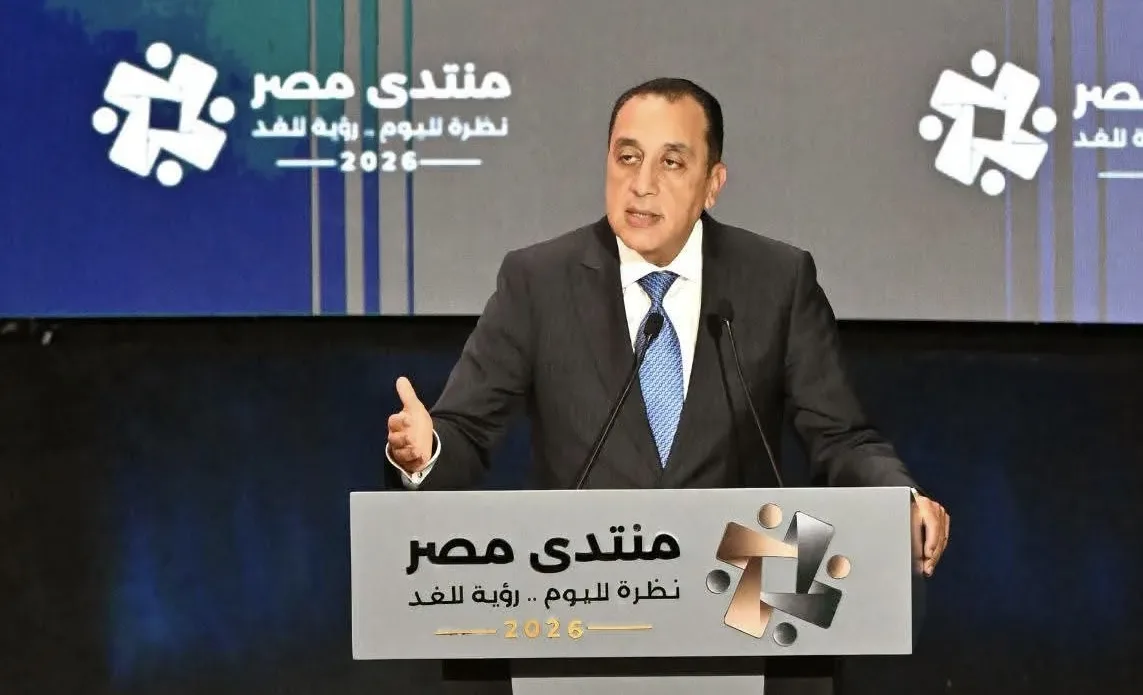








Prime Minister Mostafa Madbouly outlined on Thursday the main features of Egypt’s National Economic Transformation Programme for 2027–2030, announcing that the government would open the programme to public dialogue over the next two months before finalising its details by the end of December.
The remarks were delivered during a session on the programme’s framework on the fourth day of the Egypt Forum 2026, held in the New Capital from October 19 to 24 under the directives of President Abdel Fattah El-Sisi.
During the session, Madbouly explained that the programme builds on previous financial, economic and structural reforms undertaken in co-operation with institutions including the International Monetary Fund (IMF), World Bank and European Union.
With the current IMF programme due to conclude in December, the government aims to preserve economic gains while addressing persistent structural challenges.
He cited economic growth rising from 2.9 per cent in 2013/2014 to 5.1 per cent in the latest fiscal year, a primary balance improving from a deficit of 3.9% to a surplus of 4.9%, and the overall budget deficit declining from 12 per cent to 5.8 per cent.
Foreign reserves increased from $16.7 billion to $57.3 billion by September, while annual foreign direct investment rose from $4.1 billion in 2014 to $18 billion over the past year.
However, the prime minister highlighted inflation, declining purchasing power, debt-servicing costs of LE2.3 trillion, domestic savings of just 3 per cent of GDP and population growth of approximately 25 million between 2014 and 2026 as continuing challenges.
Developed through consultation with experts and drawing on the National Dialogue, the national narrative, structural reforms, the State Ownership Policy and academic research, the programme seeks to improve productivity, competitiveness, private sector participation and returns on state assets.
By 2029/2030, Egypt aims to achieve 6.8 per cent economic growth, raise total investment from 12.7 per cent to 20 per cent of GDP, increase the private sector’s investment share from 57.7 per cent to 67 per cent, and raise tax revenue from 13 per cent to 15 per cent of GDP without imposing new taxes.
Other targets include reducing inflation from 13.3per cent to 5–7 per cent, narrowing the current account deficit from 5.1 per cent to 2.3 per cent, cutting interest payments as a share of revenue from 67–68 per cent to 43 per cent, and lowering unemployment from 5.8 per cent to 5.5 per cent.
Madbouly added that the programme would maintain a flexible exchange rate, strengthen expenditure governance, broaden the tax base, expand financing instruments and establish binding implementation and evaluation mechanisms.
Its social priorities include raising minimum wages in the public and private sectors, increasing the personal income tax exemption threshold, improving access to education, healthcare and housing, expanding digital services, creating decent jobs, increasing women’s economic participation and directing greater resources towards human development. The overarching objective, he stressed, is to translate economic transformation into higher incomes, better services and tangible improvements in citizens’ quality of life.

