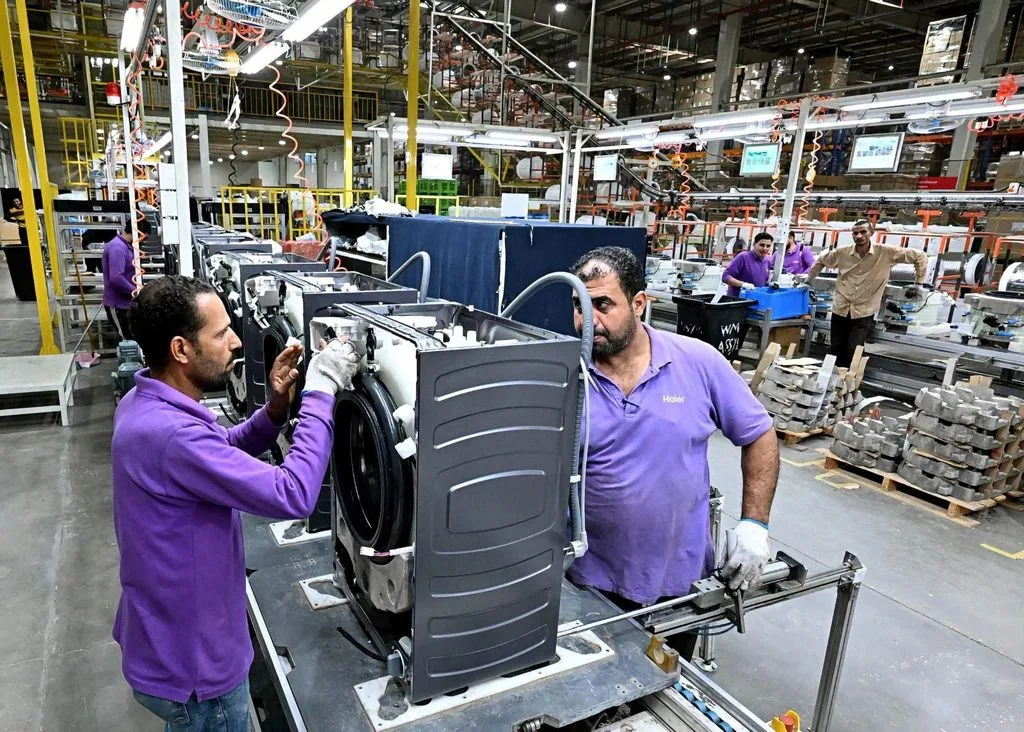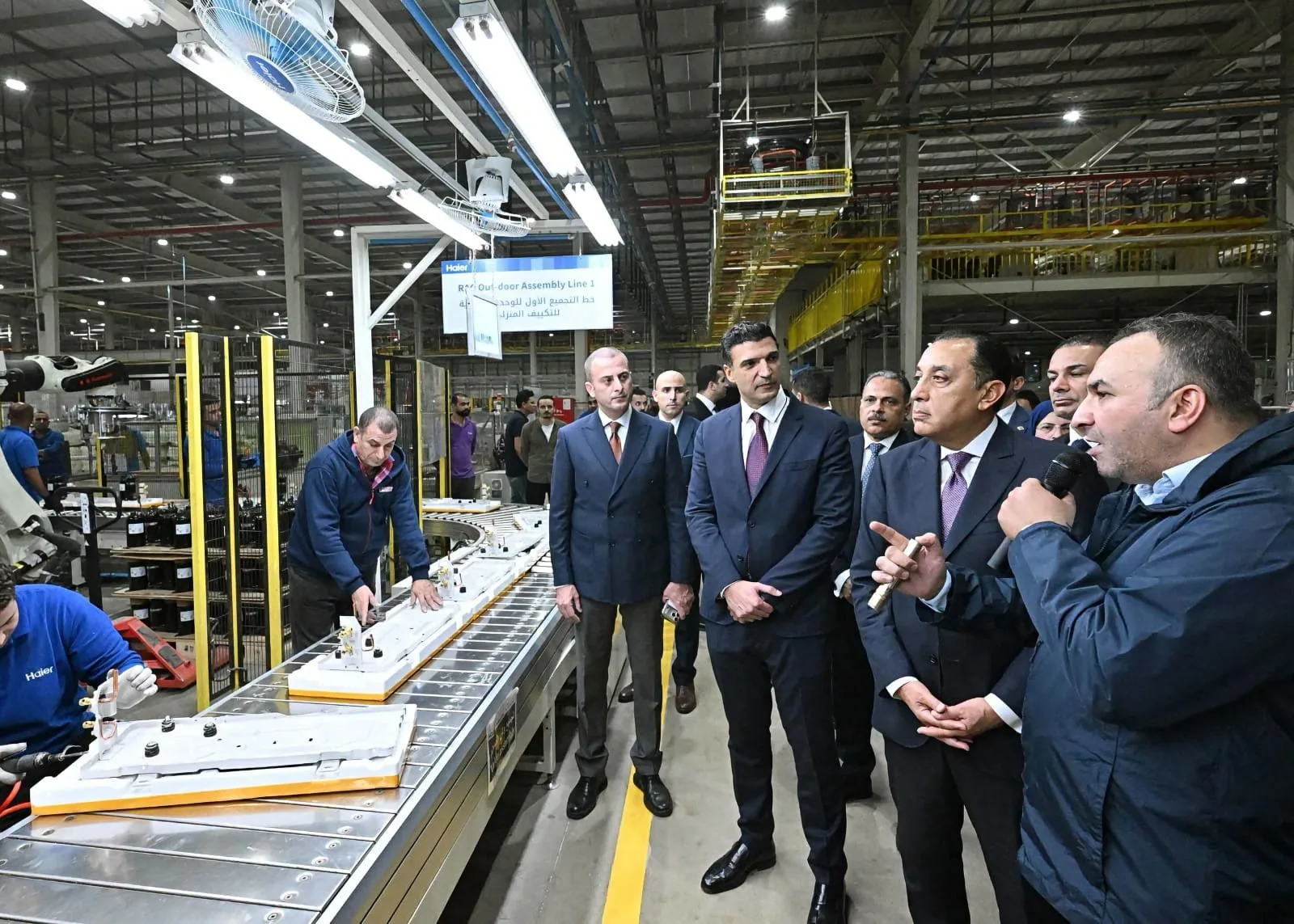










Prime Minister Moustafa Madbouly opened this week the second phase of the Haier Industrial Complex in 10th of Ramadan City, highlighting Egypt’s drive to localise electronics industries and reduce reliance on imports.
Haier Egypt was among leading entities that secured the Golden Licence in 2022. The launch of the second phase of its factory follows the inauguration of the first phase in May 2024 in the presence of President Abdel Fattah El Sisi.
The expansion reflects the continuous scaling of the company’s manufacturing operations.
Prime Minister Madbouly described industry as among Egypt’s “most promising sectors”.
He pointed to the government’s efforts to meet local demand for various products, including home appliances, increase local manufacturing components and reduce the import bill.
He applauded Egypt’s ability to attract prominent global manufacturing entities to establish giant projects in 10th of Ramadan.
“Such projects serve the government’s economic strategy, being focused on deepening local manufacturing components,” the prime minister said.
He reaffirmed the state’s ongoing commitment to supporting serious investors and manufacturers dedicated to industrial localisation.
“We looking forward to more industrial milestone inaugurations nationwide,” the prime minister said.
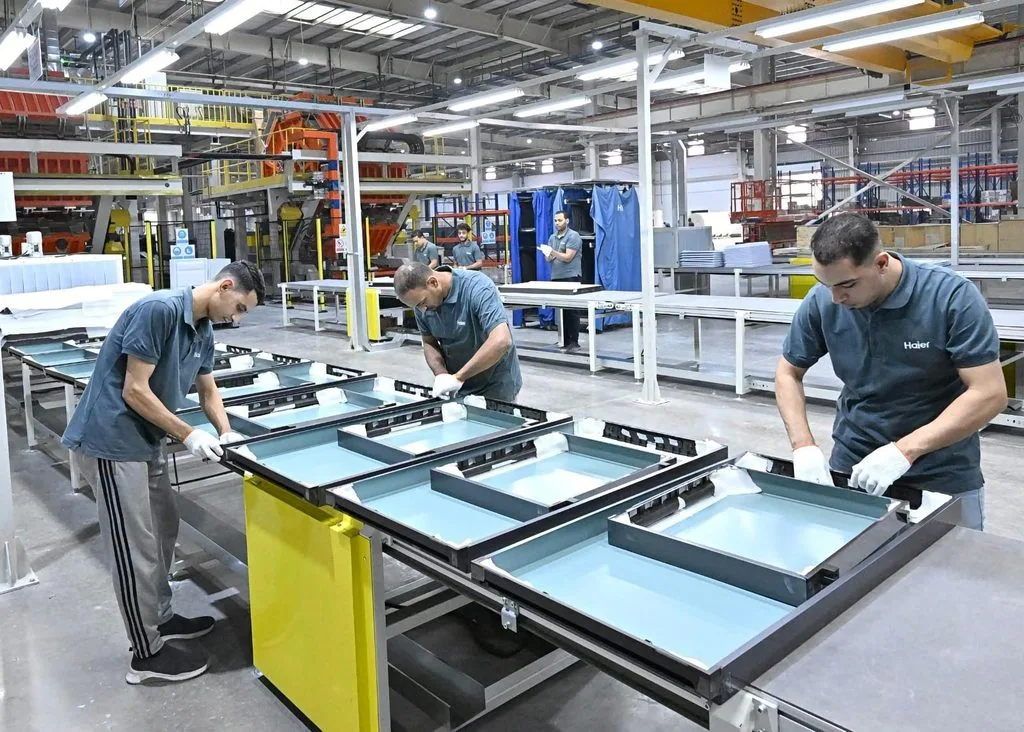
With the completion of the first and second phases, the facility boasts diverse production lines of smart TVs, washing machines, residential air conditioners, low-pressure central air conditioning units, refrigerators, and freezers, alongside a feeding industries plant.
The new expansion involves the introduction of the $70 million Variable Refrigerant Flow (VRF) central air conditioning production line.
This facility offers around 3,000 jobs for young people, while bolstering national industrial capabilities.
The inauguration of such industrial projects contributes to attracting investment, boosting production and creating jobs, economists said.
“When global investors see the implementation of such projects they are more likely to invest in Egypt,” leading economist Rashad Abdo told The Egyptian Gazette.

Expanding the local industrial capacity, he added, would increase exports, reduce reliance on imports and generate more foreign currency, helping increase foreign currency reserves at the Central Bank.
“This would also enable Egypt to meet domestic demand for various goods, particularly food and other essential commodities,” Professor Abdo said.
He described manufacturing as the “most important stage” of the production process, noting that it creates jobs and reduces the need for imported products.
Professor Abdo added that industrial expansion would help businesses secure the machinery, equipment and raw materials they need, supporting production growth and improving export capacity.
“Ultimately, these developments would help attract more Egyptian, Arab and foreign investment and improve the country’s overall economic conditions,” he said.
Haier Group Executive Vice President Li Pan said his company had recorded a ten-fold increase in revenues in Egypt over four years.
It targets tripling its production volume over the next five years to achieve a business volume of $500 million.
This step affirms the company’s long-term expansion roadmap in the Egyptian market, which comes as Egypt pursues a $100 billion export target for 2030.
Li said Haier Egypt Ecological Park, with total investments of $185 million, is the first eco-friendly industrial city in the Middle East and Africa to use digital twin technology.
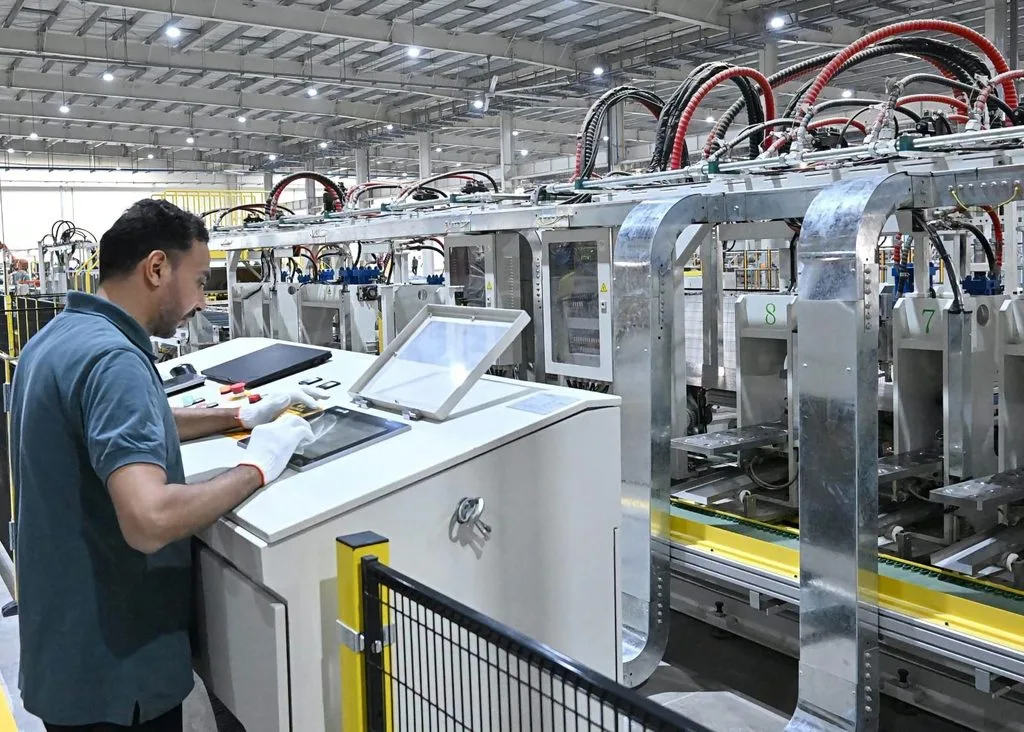
The facility supports Egypt’s green economy, positioning the country as a regional manufacturing and export hub in the Middle Eastern and African markets.
Egypt has become a long-term investment destination and a manufacturing base serving the Middle East, Africa and Europe, Haier Egypt General Manager Ahmed El-Gendi said in press remarks.
Meanwhile, economist Sahar al-Damati described the opening of such industrial facilities as a continuation of efforts to implement the government’s industrial strategy 2026-2030.
This strategy, she added rests on a series of elements, including localising industry, expanding the production base, boosting exports, increasing revenues and reducing public debt.
“It also aims to further engage the private sector into the development and production process,” she told this newspaper.