







Egypt’s Minister of Transport, Kamel El‑Wazir, announced on Friday that New Alamein City has emerged as an integrated smart city and a regional hub for education, innovation and scientific research, alongside its status as a world‑class urban and tourism destination.
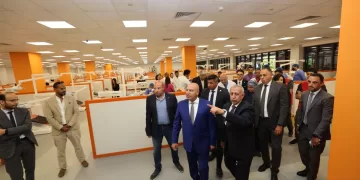
El‑Wazir made the remarks during an inspection tour of the New Alamein branch of the Arab Academy for Science, Technology and Maritime Transport (AASTMT), where he reviewed its advanced educational, technological and medical facilities. He highlighted the academy’s role in preparing qualified professionals equipped with the skills needed to meet global developments and labour market demands.
The minister began his tour at the College of Artificial Intelligence, inspecting its state‑of‑the‑art laboratories and educational technology applications. He also visited the teaching hospital and dental clinics, which provide free medical treatment to more than 200 New Alamein residents daily as part of the academy’s community service efforts.
El‑Wazir praised the high standards of the AASTMT branch, citing its advanced infrastructure and modern educational, medical and technological facilities. He described the academy as a leading model for integrating education, scientific research and practical applications, producing professionals capable of driving development across sectors including transport, logistics, engineering, artificial intelligence and medical sciences.
He stressed that the rapid development of New Alamein reflects the success of Egypt’s vision to establish integrated smart cities that extend beyond urban growth to encompass education, healthcare, industry and services, positioning the city as one of the Middle East’s most promising urban centres.
For his part, AASTMT President Ismail Abdel Ghafar Farag reviewed the capabilities of the branch, which occupies 62 feddans and began operations in 2019. It comprises nine colleges, including Medicine, Dentistry, Pharmacy, Physical Therapy, Artificial Intelligence, Engineering and Technology, Management and Technology, International Transport and Logistics, and Graduate Studies in Management.
The branch currently has more than 4,000 enrolled students and has already graduated three cohorts from several faculties. The first cohort of the College of Medicine is scheduled to graduate this year. Farag emphasised that the branch continues to produce qualified graduates according to the highest international academic standards.
At the conclusion of the visit, El‑Wazir affirmed that the state will continue to support outstanding educational institutions, stressing that human development is the foundation of building the New Republic. He added that investment in education, scientific research and technology is essential to sustaining development, enhancing Egypt’s competitiveness and preparing generations capable of shaping the future and achieving the country’s comprehensive development vision.

