




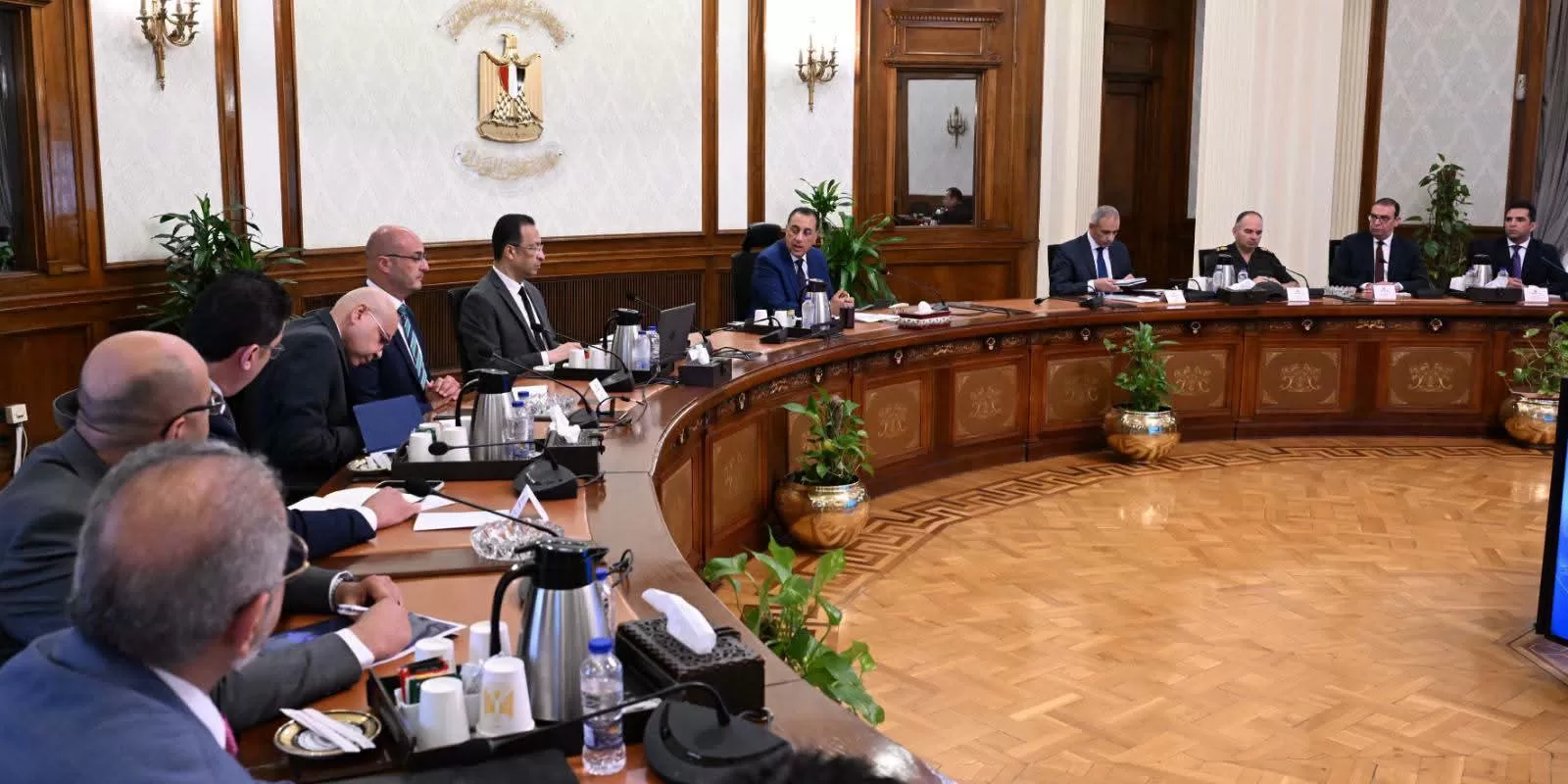
Prime Minister Moustafa Madbouli has underscored the importance of completing telecommunications infrastructure projects, particularly in villages covered under the first phase of the presidential Decent Life initiative.
He also called for continued coordination between the Ministry of Communications and Information Technology and relevant authorities to further improve communications and internet services for citizens across Egypt.
Chairing a meeting to review progress on communications and information technology projects, the prime minister also directed continued support for projects and technological solutions developed by the Ministry’s Applied Innovation Centre, alongside the wider adoption of artificial intelligence and cloud computing applications in line with the objectives of the National Council for Artificial Intelligence, Quantum Computing and Emerging Technologies.
He stressed that these efforts would support secure digital transformation and enhance the competitiveness of the sector, the ministry said in a statement.
Minister of Communications and Information Technology Raafat Hindi, representative of the Armed Forces Signal Corps Major General Mohamed Ali, Chief Executive Officer of the National Telecommunications Regulatory Authority Mohamed Shamroukh, and officials from the relevant ministries and agencies attended the meeting.
For his part, Minister Hindi reviewed efforts to strengthen Egypt’s digital infrastructure as a key driver of digital transformation, investment attraction and improved communications services.
He outlined the ministry’s plan to expand the nationwide fibre optic network, replace copper cables with fibre optic infrastructure, extend 5G services and increase the number of mobile towers.
He noted that fibre optic networks have been installed in more than 1,250 villages under the Decent Life initiative, enabling residents to access digital services.
The minister also highlighted efforts to develop advanced digital infrastructure to support artificial intelligence, attract investment in AI and cloud computing, and expand mega data centres as a foundation for the digital economy.
He reviewed the Applied Innovation Centre’s AI solutions across the health, education, agriculture and culture sectors, as well as the development of the “Karnak” large language model to strengthen Egypt’s digital sovereignty and support Arabic generative AI.
Eng Hindi added that Egypt has advanced 60 places over the past six years in the 2025 Government AI Readiness Index published by Oxford Insights, ranking first in Africa and 51st globally.

