



• Latest
  • Trending
  • All
  • Egypt
  • Business
  • Local
  • World
How US manages its interests in ME (3 – 3)

How climate, agricultural technologies open door to foreign influence  (4-5) 

July 26, 2026
US sanctions Turkish bank called Iran’s ‘critical financial lifeline’

US sanctions Turkish bank called Iran’s ‘critical financial lifeline’

September 4, 2026
Xi to bring large CEO delegation on US visit

Xi to bring large CEO delegation on US visit

September 4, 2026
Egypt wins Women’s African Cup, qualifies for 2028 Olympics

Egypt wins Women’s African Cup, qualifies for 2028 Olympics

September 4, 2026
Ebola vaccine project discussed to boost Egypt’s local manufacturing

Ebola vaccine project discussed to boost Egypt’s local manufacturing

September 4, 2026
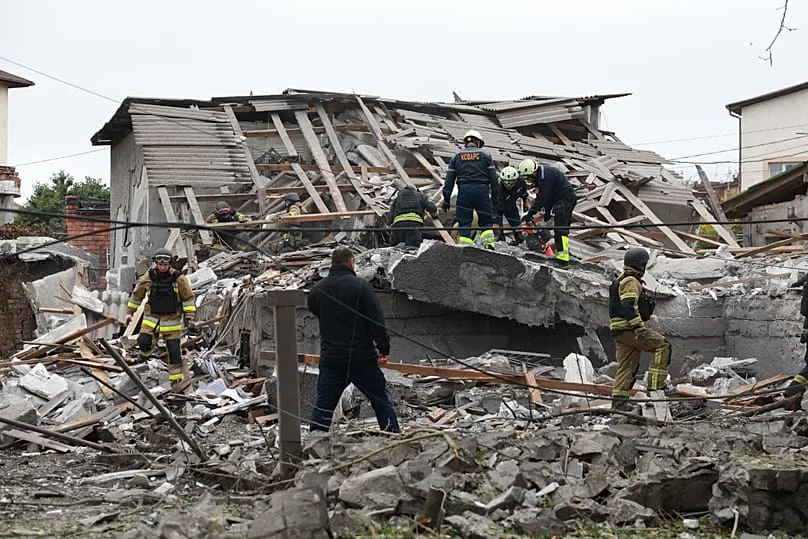
Russian drone strikes Ukraine’s security service HQ

Russian drone strikes Ukraine’s security service HQ

September 4, 2026

Egypt FM praises Italy’s Nile water stance

September 4, 2026
Trump threatens trade halt over Fed rate cuts

Trump threatens trade halt over Fed rate cuts

September 4, 2026
Egypt, Bosnia’s Pretis sign defence industry co-operation MoU

Egypt, Bosnia’s Pretis sign defence industry co-operation MoU

September 4, 2026
Egypt FM praises Italy’s Nile water stance

Egypt FM praises Italy’s Nile water stance

September 4, 2026
How El Nino-driven drought is squeezing the Panama Canal

How El Nino-driven drought is squeezing the Panama Canal

September 4, 2026
  • Advertise
  • Privacy & Policy
  • Contact
Friday, September 4, 2026
  • Login

Editor-in-Chief

Mohamed Fahmy

Board Chairman

Tarek Lotfy

Egyptian Gazette
No Result
View All Result
  • HOME
  • EGYPT
    • Local
    • Features
  • World
    • National Day
  • Technology
  • BUSINESS
    • Real Estate
    • Automotive
  • SPORTS
  • ENTERTAINMENT
    • Arts
    • Health
    • Lifestyle
    • Travel
  • Skyward
    • Snippets from EgyptAir history
  • MORE
    • Multimedia
      • Video
      • Podcast
      • Gallery
    • OP-ED
  • HOME
  • EGYPT
    • Local
    • Features
  • World
    • National Day
  • Technology
  • BUSINESS
    • Real Estate
    • Automotive
  • SPORTS
  • ENTERTAINMENT
    • Arts
    • Health
    • Lifestyle
    • Travel
  • Skyward
    • Snippets from EgyptAir history
  • MORE
    • Multimedia
      • Video
      • Podcast
      • Gallery
    • OP-ED
No Result
View All Result
Egyptian Gazette
No Result
View All Result
Home Egypt

How climate, agricultural technologies open door to foreign influence  (4-5) 

by Gazette Staff
July 26, 2026
in Egypt, OP-ED
How climate, agricultural technologies open door to foreign influence  (4-5)  11 - Egyptian Gazette
Share on FacebookWhatsapp

By Dr Ashraf Abul Saud

The Middle East stands among the world’s most exposed regions to climate change.

Beyond rising temperatures and chronic water shortages, the region’s heavy reliance on imported food and farming technology has left it increasingly dependent on outside powers.

Some scholars describe this dynamic as a form of climate and agricultural colonisation, where environmental stress, economic interests, and geopolitical ambitions feed into one another, creating a cycle that is hard to break.

A central element of this pattern is the politics of water, often called hydropolitics.

The region holds less than 2 per cent of the world’s renewable freshwater but is home to more than 6 per cent of the global population.

As climate change intensifies, control over water has become a key strategic asset.

Experts note that nations mastering desalination, efficient water management, and climate-adapted agriculture can exert significant sway, not by seizing rivers or aquifers directly, but by supplying the essential technologies needed to use them.

Food security in much of the Middle East is now deeply tied to global markets.

Many countries import large quantities of wheat, corn, edible oils, and seeds.

The Covid-19 pandemic and the Russian-Ukrainian war exposed the risks of this approach: when supply chains faltered and prices spiked, the fragility of these policies became painfully clear.

Overdependence on foreign markets has undermined regional food security and left countries vulnerable to distant economic and political shocks.

Climate finance adds another layer. On one side, it offers vital funding for adaptation projects and renewable energy.

On the other, critics warn that the conditions attached to this money, including technical requirements and institutional reforms, can deepen reliance on external experts.

Too often, this leads to limited technology transfer and weaker local capacity in developing nations.

From a broader geopolitical view, climate change acts as a threat multiplier.

Drought, desertification, falling crop yields, internal migration, and strained resources all reveal weaknesses in national infrastructure.

These pressures can create openings for economic or political leverage by those who control financial resources and advanced technology.

Importantly, this form of climate influence does not resemble traditional occupation of land or resources.

Instead, it operates through quieter channels, such as economic incentives, institutional rules, and technical dependencies, that allow powerful international actors to shape the decisions of vulnerable states.

For countries in the Middle East, the real task ahead is to restore sovereignty over their climate and agricultural future.

That means sustained investment in local research to develop home-grown seeds, smarter water systems, and better farming practices.

It also requires diversifying food import sources, building domestic agricultural technology, and strengthening co-operation across the region.

In the end, those who possess knowledge, technology, and strong institutions will be far less likely to fall into patterns of strategic dependence.

Dr Ashraf Abul Saud is a writer and an international relations scholar.

[email protected]

Tags: agricultural colonisationClimate changedesalination
ADVERTISEMENT
egyptian-gazette-logo

The Egyptian Gazette is the oldest English-language daily newspaper in the Middle East.
It was first published on January 26, 1880 and it is part of El Tahrir Printing and Publishing House.

Follow Us

Gazette Notifications

Would you like to receive notifications on our latest news ?

  • Advertise
  • Privacy & Policy
  • Contact

Copyrights for © Egyptian Gazette - Administered by Digital Transformation Management.

Welcome Back!

Login to your account below

Forgotten Password?

Retrieve your password

Please enter your username or email address to reset your password.

Log In
No Result
View All Result
  • HOME
  • EGYPT
    • Local
    • Features
  • World
    • National Day
  • Technology
  • BUSINESS
    • Real Estate
    • Automotive
  • SPORTS
  • ENTERTAINMENT
    • Arts
    • Health
    • Lifestyle
    • Travel
  • Skyward
    • Snippets from EgyptAir history
  • MORE
    • Multimedia
      • Video
      • Podcast
      • Gallery
    • OP-ED

Copyrights for © Egyptian Gazette - Administered by Digital Transformation Management.

This website uses cookies. By continuing to use this website you are giving consent to cookies being used. Visit our Privacy and Cookie Policy.
