



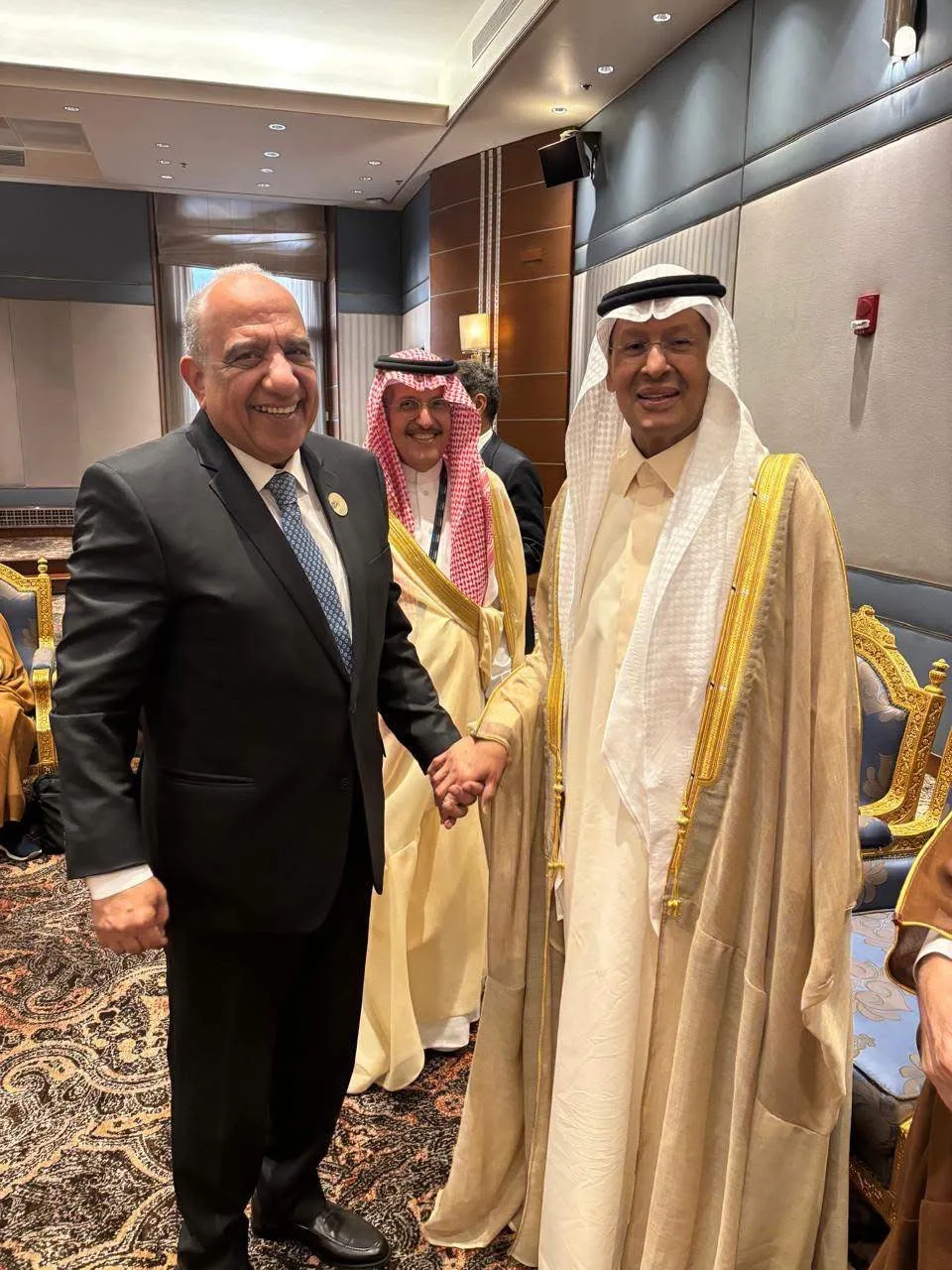
As part of Egypt’s efforts to strengthen regional energy cooperation and expand electricity interconnection, Minister of Electricity and Renewable Energy Mahmoud Esmat met Saudi Minister of Energy Prince Abdulaziz bin Salman Al Saud in Riyadh on Tuesday to discuss preparations for the launch of the Egypt-Saudi Arabia electricity interconnection project in the coming weeks.
The meeting took place on the sidelines of the Arab Ministerial Council for Electricity meeting and the International Energy Forum. The two ministers reviewed progress on the project, including the ongoing trial operation of its second phase, with technical teams from both countries working to complete testing of the 1,500-megawatt phase. They agreed to announce the completion of trial operations and jointly declare the project’s launch and commencement of operation.
With a total capacity of 3,000 megawatts, the project is one of the region’s major energy infrastructure initiatives and a step towards establishing an integrated Arab electricity interconnection network. It will enable the two countries to exchange electricity by capitalising on differences in peak demand periods, making better use of surplus power, improving operational efficiency and enhancing the stability and sustainability of their electricity grids.
The discussions also covered opportunities to expand private investment in renewable energy, particularly solar and wind power, as well as the exchange of technical expertise and modern technologies in electricity generation, transmission and distribution. The ministers discussed co-operation mechanisms to support the implementation of joint plans and promote economically efficient operations for the mutual benefit of both countries.
Esmat highlighted the longstanding ties between Egypt and Saudi Arabia and their strategic partnership in strengthening energy security. He said the interconnection would create an electricity bridge between two of the region’s largest power grids, improve the utilisation of generation capacity, reduce fuel consumption and support the development of a shared Arab electricity market.
He added that completing the project and connecting it to the unified grid would pave the way for further initiatives in clean energy, helping to reduce carbon emissions and reliance on fossil fuels.
The Egypt-Saudi Arabia electricity interconnection project will exchange up to 3,000 megawatts through three major high-voltage substations: one in East Madinah and another in Tabuk in Saudi Arabia, and a third in Badr, east of Cairo. The substations are connected by approximately 1,350 kilometres of overhead power lines and submarine cables. The project is being implemented by a consortium of three international companies.

