









Egypt’s tourism minister met the head of Japan’s travel agents association on Saturday to discuss strengthening co-operation and increasing tourist arrivals from Japan.
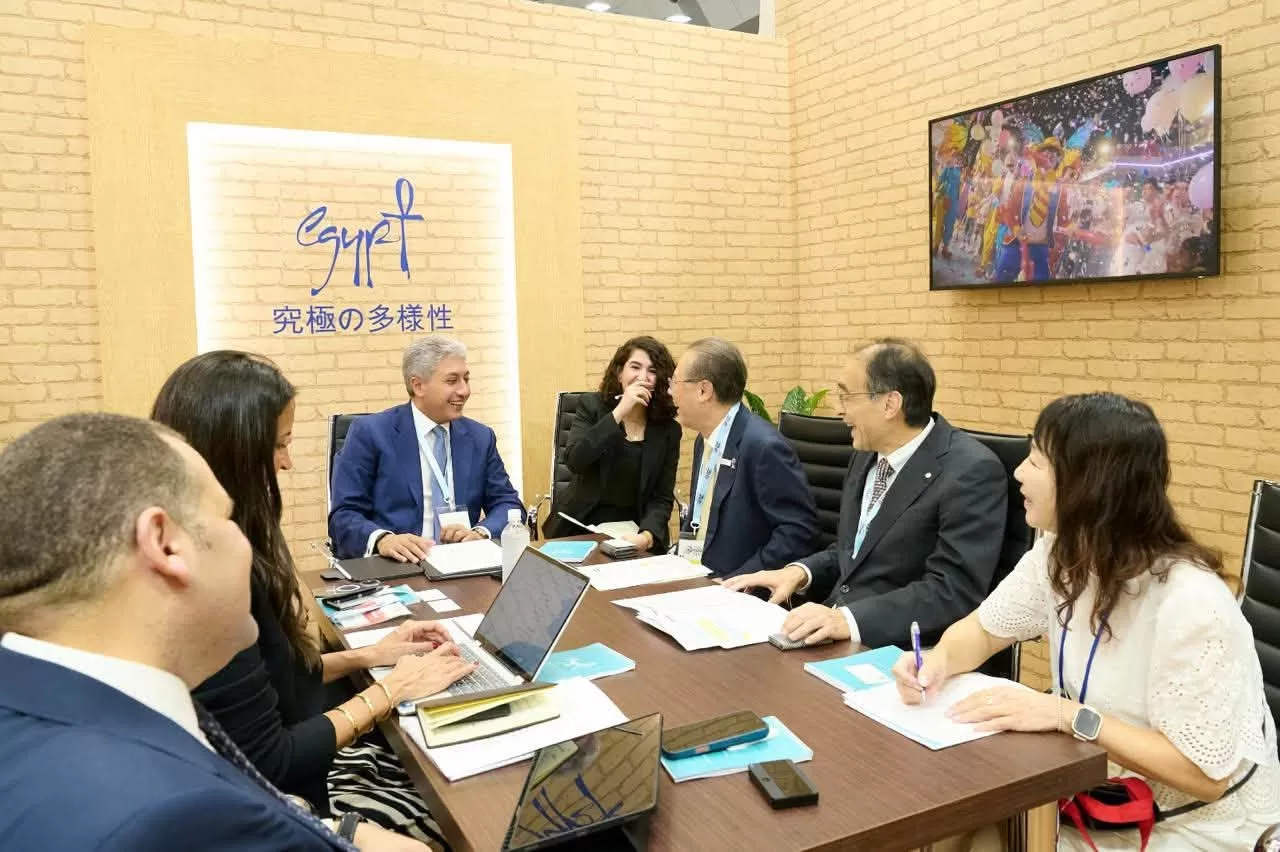
Sherif Fathy held talks with the chairman of the Japan Association of Travel Agents (JATA), Yuji Hara, on the sidelines of Tourism Expo Japan, which runs in Tokyo from September 24 to 26.
Fathy highlighted the importance of the Japanese market to Egypt and noted an increase in arrivals from Japan over the past year, the ministry said in a statement.
The JATA chairman said Egypt remained an important destination for Japanese travellers despite developments in the Middle East. He added that there was strong demand among Japanese tourists, particularly those interested in cultural tourism and ancient Egyptian history, as well as local experiences.
The two sides discussed developing integrated tourism programmes combining cultural, beach and other products, and organising incentive trips to Egypt in co-operation with Japanese tour operators.
Fathy also invited JATA to hold its annual meeting in Egypt, an invitation welcomed by the Japanese side.
On Friday, the minister opened Egypt’s pavilion at the expo, accompanied by Egypt’s ambassador to Japan, Ragy El-Etreby. He said the event provided an opportunity to promote Egypt’s tourism products and strengthen co-operation with Japanese tour operators, travel companies and airlines.
More than 1,350 exhibitors from 82 countries are taking part in the expo.
On the sidelines of the expo, Fathy participated as a speaker in the ninth ministerial roundtable held during the expo under the theme “Reimagining the Future of Tourism — Investment Strategies for Regenerative Tourism.”
The discussions focused on global challenges facing tourism, investment in regenerative tourism, environmental protection, infrastructure, digital transformation, workforce development and support for local communities.
Fathy said Egypt was working to build a resilient and sustainable tourism sector while protecting the environment and preserving its cultural heritage.
“Regenerative tourism” goes beyond limiting environmental damage by seeking to create a positive and lasting impact on destinations, local communities and heritage, he said.
Egypt’s strategy aims to strengthen sustainable economic security through tourism and maximise the sector’s social impact, ensuring that growth produces tangible benefits for surrounding communities, Fathy added.
He also highlighted public-private partnerships to improve services at archaeological sites and museums, enhance visitor experiences and generate revenues to be reinvested in conservation.
The minister said Egypt was also promoting green practices in hotels, diving centres, museums and archaeological sites nationwide.

