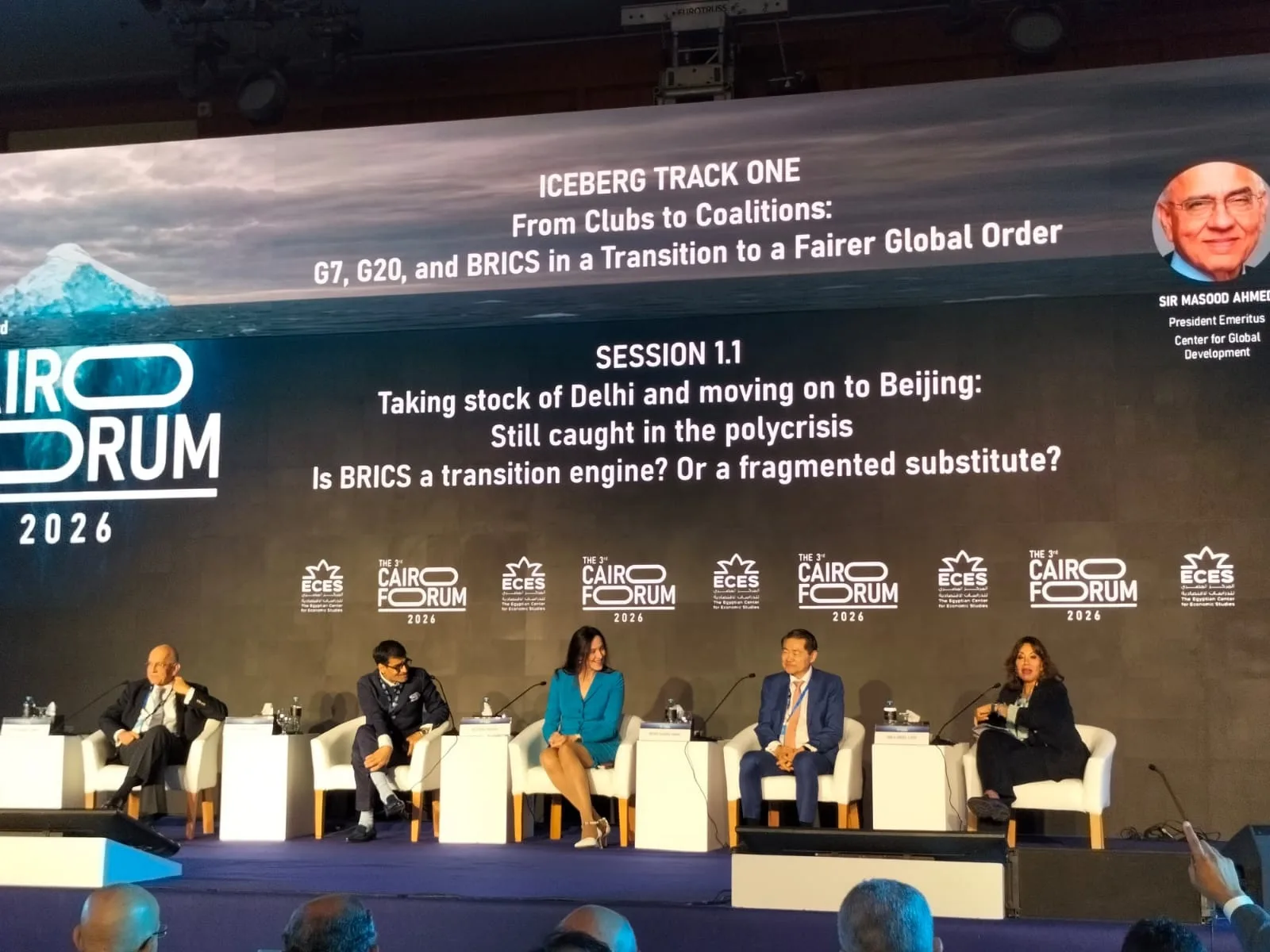


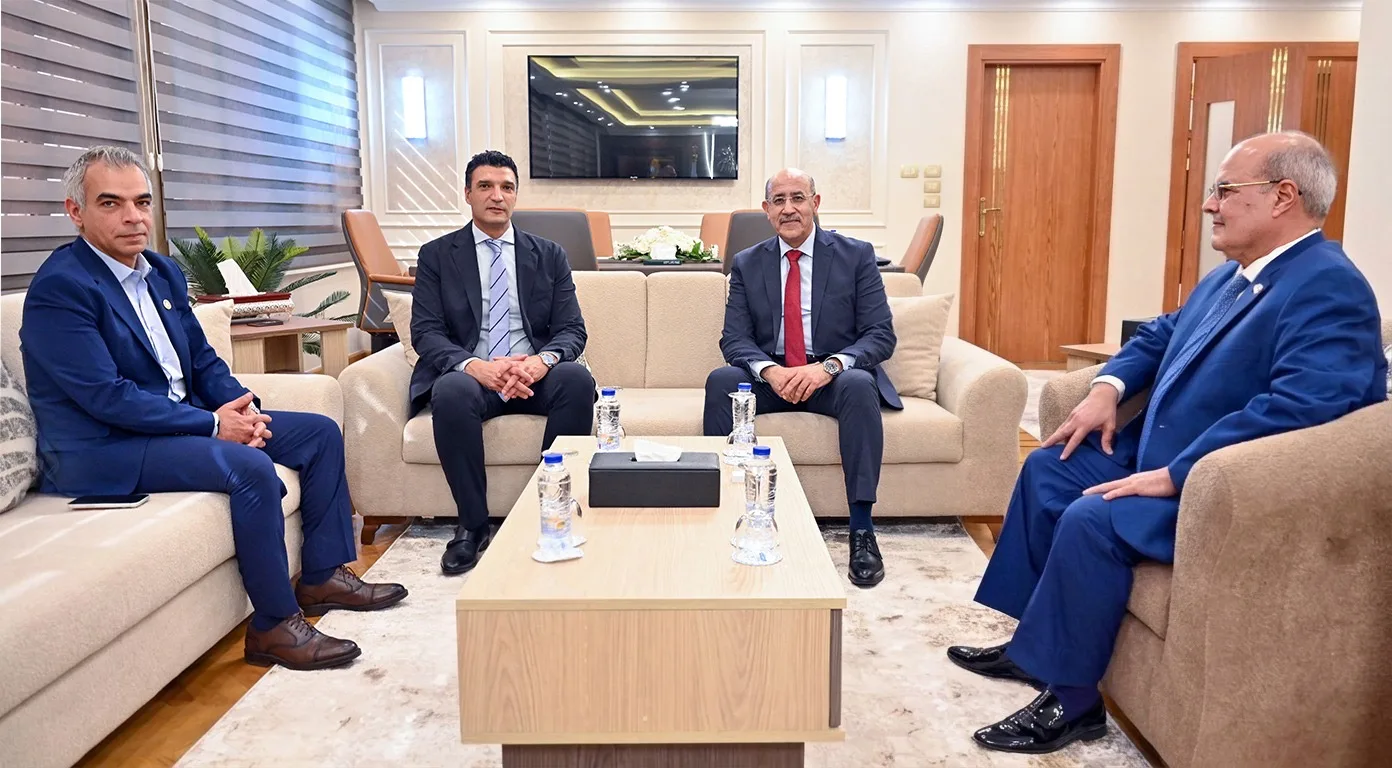


BRICS’s role in reshaping the global order took centre stage at the opening session of the Cairo Forum 3, which started in Cairo on Sunday, for two days, with high-level participation from representatives and officials of more than 30 countries, alongside a number of leading international institutions and organisations.
The forum is set to discuss the latest rapid developments in the regional and international economic and geopolitical landscapes.
International experts debated in the session whether the bloc could drive a transition towards a multipolar world or provide a viable alternative amid growing global fragmentation.
The session, entitled “The New World, The Old Crisis: Is BRICS the Transition Engine to a Fragmented Substitute?”, was moderated by Abla Abdel Latif, Executive Director and Head of Research at the Egyptian Centre for Economic Studies (ECES).
Dialogue over conflict
This year is pivotal for the bloc for three reasons, topped with the return of the G20 presidency to the US after years of presidencies by Global South countries, leaving BRICS to carry discussions that Washington was unwilling to take up, President of India’s Observer Research Foundation (ORF), Samir Saran, said.
In addition, conflicts have multiplied worldwide, some involving BRICS members themselves, yet New Delhi secured a 14-paragraph consensus statement, and development, battered since the pandemic, returned to the agenda.
New Delhi, Saran said, chose to deepen the bloc’s work rather than expand it, proposing a troika arrangement to ensure continuity between summits.
Key outcomes included an institutional framework for food security and early warning, a startup incubation programme awaiting a dedicated fund, and a commitment to strengthen the New Development Bank and the Contingent Reserve Arrangement. India also held 400 meetings across 30 cities. “All eyes on Beijing,” he said, hoping China will carry these outcomes forward, he added.
A new equilibrium
Founder and president of the Center for China and Globalisation (CCG), Henry Huiyao Wang, told the session that BRICS ‘reflects the rise of the Global South and a shift from a unipolar to a multipolar world’.
Institutions such as the International Monetary Fund (IMF) and the World Trade Organisation (WTO) remain of prime importance but need reform, and that new bodies such as the New Development Bank (NDB) and the sian Infrastructure Investment Bank (AIIB) show the way, he added.
He also called for a greater Global South role in stabilising regional conflicts, noting that China is the largest trading partner of the Gulf and Middle East while India has the largest diaspora there, and welcomed the emergence of BRICS payment systems as an alternative to reliance on a single currency.
Beijing, he said, sees the Global South as a natural partner, drawing on four decades of development experience in infrastructure, education and health. He described China as playing a stabilising role, calling for a return to economic fundamentals alongside a strategic balance that keeps conflicts under control.
Culture of dialogue
BRICS presents a new model of international relations. Its expansion brought more points of tension without making it weaker, she argued, because members retain a culture of dialogue, Head of Russia’s BRICS Expert Council, Victoria Panova, said.
The bloc is building a financial ecosystem, including clearing, insurance and payment mechanisms, and moving bilateral arrangements to the multilateral level, Panova added.
She acknowledged that the bloc ‘has no unified proposal yet on global governance reform. Yet, she agrees the current system cannot continue.
Panova stressed that BRICS has a positive agenda and tolerates diversified diplomacy, citing Indonesia, its newest member, which still seeks to join the OECD. The NDB, she noted, was set up within two and a half years of the idea being raised.
Global South’s own conversation
President Emeritus Centre for Global Development, Masood Ahmed, told the session that BRICS had begun as a reaction to an order that gave emerging powers too little say.
The rules-based order is still the dominant framework, he argued, but more countries are now exploring how to amend it, he added.
BRICS is the forum where the Global South can set out its views, and it need not adopt a single vision.
He also pointed to the difference between the NDB and AIIB models on conditionality and co-operation with existing institutions, as a question for reforming the World Bank and regional banks.
In his view, the G7 will focus on its own perspective, BRICS on the Global South’s, and the G20 should ideally be where the two meet, he noted.

