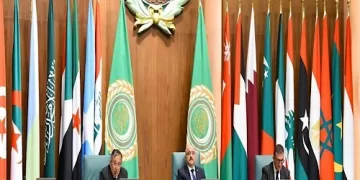




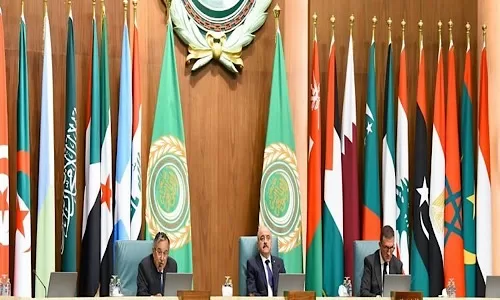
The Arab League has reaffirmed that the water security of Egypt and Sudan is an integral part of Arab national security, rejecting any measures that could undermine the two countries’ rights to Nile waters.
In a resolution adopted at the conclusion of its 166th regular session at foreign minister level on Monday, the league expressed “deep concern” over Ethiopia’s continued unilateral filling and operation of its Grand Ethiopian Renaissance Dam (GERD).
The league said such actions violated applicable international law, particularly the Declaration of Principles agreement signed by Egypt, Sudan and Ethiopia in Khartoum in March 2015.
It also voiced concern over what it described as Ethiopia’s intransigence, saying negotiations had ended without a fair, balanced and legally binding agreement governing the dam’s filling and operation.
The Arab ministers urged Ethiopia to refrain from unilateral steps that could harm the water interests of Egypt and Sudan, and called on it to respect international law principles, including preventing significant harm to other states sharing an international waterway, equitable and reasonable use of shared waters, cooperation, and prior notification and consultation.
The league rejected what it called Ethiopia’s attempts to create an illegal fait accompli regarding shared rivers and to legitimise a dam built without adherence to relevant international legal rules.
It also rejected the dam’s unilateral and uncoordinated operation, warning that it posed a continuing risk of serious harm to the downstream countries.
The resolution called on the UN Security Council to assume its responsibilities over the dispute, which the league said threatened regional and international peace and security.
The Arab League decided to keep the GERD issue as a permanent item on the agenda of its summits and ministerial meetings until a settlement is reached that safeguards Egypt and Sudan’s water rights. It also tasked Arab representatives and a committee formed under a 2020 resolution with monitoring developments and coordinating with Cairo and Khartoum on future steps.

