






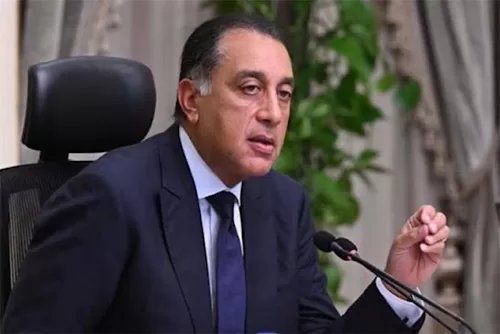
Egypt’s Prime Minister Mostafa Madbouly reviewed a report on the General Authority for Healthcare’s key achievements during the first half of the 2025/2026 fiscal year, highlighting progress in expanding comprehensive health insurance coverage, improving service quality, strengthening financial sustainability and accelerating digital transformation.
The report, presented by General Authority for Healthcare Chairman Ahmed El-Sobky, said 6,767,985 people benefited from the system during the period, receiving 94,222,109 treatment services and 3,827,478 comprehensive screening services.
Treatment-service visits totalled 18,978,271, while the authority’s network expanded to 335 healthcare facilities, including 289 family medicine centres, units and comprehensive clinics, as well as 46 hospitals.
A total of 855,602 surgical procedures were performed, including 191,771 advanced operations.
The report highlighted the authority’s commitment to international quality and accreditation standards. Sharm El-Sheikh International Hospital and Ismailia Medical Complex received Joint Commission International accreditation, while laboratories at Al-Shifa Medical Complex and Karnak Hospital obtained ISO accreditation.
The Stroke Unit at Ismailia Medical Complex also received accreditation from the World Stroke Organisation.
The authority continued implementing its value-based care approach, shifting the focus from the volume of services provided to quality and health outcomes, particularly in the management of chronic diseases.
Under a primary-care project, the rate of uncontrolled hypertension and diabetes fell to 4% among 217,000 beneficiaries receiving annual follow-up, the report said.
Primary healthcare services were expanded through the opening of seven new units and centres and the addition of 760 specialised-clinic shifts. A total of 37,643 counselling sessions were provided, marking a 33 per cent increase from the previous period, while 199,686 beneficiaries received primary-care emergency services.
The “Live Healthy” programme conducted 1,683 community activities, compared with 150 during the previous period.
The report also highlighted public health initiatives. Some 70,162 beneficiaries received hepatitis C services, while 159,416 benefited from women’s health initiatives and 15,377 received maternal and foetal health services.
Other programmes covered chronic and kidney diseases, cancer, premarital screening and newborn hearing impairment.
Human-resource development efforts included plans for 1,265 training courses, fellowship programmes and Egyptian Board training programmes across 248 medical departments and 45 primary-care facilities.
The programmes involved 290 trainers and 929 trainees, alongside training opportunities in Japan and at international institutions.

