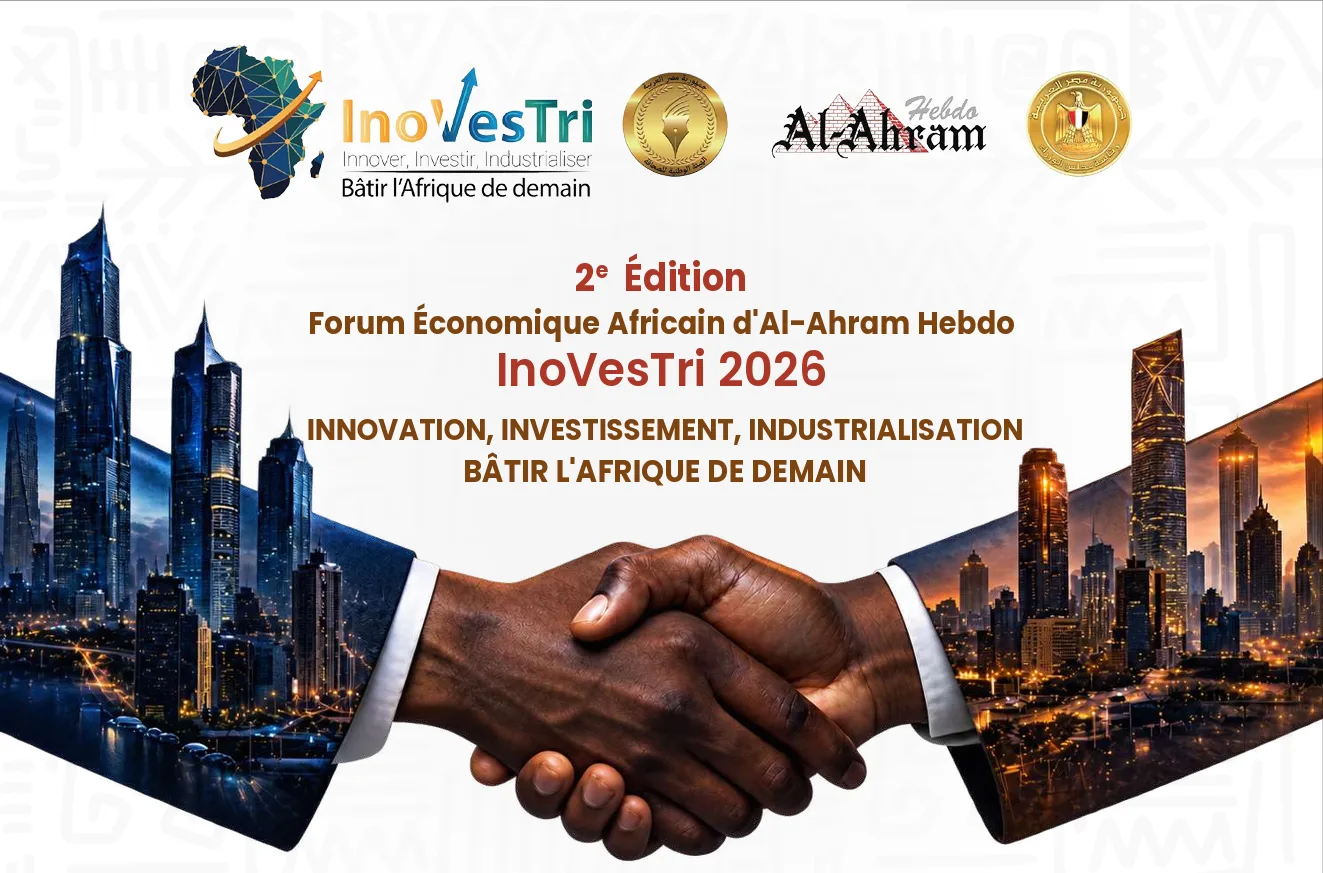






Al-Ahram Hebdo will launch the second edition of its African Economic Forum (InoVesTri 2026) on Saturday 28 November 2026, in the Naguib Mahfouz Hall at the organisation’s headquarters. Held under the title “The African economy: from confronting geopolitical turbulence to consolidating sovereignty”, the forum will bring together senior officials, decision-makers and economic and diplomatic leaders from Egypt and across the African continent.
Attendees will include Eng Ibrahim Mehleb, a former prime minister; Dr Hussein Eissa, deputy prime minister for economic affairs; and Dr Hala El-Said, adviser to the president for economic affairs, along with a number of Egyptian and African ministers and officials.
Other participants will include Dr Mohamed Farid Saleh, minister of investment and foreign trade; Eng Khaled Hashem, minister of industry; Eng Randa El-Menshawy, minister of housing, utilities and urban communities; Mr Ahmed Kouchouk, minister of finance; Mr Ahmed Rostom, minister of planning; and Eng Hossameddin Mostafa, deputy minister of transport for African affairs. They will be joined by Mohamed Abu al-Enein, deputy speaker of the House of Representatives, and Dr Mamadou Labrang, ambassador of the Republic of Cameroon and dean of the African diplomatic corps. African ambassadors and representatives of diplomatic missions, leaders of international and regional financial institutions, company heads, investors and businesspeople will also take part.
This year’s forum carries the slogan “Investment, industrialisation, innovation: building the Africa of tomorrow”. It is intended as a strategic platform for dialogue on the future of the African economy amid rapid geopolitical and economic shifts. These pose challenges for trade, investment and global supply chains, and call for African states to be better able to build more independent and competitive economies and to consolidate the foundations of economic and financial sovereignty.
The forum’s sessions will address a number of key issues relating to the continent’s future development, foremost among them how to turn government visions into executive policies capable of stimulating investment and industrialisation, and how to accelerate urban development, infrastructure and cross-border connectivity. The sessions will also examine ways of deepening African economic integration, expanding markets through collective partnerships and cross-border projects, and strengthening the role of international and regional financial institutions in funding development and investment projects.
The dialogue will extend to ways of making the most of Africa’s natural resources and of moving from exporting raw materials to local manufacturing and higher added value. It will also cover support for innovation and technology and the building of a competitive production base, so that the continent can draw on its human and economic potential and turn it into real engines of growth.
The forum will also set aside time to discuss the priorities of the coming phase and to look ahead to an economic road map for 2027, based on strengthening financial sovereignty, developing strategic planning tools and expanding African partnerships, in order to support the ability of the continent’s economies to deal with international changes and ensure sustainable growth.