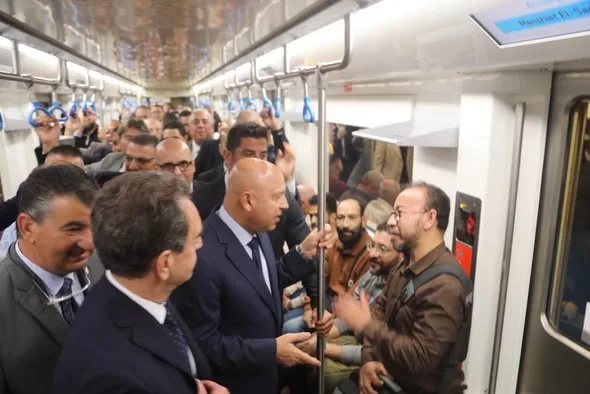




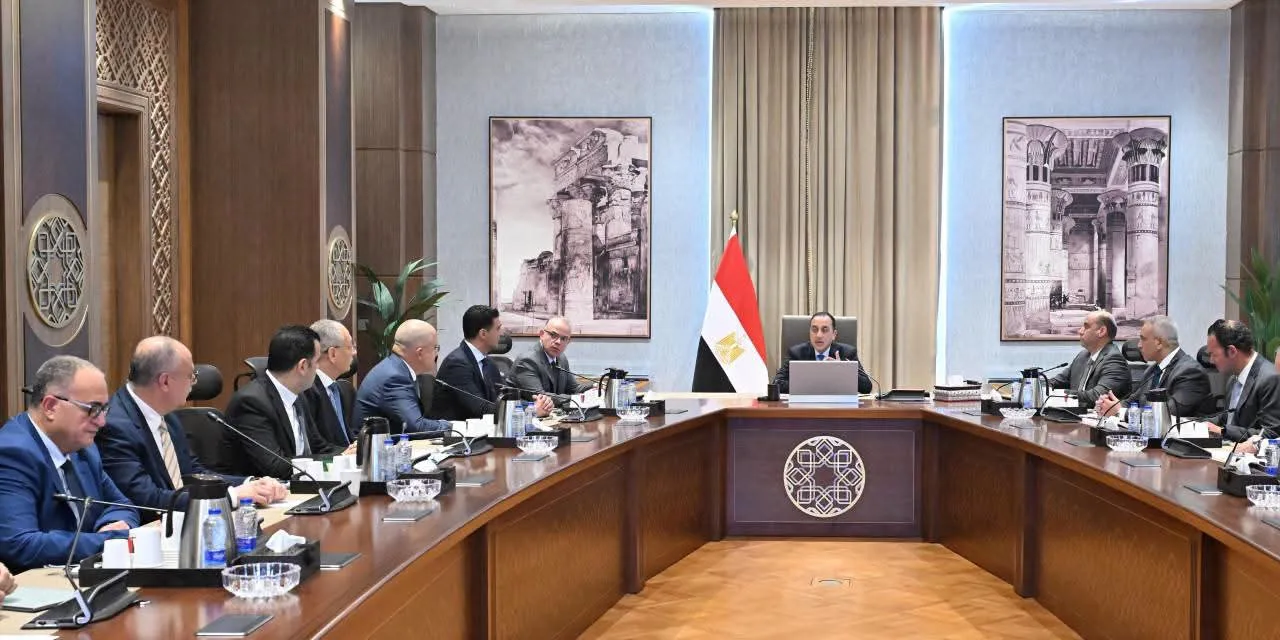


Minister of Transport Kamel el-Wazir witnessed on Sunday the launch into service of the first two new air-conditioned trains under a contract to supply 55 trains for Cairo Metro’s Line 1 (Helwan–New El-Marg).
The contract was signed with French company Alstom and covers a total of 495 air-conditioned carriages.
The event was attended by French Ambassador to Egypt Eric Chevallier, National Authority for Tunnels (NAT) Chairman Tarek Gewaily, senior officials from the Ministry of Transport and NAT, as well as representatives of Alstom.
The launch comes in line with President Abdel Fattah El-Sisi’s directives to upgrade services provided to passengers across various forms of public transportation.
It is also part of the Ministry of Transport’s comprehensive plan to modernise and improve the efficiency of existing metro lines, enhance services for citizens, construct new lines and expand the metro network.
Wazir and his accompanying delegation boarded one of the two new trains at Saray El-Qobba station and travelled to Sadat station, passing through Kobri El-Qobba, Manshiet El-Sadr, El-Demerdash, Ghamra, Al-Shohadaa, Orabi and Gamal Abdel Nasser stations.
During the ride, the minister inspected the trains’ advanced technical and technological features, stressing the importance of continuing to modernise existing lines and providing safe, modern and high-quality transportation services that meet the expectations of Egyptian citizens.
The minister said the new train contract with Alstom represents a key component of the plan to upgrade Line 1’s fleet. It includes the delivery of 55 air-conditioned trains, each consisting of nine carriages, in addition to supplying Tura workshop with modern equipment compatible with the technology used in the new trains.
The contract also includes eight years of maintenance services and a comprehensive major overhaul, including spare parts, for each train to ensure fleet efficiency and operational sustainability.
Wazir explained that the new trains feature advanced technical and technological specifications designed to provide passengers with the highest levels of comfort and safety.
The minister emphasised that the government’s objective goes beyond simply adding new trains to Line 1, as it is implementing a comprehensive upgrade of all components of the system to achieve a qualitative improvement in service quality, operational efficiency and safety standards.
He explained that current development works include the rehabilitation and maintenance of 23 trains in co-operation with a Spanish company, in addition to upgrading signaling, telecommunications and central control systems, railway tracks, electrical power infrastructure and electromechanical systems, in co-operation with an alliance comprising Egyptian and French companies.
Wazir said these projects aim to achieve tangible improvements in services through enhancing operational efficiency, reducing intervals between trains, increasing passenger capacity and ensuring more regular train schedules, thereby reducing waiting times and providing more comfortable and safer journeys.
Wazir added that the efforts exerted by the ministry come as part of the state’s strategy to establish an integrated network of sustainable green public transportation, ensure connectivity between different modes of transport, reduce carbon emissions, facilitate citizens’ mobility and keep pace with Egypt’s extensive urban expansion, while creating new development corridors that support economic and investment activities.

