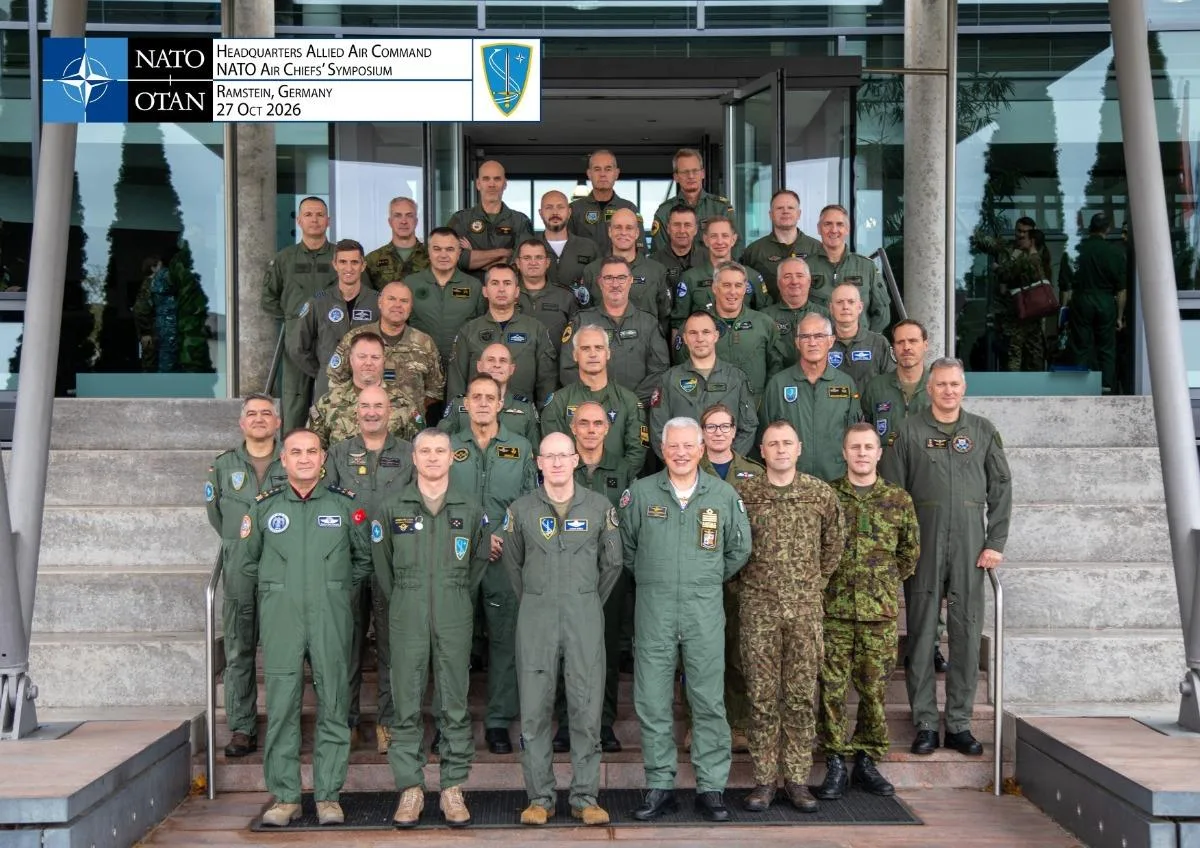











Air force chiefs and senior military officials from 28 NATO member states and five partner countries have reaffirmed their commitment to strengthening the alliance’s integrated air and missile defense system and enhancing readiness to counter current and emerging threats, particularly attack drones.
The commitment came during the NATO Air Chiefs’ Symposium, held at Allied Air Command headquarters in Ramstein, Germany. Discussions focused on the alliance’s air defense posture, collective security and coordination among allied air forces.
Participants reviewed plans to improve combat operations, update the integrated air and missile defense framework and strengthen command and control structures to ensure a rapid response to threats.
NATO said its Standing Defense Plan SDP-12000 operates in peacetime, crises and conflicts to protect allied territory, populations and forces against aerial threats, including one way attack drones, while preparing for future challenges.
The plan establishes common rules of engagement, command-and-control procedures and targeting processes to ensure more efficient use of resources and shift from air surveillance to active defense.
Commander of NATO Allied Air Command, US Lieutenant General Jason T Hinds, stressed the importance of continued training, capability-sharing and joint planning to counter evolving threats, ensuring allied forces remain ready to respond to any attack.
He said the symposium also provided an opportunity to exchange expertise and strengthen collective security and cooperation among NATO members.
Participants highlighted the role of joint exercises, including Steadfast Duel 2026 and Ramstein Flag 2026, in testing operational plans, decision making and coordination, thereby improving interoperability and readiness across the Euro-Atlantic region.
NATO said closer strategic coordination and stronger command structures would reinforce collective deterrence and defense and enable allied air forces to respond to threats from any direction.

