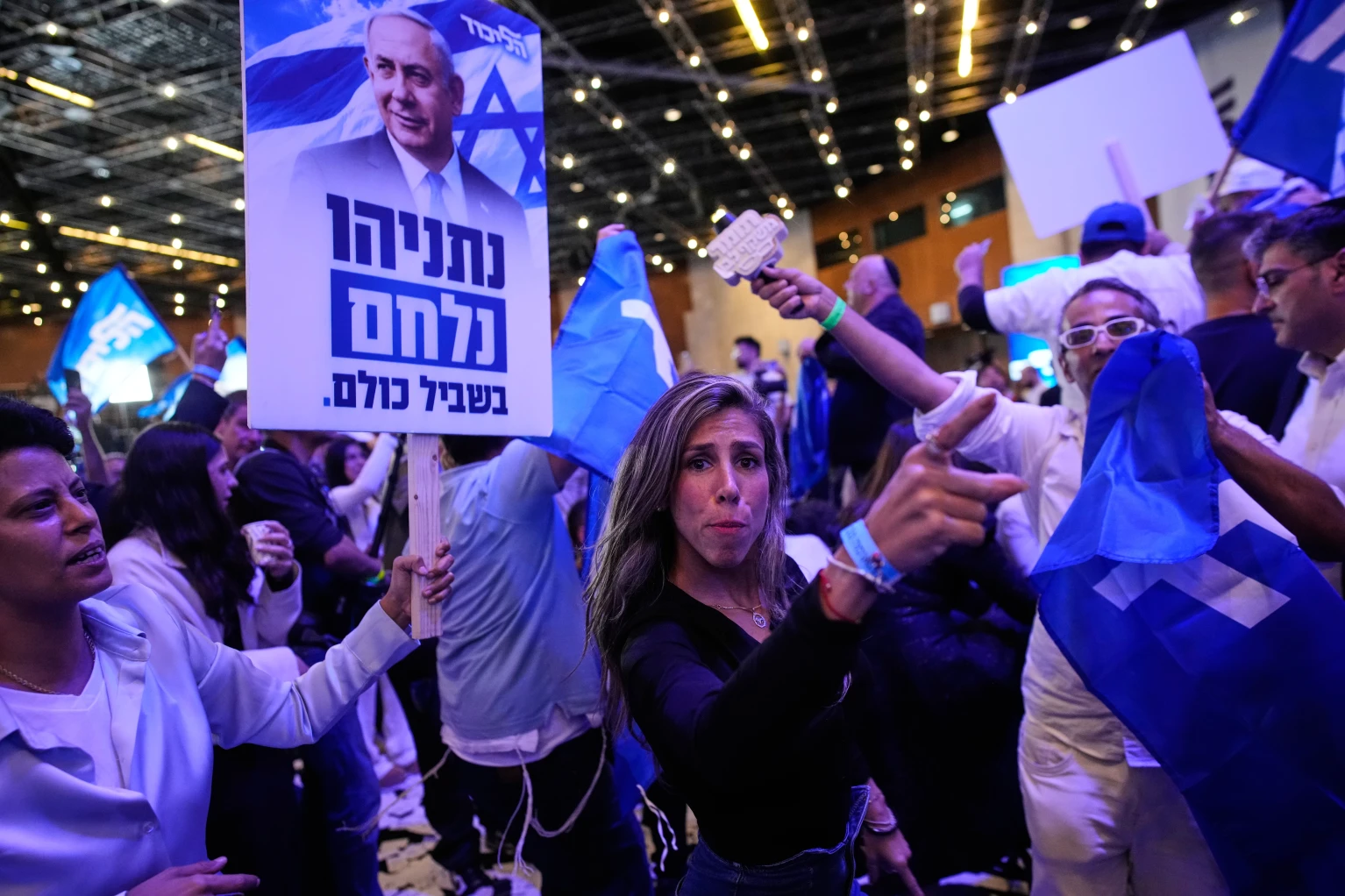


Anxious Israelis watched election results take shape on Wednesday after the highest turnout in over a quarter-century, as no clear winner emerged and weeks of negotiating could lie ahead for Prime Minister Benjamin Netanyahu and an array of opposition parties trying to unseat him.
Arab-led parties made a historic showing, but it’s not clear if other opponents of Netanyahu’s far-right government would form a coalition with them for a majority in the next parliament. Issues around the Palestinians and their descendants remain incredibly sensitive in Israel.
Netanyahu was defiant on Wednesday as he seeks to remain the country’s longest-serving prime minister. He dismissed the idea of partnering with Arab parties — whose constituents make up 20 per cent of Israel’s population — as treasonous.
“We must establish a strong, right-wing, nationalist government,” Netanyahu said. “We must not endanger Israel and establish a government that relies on anti-Zionist Arab parties.”
His top challenger, centrist former military chief Gadi Eisenkot, has left the door open to partnering with Arab parties under certain conditions.
But whether some of Eisenkot’s likely partners who have ruled out such an alliance will change their minds to force Netanyahu from office remains to be seen.
With 70 per cent of votes counted, Netanyahu’s Likud party has 20.6 per cent and Eisenkot’s Yashar party has 15.9 per cent. The count from Israel’s Central Elections Committee does not indicate how many seats each will have in parliament, the 120-seat Knesset. Likud’s share remained lower than in the previous election in 2022, when it was 23.4 per cent.

