



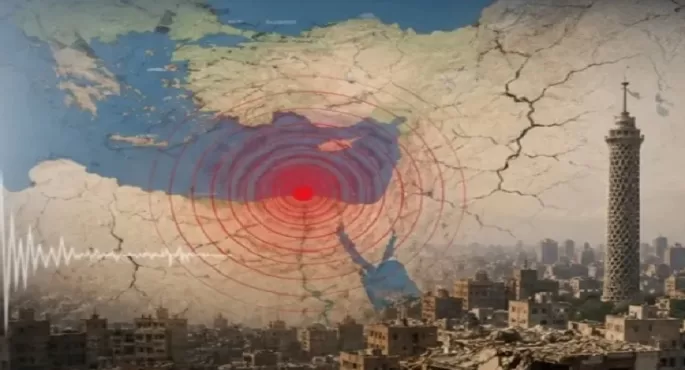
Egypt is not located on any of the world’s major seismic belts, and the aftershocks following Monday’s 5.5-magnitude earthquake in the Gulf of Suez have all been weak and pose no cause for concern, according to a senior seismologist.
Head of the Seismology Department at the National Research Institute of Astronomy and Geophysics, Sherif El-Hady, said all aftershocks recorded after the quake measured below magnitude 3.0, making them too weak to be felt by the public.
Speaking to Extra News television, El-Hady said it is normal for earthquakes to be followed by a series of minor aftershocks, most of which are detected only by specialized monitoring equipment.
He explained that the nearest major seismic belt to Egypt lies in the eastern Mediterranean, about 400 kilometers from the country’s borders. While the Gulf of Suez, Gulf of Aqaba and the Red Sea are known for seismic activity. Earthquakes in those areas are generally less powerful than those originating in the eastern Mediterranean.
El-Hady said many residents felt Monday’s tremor because its epicenter was relatively close to Cairo compared with previous earthquakes, stressing that this does not necessarily indicate a higher level of danger.
He urged the public to remain calm during earthquakes, stay in safe locations inside buildings, avoid using elevators or rushing to stairways while shaking is underway, and wait until the tremors have stopped before evacuating.
The 5.5-magnitude earthquake struck the Gulf of Suez early Monday and was caused by movement along an active geological fault in the area, he added.

