











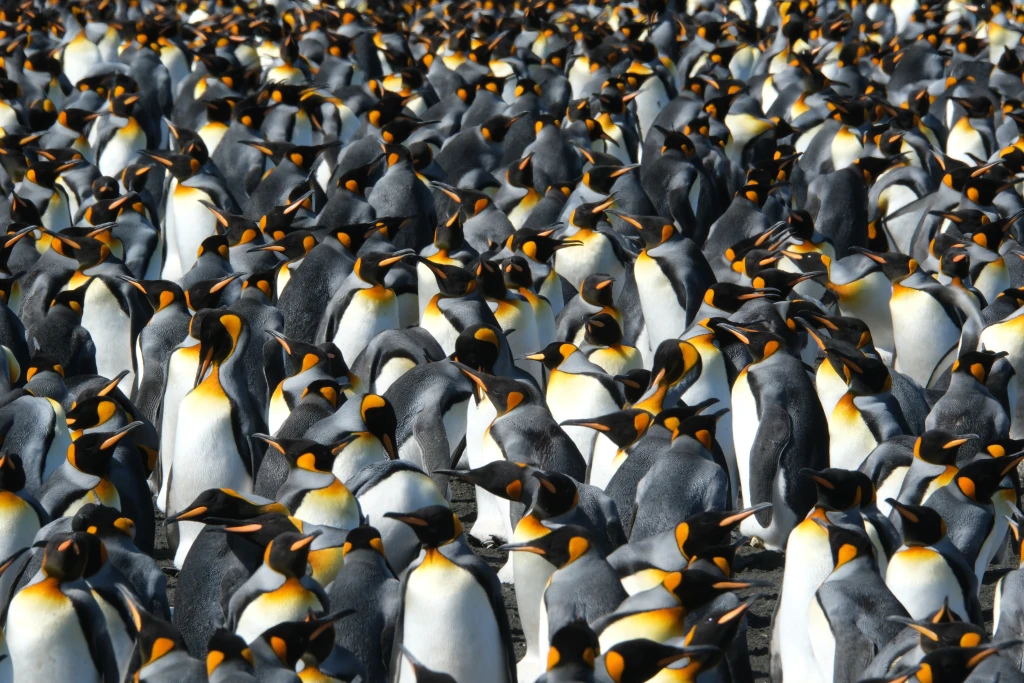
The warming world has disrupted the timing for plant and animal reproduction, and it’s usually bad news for species that depend on each other — like flowers blooming too early and pollinating bees arriving too late. But researchers have found the rare critter that’s getting a boost from the change: King penguins.
A new study of 19,000 king penguins in a sub-Antarctic island chain found their breeding is starting 19 days earlier than it did in 2000. Mating earlier has increased the breeding success rate by 40%, according to a study in Wednesday’s journal Science Advances.
The study of timing in nature is called phenology. It’s been a major concern for biologists because predators and prey and pollinators and plants are mostly adapting to warmer climates at different rates. And that means crucial mismatches in timing.
It’s especially common in birds and pollinating species such as bees. Most birds, especially in North America, aren’t keeping pace with changes in phenology, according to Clemson University biological sciences professor Casey Youngflesh, who wasn’t part of the study.
Having a species like the king penguin adapt so well to seasonal shifts and timing changes “is unprecedented,” said study co-author Celine Le Bohec, a seabird ecologist at the French science agency CNRS. “It’s quite striking.”
Unlike other penguins — which are threatened with dwindling numbers because of earlier breeding — the king penguin has the ability to breed from late October to March. And they are taking advantage of that flexibility, Le Bohec said.
They are succeeding even though the water is warming and the food web that they rely on is changing with it, said Le Bohec and study lead author Gaël Bardon, a seabird ecologist at the Scientific Centre of Monaco.
“They can adjust really well their foraging behaviour,” Bardon said. “We know that some birds are going directly to the south, to the polar front. Some are going to the north. Some are staying around the colony and so they can adjust their behaviour and that’s what makes king penguins cope really well with such changes for the moment.”

